Newsroom
Vitalik Buterin Urges Ethereum Community to Value ETH as Store of Value Over Fee Burns
8 November, 2026 / News / AI / Tags: buterin, burns, fee, burn, fees
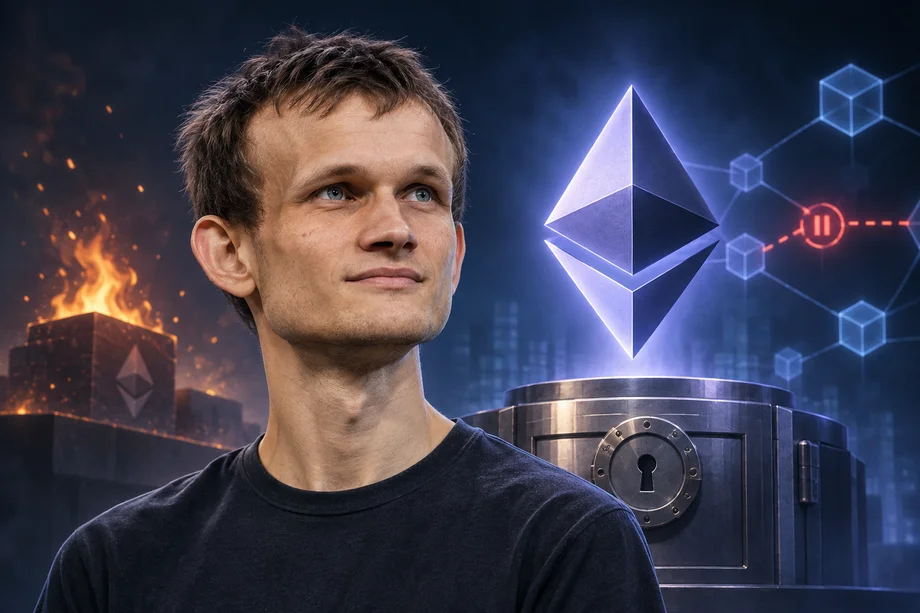
Ethereum co-founder argues the network’s long-term strength lies in decentralization and security, not maximizing token destruction through fees, as a major upgrade faces delay
Ethereum co-founder Vitalik Buterin has called for a shift in how the community assesses the value of ETH, stating that the cryptocurrency should be positioned primarily as a store of value rather than a fee-burning token. In a series of posts on X on November 8, 2026, Buterin outlined why the long-standing narrative centered on transaction fee burns is less reliable than previously assumed and could conflict with core network principles.
The comments arrived as ETH traded near $2,230 to $2,240, giving the asset a market capitalization of approximately $270 billion. Buterin stressed that EIP-1559, the 2021 upgrade that burns the base portion of transaction fees, should remain in place. He added, however, that holders should not be discouraged if fee burns stay below 10 percent of the level needed to fully offset new token issuance for the foreseeable future.
Why the Fee-Burn Thesis Falls Short
Buterin identified three main reasons for the change in emphasis. First, he said the fee-burning case “never was as strong as it seemed.” High burn rates recorded between 2021 and 2023 were driven largely by speculative activity inside crypto markets, including intense periods of NFT trading and decentralized finance usage. Those conditions produced peak daily burns approaching $180 million at times, yet they depended on wealth already circulating within the sector.
In a downturn, Buterin noted, the same economic forces would likely weaken, reducing the activity that generates fees. He illustrated the limits of treating burned fees as a stable valuation floor with a simple calculation: $1 billion in annual burns discounted at 4 percent could theoretically support a $25 billion valuation. Such models, he argued, assume demand remains constant even if the token’s price falls, an assumption that does not hold when activity is driven by internal speculation.
Tokenized real-world assets may diversify fee sources over time, but Buterin did not expect them to recreate the extreme fee levels seen during speculative peaks.
Risks of Optimizing for Maximum Fees
The second concern centered on governance and decentralization. To justify a $270 billion valuation purely through sustained fee revenue, Buterin estimated Ethereum might need to allocate around 700,000 ETH each year to protocol research and development under a more corporate-style funding model. That scale of spending would invite greater oversight and intervention, moving the network closer to the operating style of a large company.
Higher fees aimed at maximizing burns would also raise costs for users, reducing accessibility for those seeking privacy, security, and censorship resistance. Buterin warned that such a path would undermine the principles that give Ethereum its distinctive appeal.
Store-of-Value Case Built on Core Principles
Buterin tied ETH’s long-term value to what he described as CROPS attributes: censorship and capture resistance, open-source development, privacy, and security. These qualities, he said, form a more durable foundation for holders than fluctuating burn rates. Reliable asset preservation depends on stable protocol decisions, limited political interference, and the ability to move value without intermediaries.
He pointed to ongoing work on privacy tools, post-quantum security, lightweight nodes, and mechanisms such as Fork-Choice Enforced Inclusion Lists that make it harder to exclude valid transactions. In an environment of advancing artificial intelligence, resilient decentralized infrastructure becomes increasingly important for protecting assets against institutional or technological pressures.
Storing assets directly on Ethereum’s base layer continues to enable trustless exchange and collateral use, supporting utility without requiring the network to chase maximum fee revenue.
Glamsterdam Upgrade Paused After Testnet Bug
The discussion coincides with a technical setback. The planned Glamsterdam hard fork was paused after developers discovered a critical bug during testnet deployment. The flaw disrupted fee recalculation and raised concerns about smart-contract reliability. Project leads halted progress to resolve the issue before any mainnet impact.
The upgrade had been designed around expectations of surplus blockspace that would lower transaction costs and adjust burn rates downward. Related proposals aimed to raise gas limits substantially, potentially to 200 million units, through changes focused on capacity and parallel production. The pause reinforces a broader preference among developers for prioritizing network stability over rapid changes that might affect fee dynamics.
Solana co-founder Anatoly Yakovenko expressed agreement with the direction, stating that focusing on fees as the product is not viable and that platforms must deliver genuine utility to users.
Layer-2 growth has already reduced mainnet fee generation since the 2024 Dencun upgrade lowered costs for secondary networks. As a result, Ethereum has experienced periods in which new issuance exceeded burns, producing net inflation. Buterin’s remarks place these developments in a longer-term context, arguing that the network’s value rests on its ability to remain secure and decentralized rather than on achieving continuous deflation through fees.

Disclaimer
This article was generated by AI using information from multiple industry sources. It has not been reviewed or verified by a human editor and may contain inaccuracies, omissions, or misinformation. Readers are encouraged to independently verify any information before making decisions based on its content.Tired of the noise?
Let the bots trade for you.
Trade 24/7, without emotion, with data-driven strategies.
Associated articles

Vitalik Buterin Reveals Leaner Ethereum Foundation Plan with Fewer ETH Sales

Ethereum Foundation Warns Wallets and Tools Risk Failure in Glamsterdam Upgrade

Ethereum Schedules Oct. 6 Sepolia Fork for Glamsterdam Upgrade Ahead of Q4 Mainnet
Ethereum Delays Glamsterdam Hoodi Testnet Activation Over Gas Security Risks
Ethereum Schedules Frame Transactions for 2027 Hegotá Upgrade to Enable Native Account Abstraction
Latest articles

Nvidia Board Launches Probe Into CEO Jensen Huang Over Foreign Intelligence Reports
Binance Restores HYPE and APT Withdrawals in Phased Post-Breach Recovery

Keplr Suspends Social Logins After Web3Auth Breach Triggers Millions in Cosmos Transfers

Taiwan Curbs Short Selling and Activates $15 Billion Fund After Stocks Plunge