Newsroom
Ethereum Schedules Frame Transactions for 2027 Hegotá Upgrade to Enable Native Account Abstraction
7 September, 2026 / News / AI / Tags: eip, envelope, frames, programmable, validation
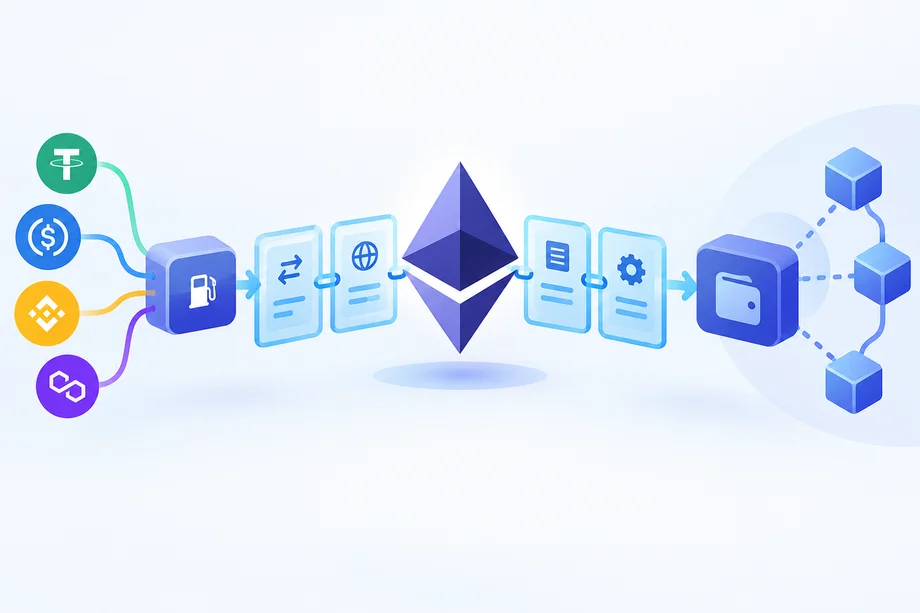
Core developers have advanced EIP-8141, allowing users to transact without holding ether for fees while supporting key rotation and quantum-resistant authentication
Ethereum core developers have formally scheduled EIP-8141, known as Frame Transactions, for inclusion in the Hegotá network upgrade planned for 2027. The decision elevates native account abstraction features into the protocol’s standard transaction system, addressing longstanding limitations of conventional accounts.
During the August 27 All Core Developers Execution call, the proposal advanced from Considered for Inclusion to Scheduled for Inclusion, according to the Hegotá Meta EIP. It now sits alongside EIP-7805, or Fork-choice enforced Inclusion Lists, as a confirmed component of the upgrade that will follow Glamsterdam.
Ethereum co-founder Vitalik Buterin, one of the proposal’s ten authors, highlighted recent advances in a September 5 post. The draft specification remains subject to revision, and activation dates for testnets and mainnet have not been set.
Separating Authorization, Fees and Execution
Frame Transactions restructure how Ethereum processes operations. A single transaction divides into programmable frames that handle distinct roles: verifying authorization, determining gas payment, and executing the intended actions. These frames operate under modes such as DEFAULT, VERIFY and SENDER.
Under the current model, the account initiating a transaction must hold ether to cover network fees. Wallets holding only stablecoins or other tokens cannot move those assets without first acquiring ETH. EIP-8141 removes that requirement by allowing a separate account or application to pay the fee in ether while the user supplies stablecoins or other assets.
Validators continue to receive fees through the existing fee market. The change brings capabilities previously available only through external systems such as ERC-4337—sponsored gas, programmable wallets and related features—directly into the base protocol without reliance on separate mempools, bundlers or paymasters.
Atomic Batching and Programmable Validation
Frames also support grouping related operations so they succeed or fail together. A common pattern today requires a user to approve a decentralized application’s spending permission in one transaction and then execute a trade in another. If the trade fails, the approval can remain active. Under Frame Transactions, the approval and trade form an atomic unit that reverts fully if any part fails.
Programmable validation further expands account capabilities. Conventional externally owned accounts rely on a fixed private-key signature scheme based on the Elliptic Curve Digital Signature Algorithm. A lost or compromised key permanently affects the account, and key rotation requires transferring assets to a new address.
With frames, an account can define its own validation logic through Ethereum Virtual Machine code. This opens paths to key rotation, multi-signature schemes, social recovery and eventual adoption of quantum-resistant cryptography while retaining the same address and assets. Buterin has previously prioritized quantum security on Ethereum’s technical roadmap alongside privacy and storage improvements.
Design Breakthrough Reduces Envelope Changes
On September 7, EIP-8141 co-author Derek Chiang described a recent design breakthrough. Features previously expected to require new fields in the transaction envelope—such as expiry conditions, signature aggregation, privacy-pool Merkle roots and post-transaction assertions—can instead be expressed as programmable contract calls within frames.
The base envelope still contains essential fields including chain identifier, nonce, sender, fees, signatures and the frame list. The approach aims to keep that envelope stable while new functionality arrives through additional frame targets and call patterns. Chiang noted that Ethereum upgrades occur roughly every nine months, making repeated envelope modifications costly for wallets, Layer 2 networks, explorers and infrastructure providers.
Developers are coordinating the design with EIP-8130, another account-abstraction proposal that introduces an on-chain keystore for registering authenticators. The combination seeks to preserve frame flexibility while giving nodes and sequencers clearer information about required validation methods before execution, reducing unpredictability for high-throughput environments.
Parallel Validation and Remaining Work
Buterin has outlined how frames could support more efficient processing by distinguishing transaction actions that change state from dependencies such as signatures or proofs. Independent dependencies that do not access state could be checked in parallel or processed once in the mempool. Simpler, more statically analyzable transactions might eventually receive lower gas costs, though no such fee schedule has been approved.
The proposal remains a draft Core EIP. Technical details including frame modes, gas accounting and the precise relationship with EIP-8130 can still change. Next steps involve updated specifications, client implementations, development networks and interoperability testing with wallets and Layer 2 systems. Developers must also assess mempool denial-of-service risks arising from more computationally intensive programmable validation.
Hegotá follows Glamsterdam, which centers on Enshrined Proposer-Builder Separation and Block-Level Access Lists. Until activation parameters are published, EIP-8141 stands as a scheduled but unfinished element of the 2027 upgrade path.

Disclaimer
This article was generated by AI using information from multiple industry sources. It has not been reviewed or verified by a human editor and may contain inaccuracies, omissions, or misinformation. Readers are encouraged to independently verify any information before making decisions based on its content.Tired of the noise?
Let the bots trade for you.
Trade 24/7, without emotion, with data-driven strategies.
Associated articles

Vitalik Buterin Proposes Ethereum Transaction Redesign for Parallel Validation and Scaling
Vitalik Buterin Backs EIP-8288 for Ethereum Cryptographic Proof Aggregation

Ethereum and Base Pursue Separate Account Abstraction Paths After Talks Collapse

Ethereum Developers Narrow 66 Proposals for 2027 Hegotá Upgrade Focused on Privacy and Censorship Resistance

Ethereum Activates Glamsterdam Upgrade on Sepolia Testnet
Latest articles
Blockchain Association Urges Clarity on DeFi and Stablecoin Rules Under GENIUS Act
XRP Launches Official X Account, Jointly Managed by Ripple and XRPL Foundation
ESMA Expands MiCA Register to 375 Providers as BingX, YouHodler and Openbank Join

France Narrowly Approves Crypto-to-Stablecoin Tax from 2027