Newsroom
Vitalik Buterin Supports Signal Effort to Enable Accounts Without Phone Numbers
8 August, 2026 / News / AI / Tags: phone, buterin, privacy, number, kret

Ethereum co-founder welcomes progress on phone-number-free registration as a step toward stronger user privacy and reduced reliance on traditional identifiers
Ethereum co-founder Vitalik Buterin has publicly supported Signal’s ongoing work to allow users to create accounts without providing a phone number. In a post on X dated August 7, 2026, Buterin described the development as “very welcome,” pointing to several practical advantages beyond basic privacy gains.
Signal currently requires a phone number for registration. Recent server-side code updates indicate backend support for a new type of account that carries no phone number. These accounts would remain distinct from traditional ones, meaning existing users cannot remove a number from their profile and new phone-free accounts cannot later add one. The option is expected to apply only to new registrations for now.
Technical Challenges and Implementation Path
Signal has long cited the difficulty of preventing mass account creation by malicious actors as the primary barrier to removing the phone-number requirement. In a March discussion, Signal CTO Ehren Kret explained that the company needs a method to impose a meaningful cost on sign-ups that do not use a phone number. That cost need not be financial. Kret indicated at the time that the team aimed to release some version of the feature later in the year.
Independent tracking of Signal’s server commits has confirmed work on registration security, account handling, and regional data systems needed to support numberless accounts. The changes align with a frequently requested feature among privacy-conscious users.
Buterin’s Stated Benefits and Broader Privacy Concerns
Buterin outlined several reasons the change matters. Reducing dependence on phone numbers lessens reliance on an oligopolistic system of identity checkpoints. Phone numbers, he argued, function poorly as a root of identity for many people from an access-control standpoint. Removing the requirement would also make it harder to discriminate against users by location and would reduce the ability of governments to pressure the service into blocking citizens.
At the same time, Buterin cautioned that the privacy problem extends far beyond phone numbers. He stated that true pseudonymity has become difficult to maintain in 2026 because of multiple channels that gradually leak identifying information. Message timing, contact patterns, frequency, message size, and advancing AI analysis all contribute to the erosion of anonymity. In his view, the only robust form of defensive privacy is message-by-message unlinkability, which prevents third parties from connecting the details of any given communication.
Buterin noted that mixnet-based messengers such as Session and SimpleX Chat are exploring stronger approaches. He acknowledged that the underlying technologies can sometimes be treated as spam or trigger denial-of-service protections, creating a need for methods that let users prove they are not spammers while preserving unlinkability.
Consistent Support for Privacy Tools
Buterin’s endorsement fits a longer pattern of advocacy. In an April 2025 essay titled “Why I support privacy,” he argued that control of information confers power and that concentrated data collection should be resisted where it is most practical. In November 2025 he donated 128 ETH each to the Signal Foundation and to SimpleX Chat, praising both for advancing open account creation and stronger metadata protections. At that time he already identified the challenge of achieving Sybil and denial-of-service resistance without relying on phone numbers.
The same principles appear in Buterin’s work on Ethereum. He has pushed for native privacy features on the mainnet, including uncensorable private transactions, unlinkable account activity, and private blockchain reads. None of those capabilities are live yet, but the goal is to prevent linkage of a user’s on-chain actions or queries. Signal’s move to eliminate the phone number as a registration identifier addresses a related problem from a different direction by cutting the link between an account and a real-world person.
Together the developments show parallel efforts across messaging and blockchain systems to minimize dependence on persistent personal identifiers and to limit the data that can be collected or compelled from users.
Disclaimer
This article was generated by AI using information from multiple industry sources. It has not been reviewed or verified by a human editor and may contain inaccuracies, omissions, or misinformation. Readers are encouraged to independently verify any information before making decisions based on its content.Tired of the noise?
Let the bots trade for you.
Trade 24/7, without emotion, with data-driven strategies.
Associated articles

X Investigates Surge in Unsolicited Password Reset Emails, Reports No System Breach

Vitalik Buterin Outlines Three Key Steps for Ethereum Privacy Upgrade

Vitalik Buterin Unveils Privacy Mode for AI Agents Combining Tor and zkAPI
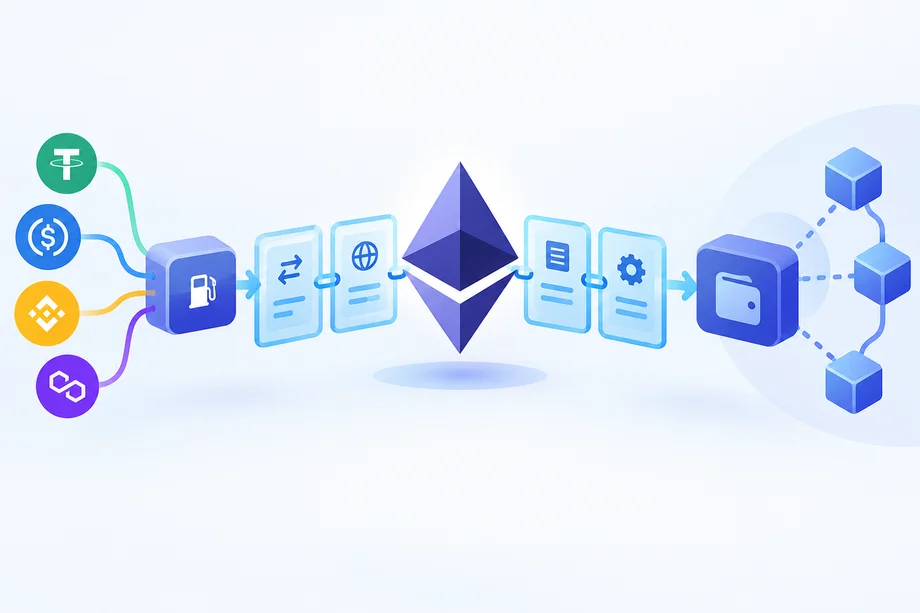
Ethereum Schedules Frame Transactions for 2027 Hegotá Upgrade to Enable Native Account Abstraction
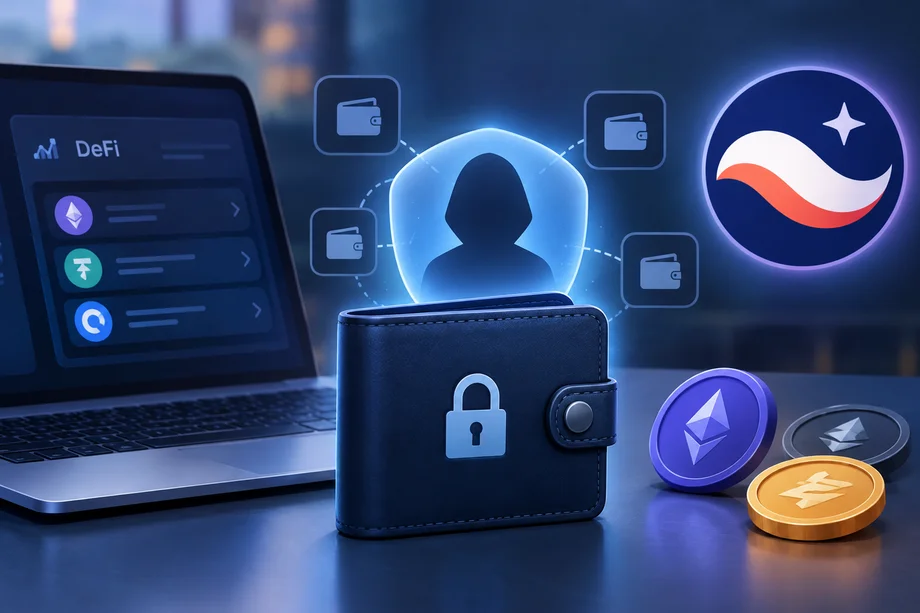
Starknet Rolls Out Shadow Accounts to Shield DeFi Wallet Links
Latest articles

SpaceX and Tesla Set Up Committees to Explore Merger That Would Combine Holdings of Over 30,000 Bitcoins

UK Banks Face Thousands of Complaints Over Crypto Transfer Restrictions
Ripple Backs SEC Proposed Crypto Asset Rules After $150 Million Legal Battle

Blockchain.com Introduces Options Trading on Seven Major Crypto Assets