Newsroom
Virtu, Tradeweb Complete First Onchain Repo Using Marshall Islands Digital Bond
28 August, 2026 / News / AI / Tags: canton, tradeweb, usdm, bond, collateral

Virtu Financial, M1X Global and Tradeweb settled a full repurchase cycle on the Canton Network in under 10 minutes using the USDM1 sovereign digital bond as collateral
Virtu Financial, M1X Global and Tradeweb have completed an onchain repurchase agreement that used a sovereign digital bond issued by the Republic of the Marshall Islands as collateral. The entire repo and repurchase cycle settled atomically on the Canton Network in under 10 minutes between regulated institutional counterparties.
The transaction relied on USDM1, a US dollar-denominated bond issued natively onchain by the Marshall Islands. The instrument is backed one-for-one by short-term US Treasurys held in bankruptcy-remote custody and continues to pay a coupon while posted as collateral. It is structured under New York law as a fully collateralized sovereign obligation.
Atomic Settlement Without Traditional Delays
In a conventional repo, one party sells securities for cash and agrees to repurchase them later, with the securities serving as collateral. Participants in this deal moved the bond and the cash legs directly through Canton rather than relying on separate custodial ledgers or standard T+1 settlement processes.
The companies described the transaction as the first known repo executed through a major institutional trading venue to combine natively issued sovereign collateral with fully onchain atomic settlement and no prime broker. Securities delivery, the cash payment and the return transaction all settled together on the same network ledger.
Tradeweb served as the execution platform. Specific details such as the transaction value, interest rate, maturity and the exact identities of the counterparties beyond Virtu’s involvement were not disclosed.
USDM1 Structure and Access
USDM1 is designed so that investors receive a first-priority security interest in the underlying Treasury collateral under Articles 8 and 9 of the Uniform Commercial Code. The companies stated that the bond can enter standard close-out netting arrangements used for derivatives and repos. Its Treasury backing is intended to support more favorable balance-sheet treatment than unsecured digital assets, though actual treatment depends on each institution’s regulator and jurisdiction.
The bond is available through Tradeweb. Institutional custody is provided by Anchorage Digital, BitGo and tZERO. Bank of Guam has also announced institutional support. According to issuer disclosures, USDM1 is offered and sold outside the United States under Regulation S and generally cannot be offered, sold or pledged to US persons unless an exemption applies.
Canton Network Activity
Canton is a blockchain network built for institutional finance, featuring privacy and permissioning controls suited to regulated transactions and tokenized assets. Its synchronized settlement system allows linked transfers to complete together, reducing the risk that one side settles while the other fails.
The latest repo follows a July transaction in which Tradeweb facilitated the real-time transfer of a tokenized US Treasury from Franklin Templeton to Virtu Financial on Canton, settled against USDCx. Activity on the network has continued to expand. In August, FalconX and Interstice launched a cross-chain swap engine connecting Canton with Ethereum, Solana and Robinhood Chain. World Liberty Financial also issued its USD1 stablecoin natively on the network.
Separately, Digital Asset and the American Idea Foundation, founded by former US House Speaker Paul Ryan, announced plans for a 2027 pilot that would use Canton to distribute state-administered benefits across three US states.
Early-Stage Milestone
The transaction demonstrates how a natively issued sovereign digital bond can function as active collateral inside an institutional financing structure rather than serving solely as an issuance or trading asset. At the same time, the participants framed the deal as an early-stage example. No commercial launch schedule, additional repo commitments or volume targets were announced.
Broader adoption across institutional repo markets would require greater standardization among counterparties, consistent operational integration with existing systems, and clarity on legal and capital treatment across jurisdictions. Further trades will be needed to show whether the rapid atomic settlement cycle can operate under higher volumes, additional settlement assets and varying market conditions.
Disclaimer
This article was generated by AI using information from multiple industry sources. It has not been reviewed or verified by a human editor and may contain inaccuracies, omissions, or misinformation. Readers are encouraged to independently verify any information before making decisions based on its content.Tired of the noise?
Let the bots trade for you.
Trade 24/7, without emotion, with data-driven strategies.
Associated articles
World Liberty Financial Deploys USD1 Stablecoin Natively on Canton Network for RWA Settlements
BNY and Citadel Securities Complete First Tokenized Treasury Triparty Repo
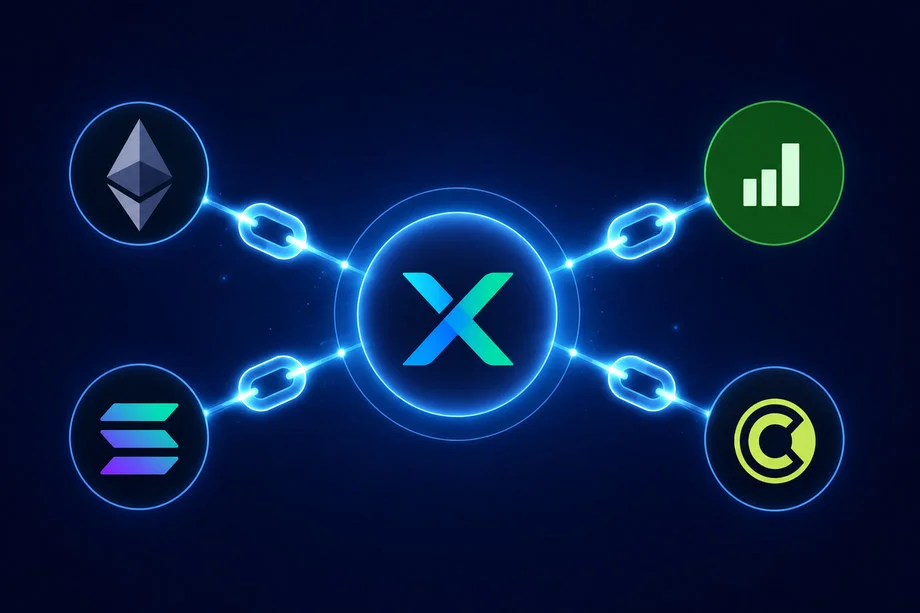
Interstice Digital Rolls Out Non-Custodial Swap Engine Linking Canton to Ethereum, Solana and Robinhood Chain

MUFG Advances Blockchain Trial for Real-Time Japanese Government Bond Repo Settlement

Goldman Sachs Puts $100B Treasury Fund on Avalanche Rails
Latest articles
Lighter Token Climbs More Than 20% on Planned CFTC Filing and Research Note

Samsung and SK Hynix Upgrade China NAND Factories Amid AI Demand and Local Rivalry

China Prosecutors Move to Confiscate $5.1 Billion Bitcoin Haul Seized in UK Fraud Case

Bank of Korea Holds Rate at 3% After Consecutive Hikes, Eyes Data for Next Move