Newsroom
US Tightens AI Chip Controls, Nvidia Limits Sales as Global Markets Decline
17 November, 2026 / News / AI / Tags: nvidia, chips, chinese, chip, advanced
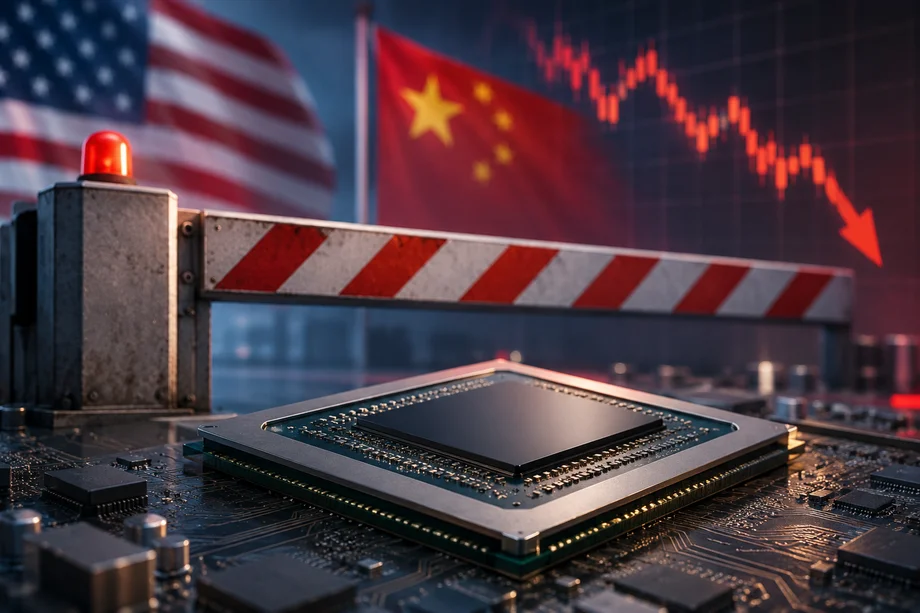
New American restrictions on advanced AI chip access to China pressured equity markets for a fourth session, while attention centers on Nvidia results and related sales policies
Global equities extended declines as fresh United States measures limited China's access to advanced artificial intelligence chips and related computing capacity. Asian markets led the downturn, with attention shifting to Nvidia's quarterly results due after the close of US trading and the company's reported plans to restrict sales linked to Chinese customers.
Market Moves Across Regions
The MSCI All Country World Index fell 0.2 percent, marking a fourth straight session of losses. Asian equities declined 1.5 percent, with Taiwan and South Korea among the weaker performers. S&P 500 futures slipped 0.1 percent, while Euro Stoxx 50 futures dropped 0.7 percent. Nasdaq 100 futures edged up 0.1 percent after three days of declines.
Chinese equities came under pressure from concerns over higher costs for advanced computing power. Shares of Chinese AI developers and data center operators declined, though domestic semiconductor producers advanced on expectations of greater demand for locally made chips. The CSI 300 Index partially recovered after reaching its lowest level since July 2025 earlier in the week.
New Export Rules and Nvidia Sales Policy
Provisional US regulations require certain data center operators to obtain government licenses before exporting advanced AI chips from Nvidia and other American manufacturers to clients in restricted regions. The Commerce Department's Bureau of Industry and Security issued an interim final rule targeting remote access by Chinese users to AI chips hosted at overseas data centers.
Nvidia informed customers it would withhold chip sales from buyers that rent more than half of their GPUs to companies in China. The company also cautioned that the proposed Remote Access Security Act could expose both Nvidia and its customers to legal action if enacted. The House of Representatives passed the bill in January, but the Senate has not yet voted. Current export controls already limit direct shipments of advanced chips to China, while oversight of remote cloud access has been less comprehensive.
In an earlier securities filing, Nvidia stated it has no practical control over its products after sale and relies on customers and partners to comply with export rules. Chinese firms have previously obtained AI computing capacity by renting access to chips at data centers outside the country rather than purchasing the hardware directly.
Earnings and Broader Market Focus
Investors are watching Nvidia's results closely for signals on AI chip demand and the company's outlook. The report is scheduled for release after US markets close on Tuesday. Cloud AI firm Anthropic is also expected to begin trading this week, providing another gauge of sentiment toward AI-related companies.
US President Donald Trump expressed support for calls from some technology industry figures for Jensen Huang to return as Nvidia chief executive. The company's board continues its search for a permanent replacement.
Central Bank Commentary and Oil Prices
Cleveland Federal Reserve President Beth Hammack backed modest and gradual interest rate increases while noting the central bank should remain open to larger steps if inflation pressures strengthen.
Reserve Bank of Australia Governor Michele Bullock pointed to ongoing inflation risks from geopolitical uncertainty and domestic capacity limits. Meeting minutes showed most of the nine-member board supported a recent rate increase due to persistent inflation, while three members placed greater weight on growth risks.
Oil prices declined amid signs that supply was outpacing demand. US Vice President JD Vance said Washington seeks to avoid extended military involvement with Iran.
The combination of tighter chip access rules, Nvidia's sales restrictions, and the company's earnings will shape near-term sentiment toward technology shares. Any increase in costs for Chinese clients seeking advanced computing capacity could temper the impact of positive results from Nvidia or the Anthropic debut.

Disclaimer
This article was generated by AI using information from multiple industry sources. It has not been reviewed or verified by a human editor and may contain inaccuracies, omissions, or misinformation. Readers are encouraged to independently verify any information before making decisions based on its content.Tired of the noise?
Let the bots trade for you.
Trade 24/7, without emotion, with data-driven strategies.
Associated articles

Nvidia’s $92 Billion Earnings Test AI Infrastructure Boom Amid Rising Costs

Nvidia Stops Licensed Hopper Chip Shipments to China After $2.4 Billion Sales

Amazon Posts $62.6 Billion Profit, AWS Growth Hits Fastest Pace in Years on AI Demand

China Weighs Approving Nvidia RTX Pro 5500 Purchases for Alibaba and ByteDance

ASML Posts Record Q3 Sales of $13.05 Billion as AI Demand Fuels Stronger Outlook
Latest articles

Binance Wallet Closes $500 Million Anthropic Tokenized Stock Campaign After Cap Hit

XRP Ledger Secures Independent Verification of Architecture and Resiliency Under Global Framework

ZachXBT Claims Indian Authorities Wrongly Froze $3M Gate Account in Scam Probe

Vitalik Buterin Urges Crypto to Build Long-Term Stability Like Housing