Newsroom
US Regulators Miss GENIUS Act Deadline, Leaving Stablecoin Framework Incomplete
19 July, 2026 / News / AI / Tags: genius, issuers, federal, proposals, stablecoin

One year after enactment, federal agencies have yet to finalize key implementing rules for the nation's first major stablecoin legislation, shortening the runway for issuers ahead of the January 2027 effective date
Deadline Passes Without Final Rules
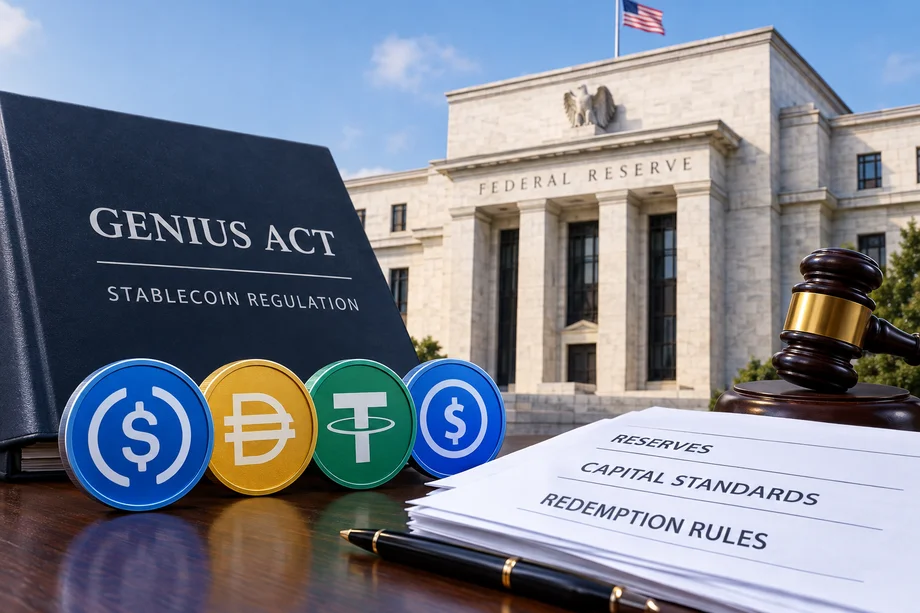
The GENIUS Act, signed into law by President Donald Trump on July 18, 2025, established the first comprehensive federal framework for payment stablecoins in the United States. The legislation set requirements for one-to-one reserve backing with highly liquid assets, redemption policies, disclosures, and oversight structures. It also directed primary regulators including the Office of the Comptroller of the Currency, Federal Deposit Insurance Corporation, National Credit Union Administration, Federal Reserve, and Treasury Department to issue implementing regulations within one year.
That deadline expired on July 18, 2026, with major rule packages still at the proposal stage. Agencies have published multiple notices of proposed rulemaking covering reserve assets, capital and liquidity standards, custody arrangements, risk management, customer identification programs, and anti-money laundering compliance. However, public comment periods on several of these extend into August, preventing finalization by the statutory date.
Key Regulatory Areas Still in Flux
The OCC released its primary proposal addressing reserve eligibility, redemptions, capital, liquidity, custody, and risk controls for nationally chartered issuers earlier in 2026. The FDIC followed with standards for institutions under its supervision, including treatment of reserves and tokenized deposits. The NCUA advanced proposals for credit unions, while Treasury outlined criteria for determining when state regulatory regimes qualify as “substantially similar” to the federal framework, potentially allowing smaller issuers to remain under state oversight.
Joint proposals from banking agencies on customer identification programs would impose bank-like verification and recordkeeping obligations on permitted stablecoin issuers. Separate FDIC and Treasury efforts target Bank Secrecy Act and sanctions compliance. Industry groups have urged better coordination across agencies, noting the interconnected nature of the proposals.
New York’s Department of Financial Services has proposed updates to its own stablecoin rules in anticipation of seeking federal recognition under the framework.
Industry Adapts Amid Uncertainty
Despite the incomplete rulemaking, the GENIUS Act has already boosted confidence in the sector. Major stablecoin issuers have expanded operations, with entities like Circle securing approvals for a national trust bank to hold USDC reserves under federal oversight. Banks and fintech firms have increased investments in blockchain-based payment infrastructure.
The stablecoin market has grown significantly, with total circulation exceeding $310 billion. USDT and USDC remain dominant, serving critical roles in payments, trading collateral, and treasury management.
Financial institutions continue preparing for compliance by mapping existing processes to draft requirements on reserves, redemptions, and customer due diligence. However, final calibrations on eligible assets, concentration limits, and operational testing remain pending.
Broader Implications and Push for CLARITY Act
The stablecoin law is viewed by many as a foundational step. Senator Cynthia Lummis has described it as an important milestone and called for passage of the CLARITY Act to extend regulatory clarity to the wider digital asset market, including clearer roles for the SEC and CFTC, and stronger customer protections in insolvency scenarios.
Progress on the CLARITY Act faces hurdles in the Senate, including concerns over ethics provisions and the need to reconcile differing committee versions before the August recess. CFTC Chair Mike Selig has highlighted the GENIUS Act’s success as a model for delivering further market structure improvements.
Experts note that while the core statutory requirements provide a baseline, timely final rules will be essential to reduce uncertainty and support full implementation within the compressed timeline. Issuers and banks must balance preparation based on proposals with flexibility for potential adjustments in the final texts.
Disclaimer
This article was generated by AI using information from multiple industry sources. It has not been reviewed or verified by a human editor and may contain inaccuracies, omissions, or misinformation. Readers are encouraged to independently verify any information before making decisions based on its content.Tired of the noise?
Let the bots trade for you.
Trade 24/7, without emotion, with data-driven strategies.
Associated articles

US Treasury Proposes Rules Clarifying Stablecoin Issuance Under GENIUS Act
Federal Reserve Proposes Capital and Redemption Rules for Stablecoin Issuers Under GENIUS Act

OCC Aims for November Finish on GENIUS Act Stablecoin Rules

Senator Lummis Pushes CLARITY Act as Key to Crypto Regulatory Clarity

Singapore Proposes Full Reserves and Interest Ban for Stablecoin Issuers
Latest articles

SpaceX and Tesla Set Up Committees to Explore Merger That Would Combine Holdings of Over 30,000 Bitcoins

UK Banks Face Thousands of Complaints Over Crypto Transfer Restrictions

Ripple Backs SEC Proposed Crypto Asset Rules After $150 Million Legal Battle

Blockchain.com Introduces Options Trading on Seven Major Crypto Assets