Newsroom
US Intensifies Crackdown on Iran’s $7.7 Billion Crypto Holdings Under Operation Economic Fury
21 May, 2026 / News / AI / Tags: iran, fury, shadow, economic, sanctions

The United States has stepped up its campaign against Iran’s use of cryptocurrency as the regime faces mounting economic pressure. Recent actions under Operation Economic Fury have resulted in the freezing of nearly $500 million in Iran-linked digital assets, highlighting the growing role of crypto in sanctions evasion strategies
Estimates suggest Iran controls around $7.7 billion in digital assets, positioning it among the largest sovereign holders of cryptocurrency. This figure has drawn attention as tensions in the Middle East continue to escalate.
Operation Economic Fury: Targeting Iran’s Financial Networks
The US Treasury Department has made significant progress in disrupting Iran’s crypto operations. Treasury Secretary Scott Bessent revealed that authorities have frozen close to $500 million in cryptocurrency connected to the Iranian regime, including a major $344 million seizure of USDT on the Tron network in April.
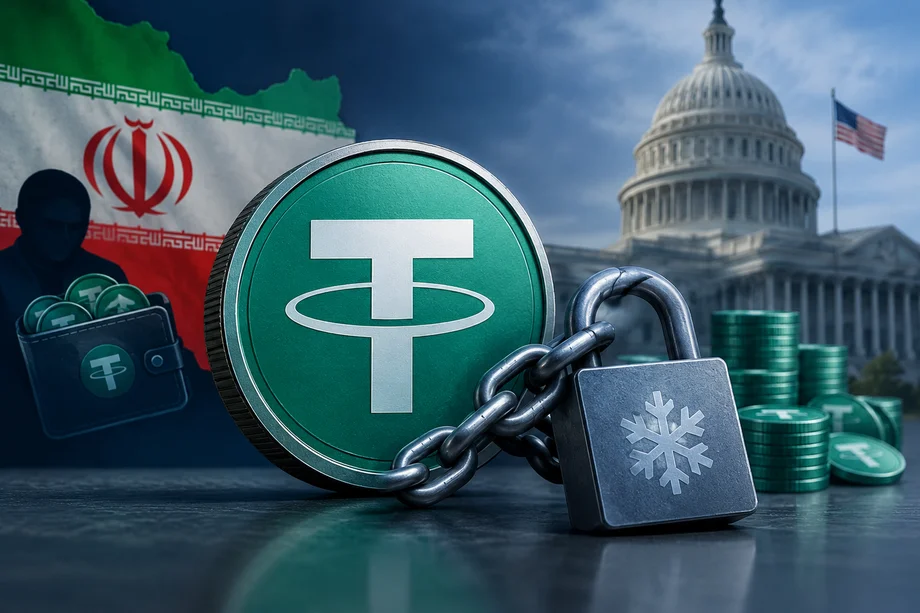
- Coordination with Tether to freeze two wallets linked to Iran’s Central Bank.
- Targeting shadow banking networks and entities supporting the Islamic Revolutionary Guard Corps (IRGC).
- Broader sanctions on exchanges and facilitators accused of routing funds for the regime.
These measures form part of a wider strategy to cut off financial lifelines for Iran’s military and proxy groups. Officials emphasize that while crypto offers anonymity in some respects, its transparent ledger often provides valuable leads for investigators.
Scale of Iran’s Crypto Reserves
Reports citing threat-detection data place Iran’s total digital asset holdings near $7.7 billion. This aligns with previous Chainalysis estimates of approximately $7.8 billion in 2025, with roughly half attributed to the IRGC.
Ordinary Iranians also account for a substantial portion of crypto activity. Blockchain intelligence firm TRM Labs noted significant trading volumes, with Iranians trading $11.4 billion in crypto in 2024 and $10 billion in 2025.
| Metric | Estimate |
|---|---|
| Total Digital Assets | $7.7 - $7.8 billion |
| IRGC Share | Roughly 50% |
| Recent US Freeze | Nearly $500 million |
| April USDT Seizure | $344 million |
Bitcoin as a Sanctions Workaround
Iran has increasingly relied on Bitcoin and other digital assets to maintain economic activity outside traditional banking channels. A notable development is the launch of Hormuz Safe, a state-backed maritime insurance platform that settles cargo policies entirely in Bitcoin for vessels in the Strait of Hormuz.
This initiative aims to address insurance gaps caused by regional tensions and sanctions. Iranian authorities claim the program could generate over $10 billion annually, though uptake from international shipping companies remains unclear.
Experts point out that crypto serves multiple purposes for Tehran: bypassing restrictions on oil revenue transfers, supporting proxy operations, and creating alternative financial infrastructure.
Challenges in Enforcement
While asset freezes demonstrate enforcement capability, some analysts question their overall impact. Daniel Tannebaum, a senior fellow at the Atlantic Council, noted that Iran is already heavily sanctioned, suggesting focus should shift to third-country actors enabling evasion.
On-chain analysis has proven effective in tracing funds, with forensic tools helping map connections to state entities. However, the decentralized nature of crypto continues to present both opportunities and obstacles for regulators.
Broader Implications
The situation underscores the dual nature of cryptocurrency in geopolitics. For sanctioned nations, it offers a potential lifeline. For enforcement agencies, blockchain transparency provides new investigative tools previously unavailable in traditional finance.
As Operation Economic Fury advances, the coming months will likely reveal how effectively Iran adapts its strategies and whether further measures against exchanges or intermediaries become necessary. The intersection of crypto, sanctions, and regional security remains a critical area to watch.
Disclaimer
This article was generated by AI using information from multiple industry sources. It has not been reviewed or verified by a human editor and may contain inaccuracies, omissions, or misinformation. Readers are encouraged to independently verify any information before making decisions based on its content.Tired of the noise?
Let the bots trade for you.
Trade 24/7, without emotion, with data-driven strategies.
Associated articles

US Seizes $1 Billion in Iranian Cryptocurrency as Sanctions Tighten

US Treasury Freezes $131 Million in Iran-Linked Crypto Wallets

US Treasury Expands Iran Sanctions to Digital Assets Over Alleged $100 Million Oil Payments
Senate Report Calls Tether USDT a Lifeline for Iran as Issuer Reports $550 Million in Freezes

US Treasury Sanctions Shelbit and Aban Tether Over Alleged Iran Sanctions Evasion
Latest articles

SpaceX and Tesla Set Up Committees to Explore Merger That Would Combine Holdings of Over 30,000 Bitcoins

UK Banks Face Thousands of Complaints Over Crypto Transfer Restrictions
Ripple Backs SEC Proposed Crypto Asset Rules After $150 Million Legal Battle

Blockchain.com Introduces Options Trading on Seven Major Crypto Assets