Newsroom
Trump Expected to Name Jay Clayton AI Czar in Shift From Dual Crypto Role
3 October, 2026 / News / AI / Tags: clayton, czar, intelligence, jay, artificial
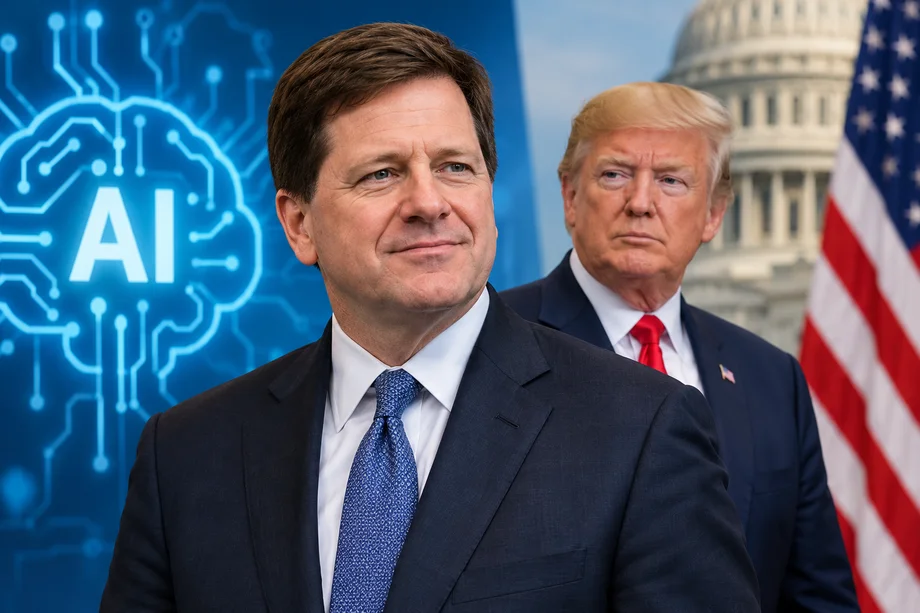
President Donald Trump is set to appoint current National Intelligence Director Jay Clayton to lead White House AI efforts, focusing solely on artificial intelligence policy separate from cryptocurrency oversight
Reported Appointment Centers on AI Force Leadership
President Donald Trump is expected to appoint Jay Clayton, the current US director of national intelligence, as the administration’s new AI czar. Multiple reports citing unnamed sources indicate the move would place Clayton at the head of efforts to coordinate domestic artificial intelligence development through a newly envisioned AI Force.
The position follows Trump’s earlier statements outlining plans for an AI Force modeled on the Space Force. The initiative aims to manage the rapid growth of the sector while avoiding additional regulations that could hinder innovation. A White House official has stated that any formal announcement would come directly from the president and described prior reports as speculative.
Clayton, confirmed by the Senate in July to lead the intelligence community, is expected to retain that role alongside the new AI responsibilities. During his confirmation hearing, he described artificial intelligence as a game changer that represents both an opportunity and a threat.
Separation of AI and Cryptocurrency Responsibilities
Unlike the previous dual role held by venture capitalist David Sacks, Clayton’s expected mandate would focus exclusively on artificial intelligence. Sacks concluded his 130-day tenure as crypto and AI czar in March due to statutory limits on special government employees. Cryptocurrency policy has since shifted to adviser Patrick Witt.
The change marks a clear division between the two technology areas within the White House structure. Clayton’s background includes significant experience regulating emerging financial technologies during his earlier service as Securities and Exchange Commission chairman from 2017 to 2020.
Clayton’s Regulatory and Private-Sector Background
As SEC chairman in Trump’s first term, Clayton oversaw the creation of the agency’s Cyber Unit to monitor blockchain activity and initial coin offerings. Under his leadership, the commission brought 57 enforcement actions related to digital assets. One of the most prominent cases involved Ripple Labs and allegations that approximately $1.3 billion in XRP token sales required securities registration.
After leaving government, Clayton served on the board of Apollo Global Management, where he was involved in directing capital toward artificial intelligence and digital infrastructure projects. He later returned to public service as interim US attorney for the Southern District of New York before assuming the national intelligence post.
In recent comments, Clayton has framed artificial intelligence as a national security matter and rejected calls to halt technological progress. His dual experience in regulatory enforcement and intelligence leadership positions him to approach AI policy through a combination of competitive advancement and risk management.
Context of Broader AI Governance Discussions
The reported appointment comes amid ongoing industry debate over the pace of frontier AI development. Technology executives have offered differing views on whether progress should slow to ensure systems remain controllable. The White House recently hosted AI and technology leaders who signed commitments to self-police their models and development practices.
Clayton’s potential role would emphasize centralized coordination of AI policy rather than the expansion of statutory regulation in the near term. The precise authorities of the AI czar position remain undefined, though the administration has signaled an expansive approach aimed at maintaining US leadership in the field.
Disclaimer
This article was generated by AI using information from multiple industry sources. It has not been reviewed or verified by a human editor and may contain inaccuracies, omissions, or misinformation. Readers are encouraged to independently verify any information before making decisions based on its content.Tired of the noise?
Let the bots trade for you.
Trade 24/7, without emotion, with data-driven strategies.
Associated articles
Trump Establishes Super Intelligence Force With Jay Clayton as AI Czar

Trump Hosts Crypto Leaders at White House Amid Regulatory Push on Digital Assets
White House Crypto Council Left Without Leader After Patrick Witt Departs

Trump Meets Senators to Push CLARITY Act Forward

Trump Backs Ethics Rules, Clearing Path for Senate Vote on CLARITY Crypto Bill
Latest articles

Singapore, Malaysia and Thailand Central Banks Expand BLOOM for Cross-Border Digital Money Settlement

Heatbit Launches $899 Bitcoin-Mining Water Heater Element for Existing Tanks

Underdog Partners With Zerohash for Crypto and Stablecoin Account Funding

Chainlink Teams With LG CNS to Advance Korean Stablecoins and Tokenization