Newsroom
Tim Draper Labels Apple and Meta Irresponsible for Lacking Bitcoin Reserves
22 September, 2026 / News / AI / Tags: draper, bitcoin, apple, meta, irresponsible
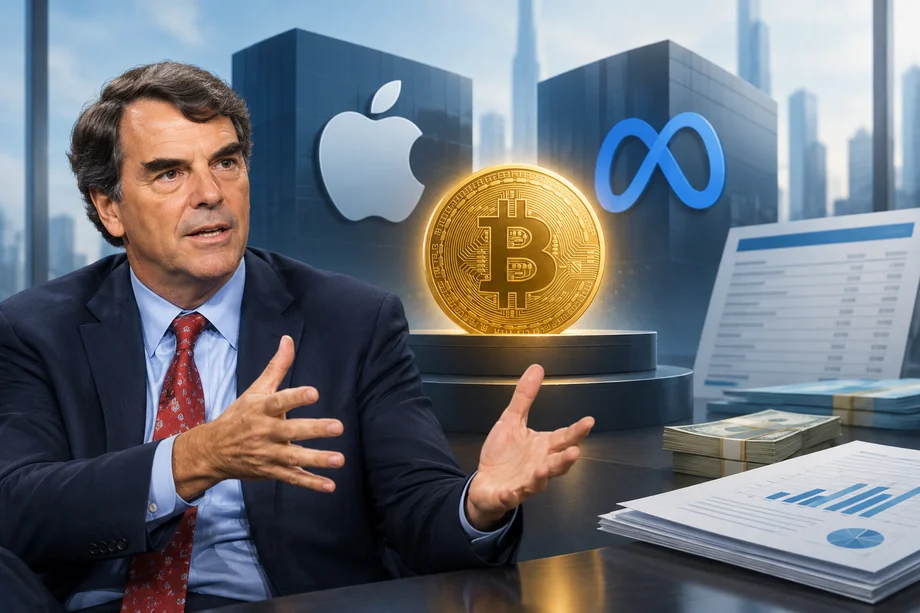
Venture capitalist Tim Draper argued that major technology firms should hold Bitcoin on their balance sheets as a safeguard against monetary risks tied to government spending
Billionaire venture capitalist Tim Draper has described it as irresponsible for large technology companies including Apple and Meta to maintain no Bitcoin exposure in their corporate reserves. The remarks came during a recent interview in which he linked the absence of Bitcoin holdings to potential financial vulnerabilities arising from sustained U.S. fiscal pressures.
Draper, founder of Draper Associates and a long-time Bitcoin proponent, stated that companies of this scale leave themselves exposed by keeping major reserves entirely outside the cryptocurrency. He connected the position to ongoing government spending patterns, warning that the current trajectory could eventually result in either hyperinflation or interest rates elevated enough to strain banks.
Call for Corporate Operating Cash Allocations
In the discussion, Draper recommended that businesses allocate roughly four weeks of operating expenses to Bitcoin. He suggested individuals consider holding the equivalent of about six months of expenses in the asset, while governments maintain some exposure as a hedge against difficulties in traditional monetary systems.
His reasoning goes beyond a standard inflation hedge. Draper indicated that boards without any Bitcoin position could leave firms vulnerable if banks holding their cash encounter failure. In his assessment, Bitcoin functions as an alternative asset positioned outside the conventional banking structure.
He further associated blockchain technology with artificial intelligence, smart contracts and software automation. These developments, he said, could lessen reliance on payment intermediaries, accountants and other centralized service providers. The monetary outlook he described remains uncertain, as no official U.S. projection establishes hyperinflation as inevitable, though Treasury data continue to show large federal deficits.
Recent figures indicated a $167 billion federal deficit in August. Across the first 11 months of fiscal 2026, outlays reached approximately $6.8 trillion against roughly $4.8 trillion in receipts, producing a cumulative deficit near $2 trillion. These numbers document borrowing needs without confirming any specific crisis outcome.
Scale of Cash Holdings at Apple and Meta
Apple’s most recent quarterly filing listed substantial liquid reserves with no disclosed Bitcoin component. As of June 27, the company reported $39.54 billion in cash and cash equivalents, $22.86 billion in current marketable securities and $84.12 billion in non-current marketable securities. Combined, these categories totaled about $146.5 billion.
The portfolio encompassed money-market funds, U.S. Treasury securities, government agency securities, corporate securities and other conventional instruments. No reference to Bitcoin appeared in the filing. Apple’s February 2026 annual shareholder meeting addressed directors, auditor selection, executive compensation, a director stock plan and a proposal related to China, without any Bitcoin treasury item.
Meta presented a comparable picture. As of June 30, it reported $15.46 billion in cash and cash equivalents together with $74.80 billion in marketable securities, for a combined total of approximately $90.3 billion. Disclosed holdings included money-market funds, U.S. government securities, agency debt, corporate debt and marketable equities. The filing contained no mention of Bitcoin.
Earlier Shareholder Proposals Met Rejection
Both Meta and Microsoft have previously faced formal requests to evaluate Bitcoin for their treasuries, and shareholders turned them down.
In 2025, a Meta shareholder proposal sought an assessment of whether adding Bitcoin would serve investor interests. The board recommended a vote against the measure, stating that existing treasury processes already reviewed multiple investable asset classes. At the May 28, 2025 annual meeting, the proposal received 3,916,871 votes in favor against 4,980,828,562 opposed, with 8,857,588 abstentions.
Microsoft encountered a parallel request at its December 2024 annual meeting. After the board advised against it, only 0.55 percent of votes supported the assessment. That equated to 28.23 million shares in favor and more than 5.14 billion against. The company maintained that its treasury team already evaluated a broad range of investment options.
Corporate Bitcoin adoption has proceeded unevenly. Certain listed firms have centered business models on holding the asset, while major technology groups continue to place most liquid reserves in cash, government securities and traditional instruments. Some dedicated treasury companies have adjusted strategies amid price movements and financing considerations.
Continued Price Target and Broader Context
Draper reiterated his longstanding $250,000 Bitcoin price forecast during the interview, connecting it to future halvings and the resulting decline in new supply. The target remains his personal projection without a fixed timeline, and earlier forecasts have sometimes outlasted expected dates.
He offered no indication that Apple or Meta had begun discussions about acquiring Bitcoin or altering treasury policy. The comments constituted an investment perspective delivered in the interview rather than any signal of corporate action. Large technology balance sheets continue to show conventional cash and securities holdings with no disclosed cryptocurrency reserves.

Disclaimer
This article was generated by AI using information from multiple industry sources. It has not been reviewed or verified by a human editor and may contain inaccuracies, omissions, or misinformation. Readers are encouraged to independently verify any information before making decisions based on its content.Tired of the noise?
Let the bots trade for you.
Trade 24/7, without emotion, with data-driven strategies.
Associated articles
Apple CEO Transition Leaves Bitcoin Treasury Question Open as Price Hovers Near $78,000

Strategy Boosts Cash Reserves to $3.225 Billion While Maintaining Massive Bitcoin Holdings

Strategy Hints at Further Bitcoin Accumulation After Reaching Record Orange Chart

BitMine Holds Nearly 5% of Ethereum With $16.2 Billion Treasury

Michael Saylor Urges Corporate Adoption as Key to Bitcoin’s Global Future
Latest articles
BitMine Holds Nearly 5% of Ethereum With $16.2 Billion Treasury

Strategy Expands Bitcoin Treasury to 848,250 Coins With $21.5 Million Purchase

Morgan Stanley Delays Tokenized Stock Trading to First Quarter of 2027

SWI Group Secures €800 Million to Repurpose Genesis Digital Assets for AI Expansion