Newsroom
Tether’s USAT Stablecoin Goes Live on Celo in First Move Beyond Ethereum
30 July, 2026 / News / AI / Tags: celo, usat, tether, usdt, network
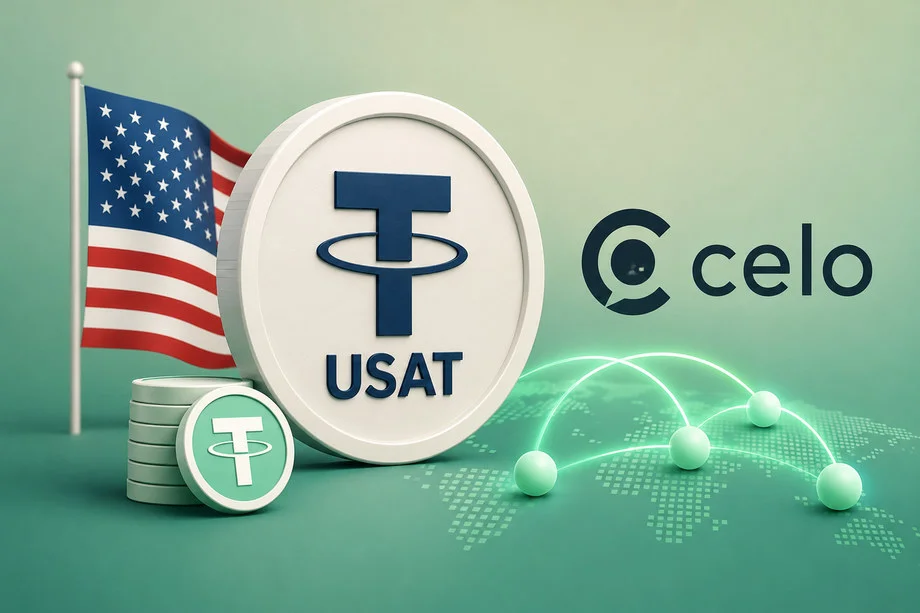
Tether’s GENIUS Act-compliant dollar stablecoin now supports native minting, burning and gas payments on Celo, the network’s second mainnet after Ethereum
Tether has deployed its US-regulated stablecoin USAT on the Celo blockchain, marking the token’s first expansion beyond Ethereum since its January launch. The July 29 rollout gives Celo users immediate access to native minting and burning functions along with the ability to pay network transaction fees directly with the stablecoin itself.
USAT is issued by Anchorage Digital Bank, N.A., a federally chartered institution supervised by the Office of the Comptroller of the Currency, and maintains reserves held by Cantor Fitzgerald. The token was structured to meet requirements under the GENIUS Act, with reserves held in cash or highly liquid cash equivalents such as U.S. Treasury securities to support one-to-one redemptions.
Native Features and Fee Abstraction
Unlike a simple bridged or wrapped version, the Celo deployment includes native issuance capabilities. Users can mint and burn USAT directly on the network, reducing reliance on third-party bridges. Through Celo’s CIP-64 upgrade, approved ERC-20 tokens can serve as gas currencies. This allows holders to cover transaction costs with USAT rather than holding a separate native token.
The arrangement removes a common barrier for payment-focused users who previously needed to acquire an additional asset before transferring value. More than half of all transaction fees on Celo are already settled in stablecoins rather than the network’s native token.
Celo’s Existing Role in Tether’s Ecosystem
Celo has become a major distribution channel for Tether’s flagship USDT stablecoin since the token arrived on the network in 2024. The chain now accounts for 28 percent of all cross-blockchain USDT transfers and ranks as Tether’s largest network by weekly active users for that asset. Tether’s transparency data shows roughly $470 million in authorized USDT on Celo, placing it eighth among supported chains by that measure. Circulating stablecoin supply on the network stands near $136 million, with USDT representing about $78.8 million, or 57.6 percent of the total.
The network also hosts more than 90 percent of unique holders of XAUt0, the omnichain version of Tether Gold. Celo recorded 67 percent user growth in the second quarter of 2026 and processes transactions from hundreds of thousands of users daily. Originally launched as a mobile-optimized Layer 1 in 2020, Celo completed its transition to an Ethereum Layer 2 built on the OP Stack in March 2025 while retaining low fees and mobile-first design.
Wallet Support and Market Position
Valora already supports USAT transactions on Celo. Opera’s MiniPay wallet, which has onboarded more than 18 million users worldwide with Tether’s backing, is expected to add the token in a future update. Additional integrations with platforms such as Morpho, Squid and Uniswap are planned.
USAT has reached a market capitalization of approximately $185 million since its Ethereum debut in January. That figure remains a small fraction of USDT’s roughly $180 billion supply. The two tokens serve distinct purposes: USDT continues as the primary global dollar instrument, while USAT is positioned for regulated U.S. payment and institutional use cases. The companies first disclosed plans for the Celo deployment in March.
The expansion places Tether’s compliant dollar asset on a network already oriented toward everyday stablecoin payments and remittances, giving users a single token for both value transfer and network fees.

Disclaimer
This article was generated by AI using information from multiple industry sources. It has not been reviewed or verified by a human editor and may contain inaccuracies, omissions, or misinformation. Readers are encouraged to independently verify any information before making decisions based on its content.Tired of the noise?
Let the bots trade for you.
Trade 24/7, without emotion, with data-driven strategies.
Associated articles

Anchorage Digital Expands Custody to Etherlink Assets Including Tokenized Uranium
Robinhood Chain Records Strong First Week With Over $70M ETH Bridged

Bitmine Expands Ethereum Treasury to 5.77 Million ETH on Robinhood Chain Momentum

Base Beryl Upgrade Brings B20 Token Standard and Faster Withdrawals on June 25
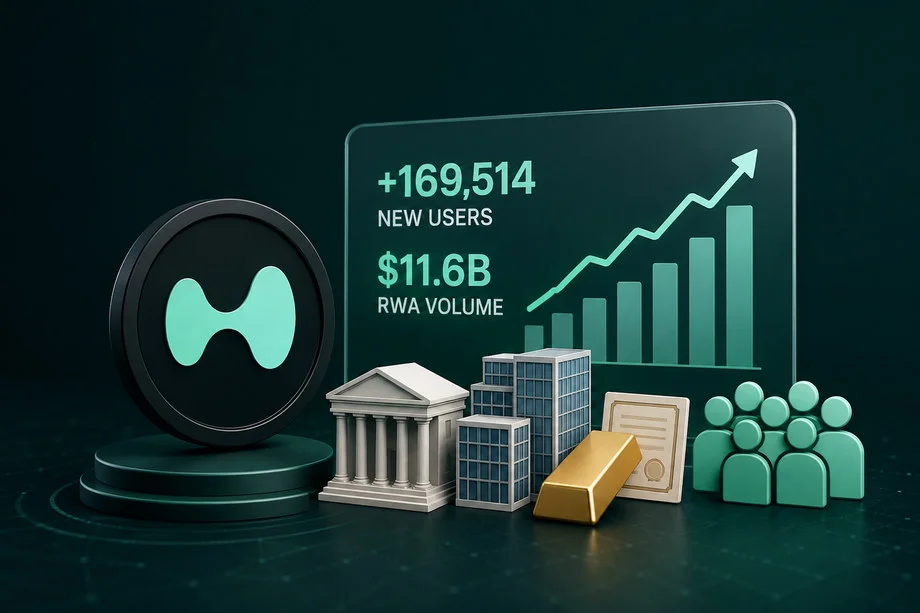
Hyperliquid Draws 169,000 RWA Users in H1 2026 as Trading Hits $111.6 Billion
Latest articles

SpaceX and Tesla Set Up Committees to Explore Merger That Would Combine Holdings of Over 30,000 Bitcoins

UK Banks Face Thousands of Complaints Over Crypto Transfer Restrictions

Ripple Backs SEC Proposed Crypto Asset Rules After $150 Million Legal Battle

Blockchain.com Introduces Options Trading on Seven Major Crypto Assets