Newsroom
Tether Confirms Minimal EQIBank Exposure After $89 Million U.S. Asset Seizure
25 September, 2026 / News / AI / Tags: eqibank, capstone, tether, usdt, forfeiture
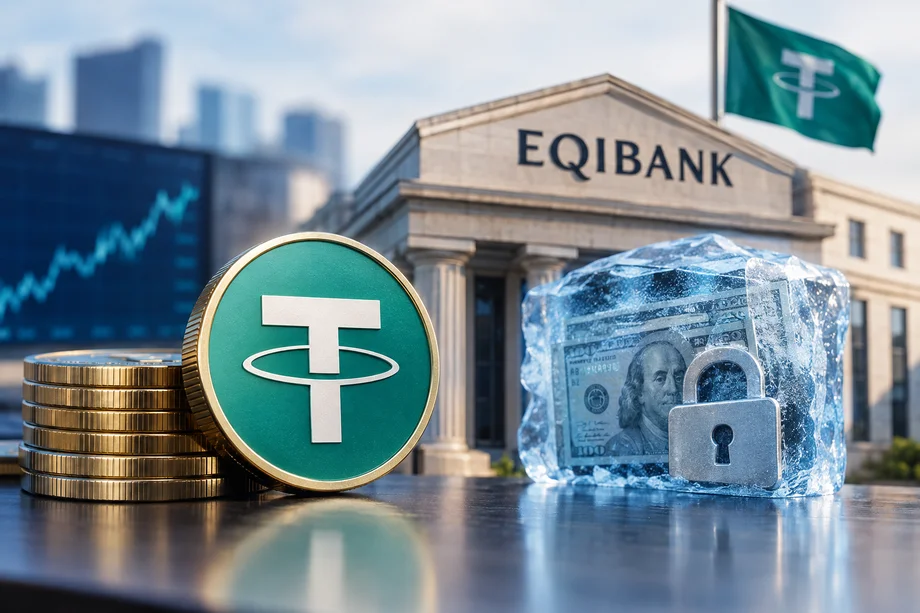
Stablecoin issuer reports holdings at the Dominica-licensed bank amount to under 0.034% of group assets following the freeze tied to its payment processor
Tether, the issuer of the USDT stablecoin, stated that its assets held at EQIBank represent less than 0.034% of the group's total assets. The disclosure came after U.S. authorities seized funds linked to the Dominica-licensed offshore digital bank through its payment processor Capstone Ltd.
Based on Tether's reported $187.75 billion in total assets as of June 30, the percentage ceiling implies a maximum exposure of roughly $64 million. Tether has not disclosed the precise dollar amount of its holdings at the bank.
Details of the U.S. Seizure
EQIBank reported that U.S. authorities seized approximately $89 million connected to Capstone, an amount equal to about 80% of the bank's monetary assets. The bank has warned that the loss of access to these funds could place it at risk of liquidation.
Court documents from the U.S. District Court for the Eastern District of California provide a related figure. A September 14 order lists about $83 million from three Capstone accounts held at Wells Fargo and JPMorgan Chase, plus roughly 1.18 million USDT from two cryptocurrency addresses. At the token's dollar peg, the identified property totals approximately $84.2 million.
EQIBank used Capstone to hold and move customer funds through those U.S. bank accounts. Federal prosecutors filed a civil forfeiture case on July 15, alleging that Capstone falsely represented its business to the banks. The case remains pending.
EQIBank has contested the seizure. The bank previously sought return of the property under Rule 41(g). A federal judge denied that motion after the government filed the separate civil forfeiture complaint. EQIBank maintains it is an innocent owner of the funds and has stated it is not a target of the investigation.
Tether's Relationship and Reserve Position
EQIBank provided banking services to Tether that included processing wire transfers tied to USDT purchases and redemptions. Tether confirmed the limited nature of its exposure in response to reports of the freeze.
Tether's June reserve figures showed liabilities of around $183.64 billion and an excess reserve buffer of $4.11 billion. The company has described its reserves as concentrated in short-duration and liquid assets, including U.S. Treasury-related holdings and repurchase agreements. The EQIBank holdings form one banking counterparty within that broader asset base.
The disclosure does not indicate an immediate threat to USDT's reserves or its dollar peg. Tether completed its first full independent financial statement audit earlier, covering 2025, with KPMG issuing an unqualified opinion. That audit predated the June 2026 figures and does not specify current balances at EQIBank.
Ongoing Legal Proceedings
The forfeiture action and EQIBank's related matter have been assigned to the same judges because they are related, though they have not been consolidated. A September 14 order requires the government to publish notice of the forfeiture for 30 consecutive days. Parties asserting an interest in the property must follow the claim procedures under Supplemental Rule G.
EQIBank continues to pursue recovery of the seized assets through the active litigation in the Eastern District of California. Tether has stated that the limited exposure has no impact on the quality or liquidity of its reserves while any recovery process continues.
Separately, Tether has advanced plans to enable native USDT transfers on the Bitcoin network through integration with the Taproot Assets protocol and collaboration with Lightning Labs. Company chief executive Paolo Ardoino noted the development with the comment that USDT on Bitcoin is coming home.
Disclaimer
This article was generated by AI using information from multiple industry sources. It has not been reviewed or verified by a human editor and may contain inaccuracies, omissions, or misinformation. Readers are encouraged to independently verify any information before making decisions based on its content.Tired of the noise?
Let the bots trade for you.
Trade 24/7, without emotion, with data-driven strategies.
Associated articles

Thai Businessmen Sue Tether Over $42.4 Million USDT Freeze Before Warrant

Conduit Technology Sues Tether Over $2.76 Million USDT Freeze

US Treasury Freezes $131 Million in Iran-Linked Crypto Wallets

U.S. Authorities Seek Forfeiture of $25 Million in Crypto from Romance and Investment Scams

Tether Secures First Full Big Four Audit Showing $6.8 Billion Reserve Surplus
Latest articles

Babylon Labs Advances Proposal for Native Bitcoin Lending on Aave V4

TSMC Posts Record Q3 Profit Surge on AI Chip Demand, Lifts Full-Year Outlook
ASIC Opens Consultation on Capital and Custody Rules for Digital Asset Platforms

GTA 6 Leaker Cyberleek Drops Full Build Plan After Memecoin Collapse, Activates Dead Man’s Switch Threat