Newsroom
Storj Labs Files Chapter 11 to Clear Legacy Debts as Token Drops Sharply
27 July, 2026 / News / AI / Tags: storj, chapter, storage, court, raev
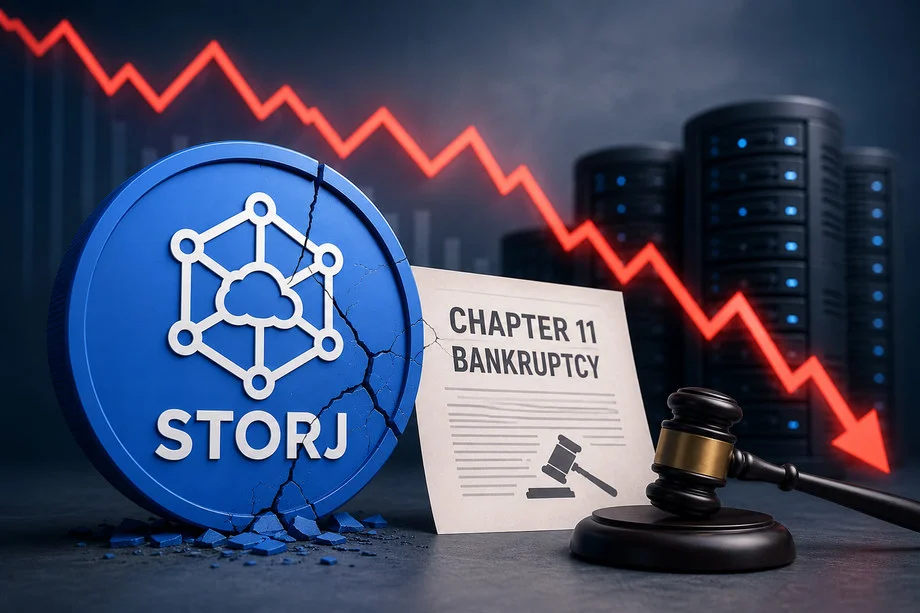
Decentralized storage firm seeks court-supervised restructuring while pledging uninterrupted network operations and exploring equity for token holders
Storj Labs, the company behind the decentralized cloud storage network, voluntarily filed for Chapter 11 bankruptcy protection on July 26 in the U.S. Bankruptcy Court for the Northern District of West Virginia. The case, numbered 5:26-bk-00512, aims to address legacy financial obligations from an earlier phase of the business while preserving day-to-day operations.
The firm stated that its core decentralized storage services and the broader network will continue without interruption, subject to court approval. Parent company Inveniam, which acquired Storj in October 2025, has endorsed the restructuring as a path toward long-term sustainability and a renewed focus on distributed storage, compute, and file-access products.
Restructuring Targets Older Obligations
Company executives framed the filing as a deliberate reorganization rather than a liquidation or operational failure. Storj has been disposing of previous acquisitions and non-essential units to concentrate resources on its primary decentralized cloud storage platform, which compensates independent node operators for contributing unused disk space and bandwidth across more than 100 countries.
Kaloyan Raev, director of software engineering, described the underlying business as fundamentally sound.
Raev also called the Chapter 11 process a decisive and positive step. Storj previously raised approximately $35 million in total funding, including a $30 million STORJ token sale completed in seven days during the 2017 initial coin offering boom, along with earlier equity rounds.
Proposal for Shared Ownership
In communications with its community, Storj outlined plans to develop a framework that could allow management, the decentralized community, STORJ token holders, existing investors, and potential new capital partners to share ownership of the reorganized entity. Token holders typically hold no formal equity claim and receive nothing in standard Chapter 11 proceedings, making the proposal unusual.
Specific details—such as eligibility criteria, any required token snapshot or lockup, allocation percentages, or valuation methods—have not been disclosed. Any such plan must be formalized in a reorganization document, satisfy creditor priorities, and obtain court approval. Holding STORJ tokens currently confers no confirmed right to shares in a post-restructuring company.
Token Price Reaction and Market Context
The STORJ token declined between 16 percent and 20 percent in the hours following the announcement, trading near $0.06 to $0.072 depending on the data source. Trading volume was elevated relative to the token’s roughly $27 million market capitalization. The asset remains down approximately 79 percent over the past year and more than 98 percent from its 2021 peak near $3.80 to $3.91.
Storj emphasized that the token’s utility within the network remains unchanged and that independent storage node operations continue normally. The company has not issued any statement altering token economics as part of the filing.
Part of a Broader Wave of Crypto Restructurings
The Storj case arrives amid a cluster of crypto-related financial actions in July. Movement Labs filed for Chapter 11 protection earlier in the month. Bitcoin mining firm Poolin also entered Chapter 11 proceedings while seeking a court-supervised sale of Texas operations. Separately, BitMEX announced plans to permanently shut down after 11 years, and BitMart disclosed a phased wind-down of its trading platform.
Unlike some peers pursuing asset sales or full closures, Storj is positioning its filing as a court-supervised reorganization designed to right-size the balance sheet while keeping the decentralized network intact. Future court filings are expected to provide greater clarity on total liabilities, the creditor schedule, and the precise terms of any ownership pathway involving token holders.
Disclaimer
This article was generated by AI using information from multiple industry sources. It has not been reviewed or verified by a human editor and may contain inaccuracies, omissions, or misinformation. Readers are encouraged to independently verify any information before making decisions based on its content.Tired of the noise?
Let the bots trade for you.
Trade 24/7, without emotion, with data-driven strategies.
Associated articles

Poolin, Once Bitcoin's Top Mining Pool, Files for Chapter 11 Bankruptcy
Movement Labs Files for Chapter 11 Bankruptcy Amid Lingering MOVE Token Fallout
Upbit and Bithumb to Delist STORJ, JASMY and TT on September 14

Character.ai Files for Chapter 11 Bankruptcy as Disney Bids $20 Million for Selected Assets
Kinetics Fund Discloses Stake in Private Ripple Labs Shares via SEC Filing
Latest articles

SpaceX and Tesla Set Up Committees to Explore Merger That Would Combine Holdings of Over 30,000 Bitcoins
UK Banks Face Thousands of Complaints Over Crypto Transfer Restrictions
Ripple Backs SEC Proposed Crypto Asset Rules After $150 Million Legal Battle
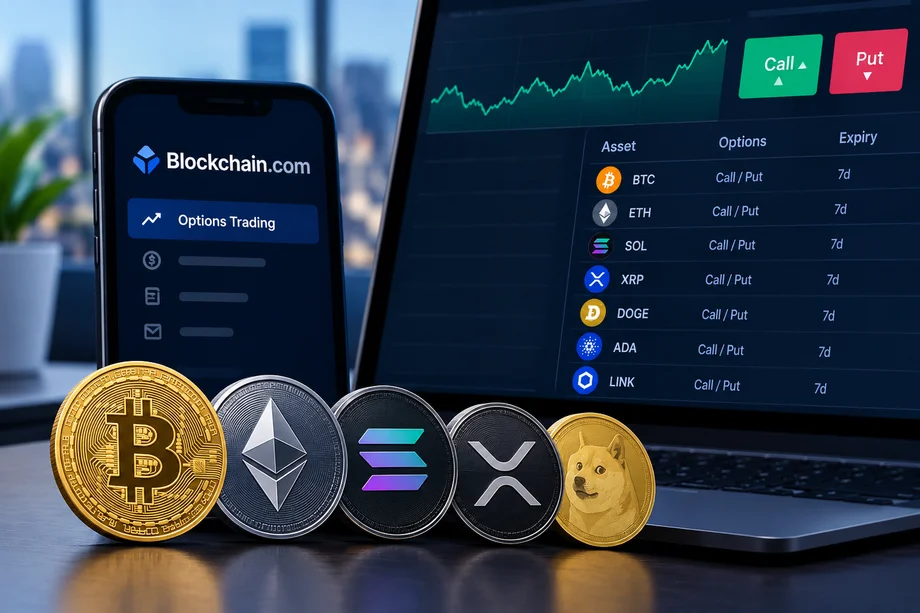
Blockchain.com Introduces Options Trading on Seven Major Crypto Assets