Newsroom
South Korea Officials to Consult Crypto Exchanges Amid Push to Delay 22% Tax
19 October, 2026 / News / AI / Tags: tax, income, january, taxation, postponements

Senior finance officials will meet five major platforms on October 20 as industry groups and lawmakers seek to postpone the January 2027 crypto income tax
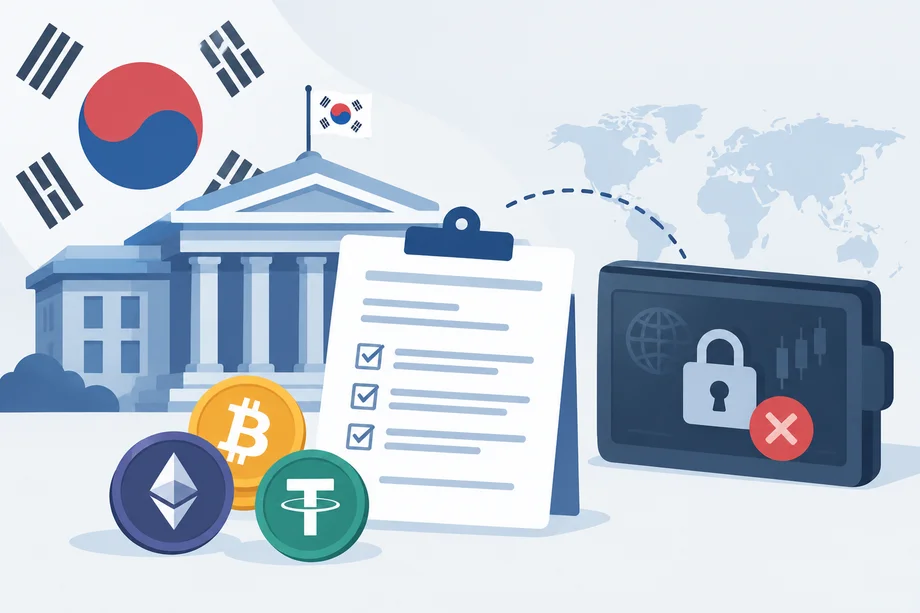
South Korean government officials are scheduled to hold consultations with representatives of the country’s five largest cryptocurrency exchanges on October 20, as pressure mounts for another delay to the planned 22 percent tax on digital asset income. The meeting comes just days after a ruling-party lawmaker introduced legislation that could shift the start date to 2029 by linking it to international data-sharing rules.
According to reports, the session will include executives from Upbit, Bithumb, Coinone, DigitalX and Gopax, along with officials from the Digital Asset Exchange Alliance. Attending on the government side are Kwon Dae-young, first vice minister of the Ministry of Economy and Finance, and Yoo Young-jun, director general for digital financial policy at the Financial Services Commission.
Industry Concerns Over Unresolved Rules
Exchange operators have voiced practical difficulties in preparing for the tax, which is currently set to take effect on January 1, 2027. An industry official stated that standards for various transaction types have not been finalized and that time is running short to complete the required infrastructure. The official added that there is a shared view within the sector in favor of postponing the start of taxation.
Specific activities that remain unclear include the tax treatment of staking rewards, airdrops, hard forks and decentralized finance transactions. Platforms have also raised questions about handling assets held in private wallets or traded on overseas venues, where complete transaction histories may be unavailable. Additional points of concern involve the absence of loss carryforward provisions and consistency in calculating acquisition costs across multiple services.
The current framework applies a combined 22 percent rate—20 percent national income tax plus local income tax—to qualifying annual income from cryptocurrency transfers and lending that exceeds a basic deduction of 2.5 million won, equivalent to approximately 1,800 US dollars. The tax targets income rather than the total value of holdings or gross transaction volumes.
Legislative Proposal Ties Timing to Global Data Exchange
On October 16, Democratic Party lawmaker Park Min-gyu introduced an amendment to the Income Tax Act, backed by 14 sponsoring lawmakers. The bill would replace the fixed January 2027 start date with a formula tied to the Organisation for Economic Co-operation and Development’s Crypto-Asset Reporting Framework. Taxation would begin on January 1 of the second year after the first exchange of cryptocurrency transaction information under that framework.
If the initial data exchange occurs in 2027 as expected, the tax would take effect on January 1, 2029. Supporters of the measure argue that implementing the tax before international reporting systems are fully operational could create unequal treatment between users of domestic and foreign platforms, since authorities face greater challenges obtaining comparable data from overseas exchanges.
The bill remains at the introduction stage and has not received parliamentary approval. The existing legal schedule therefore continues to stand.
History of Postponements and Ongoing Preparations
South Korea first legislated the cryptocurrency income tax through amendments to the Income Tax Act in 2020. Implementation has already been delayed three times, with the most recent shift setting the start for January 2027. The repeated postponements have reflected both political debate and industry arguments about readiness of tax infrastructure and investor protections.
Despite the latest calls for further delay, the National Tax Service is proceeding with preparations under the current timeline. Tax commissioner Lim Gwang-hyeon told a parliamentary hearing that the agency expects to issue detailed guidance around November. Lawmakers have instructed officials to continue administrative work unless the National Assembly formally changes the effective date.
Income earned during 2027 would generally be reported in the following year’s annual tax filings. Finance Minister Lee Hyoung-il previously indicated that the government would collect views from affected parties before proceeding, a process now taking concrete form in the October 20 consultation.
The outcome of the meeting and the progress of the legislative proposal will determine whether the January 2027 schedule holds or whether another postponement becomes necessary before year-end.
Disclaimer
This article was generated by AI using information from multiple industry sources. It has not been reviewed or verified by a human editor and may contain inaccuracies, omissions, or misinformation. Readers are encouraged to independently verify any information before making decisions based on its content.Tired of the noise?
Let the bots trade for you.
Trade 24/7, without emotion, with data-driven strategies.
Associated articles

South Korea Crypto Tax Petition Reaches 50,000 Signatures Ahead of 2027 Start
South Korea Requires Reporting of Crypto Accounts on Bankrupt Overseas Exchanges

France Finance Committee Approves Tax on Crypto-to-Stablecoin Swaps From 2027

South Korea Approves $14 Billion Sovereign Account for AI and Strategic Industries

Bithumb CEO Named Bribery Suspect in Lawmaker Hiring Scandal
Latest articles

MARA Holdings Moves 1,000 Bitcoin to Exchanges Amid Questions Over Potential Sale

JPMorgan Extends JPM Coin Deposit Token to Ethereum for Institutional Clients

Bitcoin Stays Above $80,000 as Saylor Signals Further Purchases by Strategy

World Unveils Banking Identity Suite to Combat AI Fraud and Deepfakes