Newsroom
South Korea Considers Fourth Delay of Crypto Gains Tax to 2029
26 October, 2026 / News / AI / Tags: tax, january, delay, virtual, start

Presidential office reviews postponing the 22% levy amid gaps in tracking overseas trades and U.S. data-sharing timelines under the OECD framework
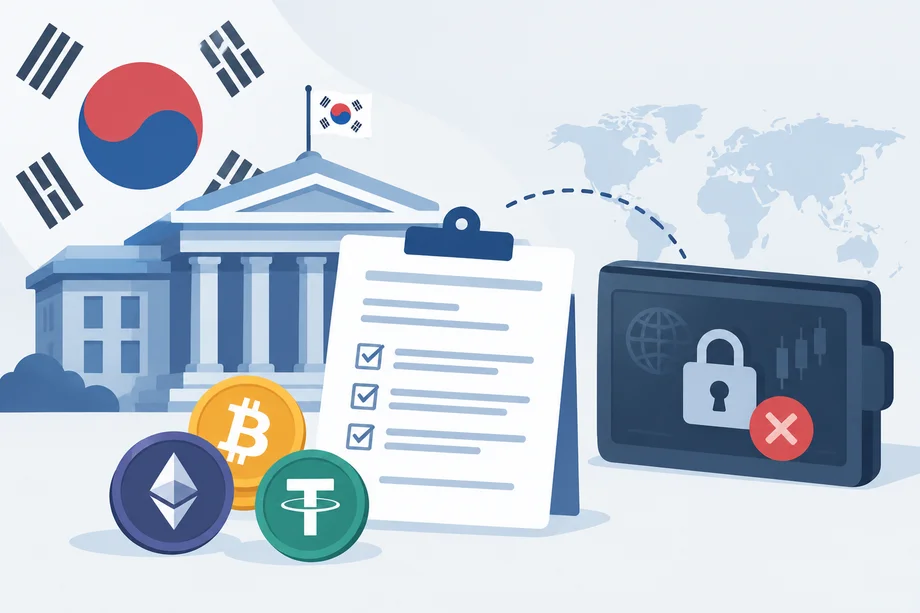
South Korean authorities are weighing a further postponement of the country's tax on cryptocurrency gains, currently set to begin on January 1, 2027. Officials indicate the start could shift to 2029, marking the fourth delay since the measure was enacted in 2020.
The presidential office has confirmed discussions with government agencies about the potential change. An official stated that the office is examining postponement of virtual asset taxation. No final decision has been reached, and any alteration would require parliamentary approval through amendments to the Income Tax Act.
Tax Structure and Repeated Delays
The proposed levy applies a combined 22% rate—20% national income tax plus 2% local tax—to annual profits from the transfer or lending of virtual assets that exceed 2.5 million won, equivalent to roughly $1,880. Losses cannot be carried forward under the current design.
Lawmakers first approved the framework through a 2020 amendment to the Income Tax Act, with an initial target start in January 2022. Implementation was later moved to 2023, then 2025, and most recently to January 1, 2027. The National Tax Service continues to list the 2027 date as the official effective point.
Enforcement Challenges Tied to International Data Sharing
The primary concern centers on the ability to monitor transactions conducted through foreign platforms, particularly those based in the United States. Without comprehensive cross-border information, tax authorities would need to pursue individual overseas records, creating an uneven burden that falls more heavily on users of domestic exchanges.
This issue connects directly to the Organisation for Economic Co-operation and Development’s Crypto-Asset Reporting Framework, or CARF. The system enables automatic exchange of crypto transaction data among participating jurisdictions. South Korea is scheduled to begin exchanges in 2027 as part of an initial group of countries. The United States, which accounts for nearly half of the global virtual asset market according to officials, is not expected to join until 2029.
Earlier this month, Democratic Party lawmaker Park Min-kyu and 13 colleagues introduced a bill that would set the tax start date as January 1 of the second year after the first international CARF data exchange. Under the expected timeline, that would place implementation in 2029. Separate proposals from People Power Party lawmakers have suggested delays to 2029 or 2030, or even removal of the crypto tax provisions.
Industry, Public and Political Pressure
Industry groups and some lawmakers argue that South Korea lacks the full regulatory infrastructure needed for fair enforcement. The Virtual Asset User Protection Act took effect in 2024, yet broader digital asset legislation remains incomplete. Representatives from major domestic exchanges and the Digital Asset Exchange Alliance have met with finance ministry officials to discuss readiness.
Public petitions calling for either repeal or a two-year delay each surpassed 50,000 signatures, triggering formal legislative review. Surveys cited in local reporting have shown substantial investor opposition to the current schedule. Finance Minister Lee Hyeong-il and Financial Services Commission Chairman Lee Eog-weon have indicated the government will gather input from the National Assembly and industry before settling on a position.
A final decision is anticipated during inter-agency consultations and National Assembly tax revision discussions expected between late November and early December. Until any legislative change is enacted, the January 1, 2027 start date remains in force.
| Timeline Event | Date |
|---|---|
| Original planned start | January 2022 |
| First delay | 2023 |
| Second delay | 2025 |
| Current scheduled start | January 1, 2027 |
| Potential fourth delay | 2029 |
The discussions reflect ongoing efforts to balance tax collection with practical enforcement capacity and competitive fairness for domestic platforms. Any shift would depend on parliamentary action and further coordination among government agencies.
Disclaimer
This article was generated by AI using information from multiple industry sources. It has not been reviewed or verified by a human editor and may contain inaccuracies, omissions, or misinformation. Readers are encouraged to independently verify any information before making decisions based on its content.Tired of the noise?
Let the bots trade for you.
Trade 24/7, without emotion, with data-driven strategies.
Associated articles

South Korea Officials to Consult Crypto Exchanges Amid Push to Delay 22% Tax

South Korea Advances Crypto Framework as Tax Deadline Draws Near

South Korea Crypto Tax Petition Reaches 50,000 Signatures Ahead of 2027 Start
South Korea Requires Reporting of Crypto Accounts on Bankrupt Overseas Exchanges

South Korea Lawmakers Advance Bill Expanding FIU Powers Against Unregistered Crypto Operators
Latest articles

Zcash Co-Founder Proposes Redirecting 8% of Block Subsidies to Network Reserve

Bitcoin Monte Carlo Simulations Point to Median Value of $1.03 Million in 2033

S&P Global Completes Acquisition of OpenZeppelin Smart Contract Security Firm

Franklin Templeton Files Two ETFs to Convert US Stock Dividends into Bitcoin