Newsroom
Solana and Arbitrum Founders Clash Over Robinhood Chain Fee Structure
6 September, 2026 / News / AI / Tags: robinhood, arbitrum, fees, yakovenko, goldfeder
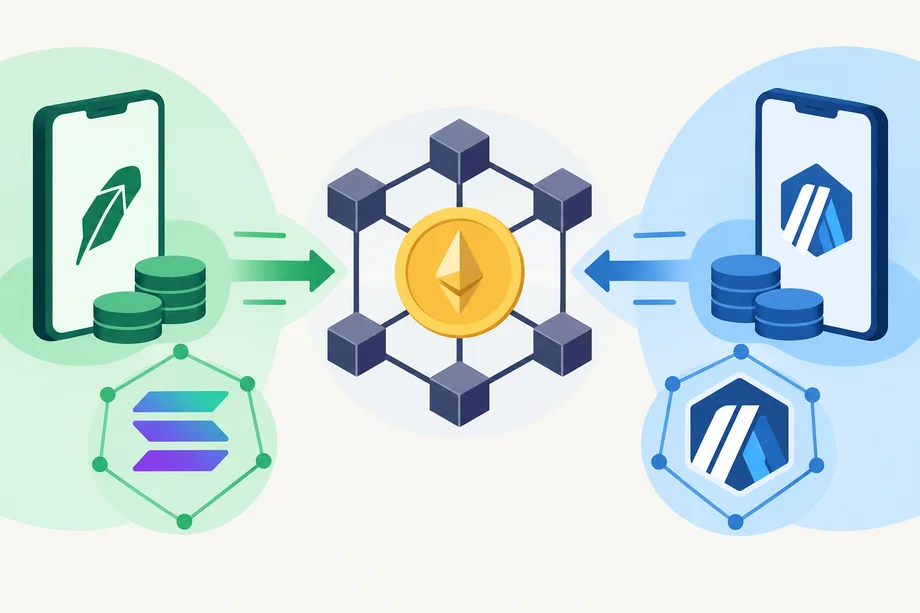
Anatoly Yakovenko calls average $0.40 fees “brain dead,” arguing Robinhood could offer gasless transactions on Solana using its Arbitrum revenue share, while Arbitrum’s Steven Goldfeder defends the model as allowing the firm to act as a landlord
Solana co-founder Anatoly Yakovenko has publicly criticized the fee structure of Robinhood Chain, describing profits derived from network congestion as “brain dead.” The remarks come as the chain, launched on July 1, 2026, has seen average transaction fees climb to roughly $0.40 amid rising usage.
Robinhood Chain operates on Arbitrum technology, settles transactions to Ethereum, and uses ETH for gas. In one recent period it generated $4.22 million in fees across about 10.4 million transactions. A later daily figure reached $6.04 million in fees, with the network retaining approximately $5.44 million after expenses and revenue sharing. Median fees have ranked it highest among 27 tracked chains at $0.24.
Yakovenko’s Critique of the Fee Model
Yakovenko argued that a front-end application such as Robinhood’s should monetize users through transparent charges inside its own product rather than capturing value from rising base-layer costs when the network becomes congested. He pointed to Solana’s base fee of 5,000 lamports per signature, which at current Solana prices near $100–$105 remains well under one cent.
In a separate post he stated that front ends typically charge 50 to 80 basis points and that making money from global congestion is misguided. The 10 percent of net revenue that Robinhood Chain pays to the Arbitrum ecosystem—8 percent to the Arbitrum DAO treasury and 2 percent to the Developer Guild—would, in his view, more than cover equivalent Solana transaction costs and enable a fully subsidized experience for users.
The chain has also experienced brief interruptions in block production, during which users continued to face the elevated fees.
Goldfeder Defends the Landlord Model
Offchain Labs co-founder Steven Goldfeder responded that Robinhood deliberately chose Arbitrum so it could retain roughly 90 percent of net protocol revenue. Under the Arbitrum Expansion Program the firm keeps the large majority of fees after covering Ethereum data-availability costs and other expenses.
Goldfeder noted that deploying solely as an application on Solana would leave Robinhood paying network fees without receiving any of the underlying chain revenue. Activity from third-party tools, trading bots, decentralized exchanges and token launchpads would generate fees that flow to Solana validators instead. On Robinhood Chain the company operates the sequencer and therefore captures fees from the broader network, including traffic that never passes through Robinhood’s own interface.
Recent volume has been driven in significant part by memecoin trading and platforms such as GMGN, Pons and Uniswap. Daily decentralized exchange volume has reached approximately $1.71 billion, with total value locked near $1.17 billion.
Revenue Sharing and Subsidy Details
Net revenue is calculated after Ethereum data costs and infrastructure expenses. The arrangement has contributed to a recovery in the ARB token, which rose about 90 percent from its record low. Over a recent seven-day stretch the chain generated $20.33 million in revenue; annualizing that rate would imply more than $1 billion, though such figures remain projections based on elevated activity.
Robinhood launched the chain with a 90-day gas subsidy for transactions made through its own wallet. That promotion is scheduled to end around September 29. After the subsidy expires, the share of activity that continues when users pay their own fees will provide clearer data on sustainable demand.
The exchange between the two founders centers on a fundamental difference in approach: whether a brokerage should monetize primarily at the application layer on an existing high-throughput network or operate its own chain to capture a larger portion of network-wide fees while still relying on Ethereum settlement and an Arbitrum licensing arrangement.


Disclaimer
This article was generated by AI using information from multiple industry sources. It has not been reviewed or verified by a human editor and may contain inaccuracies, omissions, or misinformation. Readers are encouraged to independently verify any information before making decisions based on its content.Tired of the noise?
Let the bots trade for you.
Trade 24/7, without emotion, with data-driven strategies.
Associated articles

Robinhood Chain Posts $4.5 Million in Daily Fees While Paying Ethereum $398
Arbitrum Builds Strength Through Robinhood Chain Partnership and Fee Model Changes
Robinhood Chain Surges Past Base With Record Daily Transactions
Bitmine Expands Ethereum Treasury to 5.77 Million ETH on Robinhood Chain Momentum
Robinhood Chain Posts $2.66 Million in Daily App Revenue, Surpassing Ethereum and Hyperliquid
Latest articles
Revolut Services Disrupted by Google Cloud Power Event in London
Mt. Gox Trustee Extends Creditor Repayment Deadline to October 2027

JPMorgan Forecasts 10% Annual Bitcoin Returns, Surpassing Stocks and Gold Over Next Decade

Bitget Plans Acquisition of Licensed Thai Crypto Exchange to Enter Local Market