Newsroom
SoFi Introduces Tokenized Bank Deposit Paying 4.40% APY With FDIC Coverage
22 October, 2026 / News / AI / Tags: sofi, sofie, sofiusd, deposit, bank
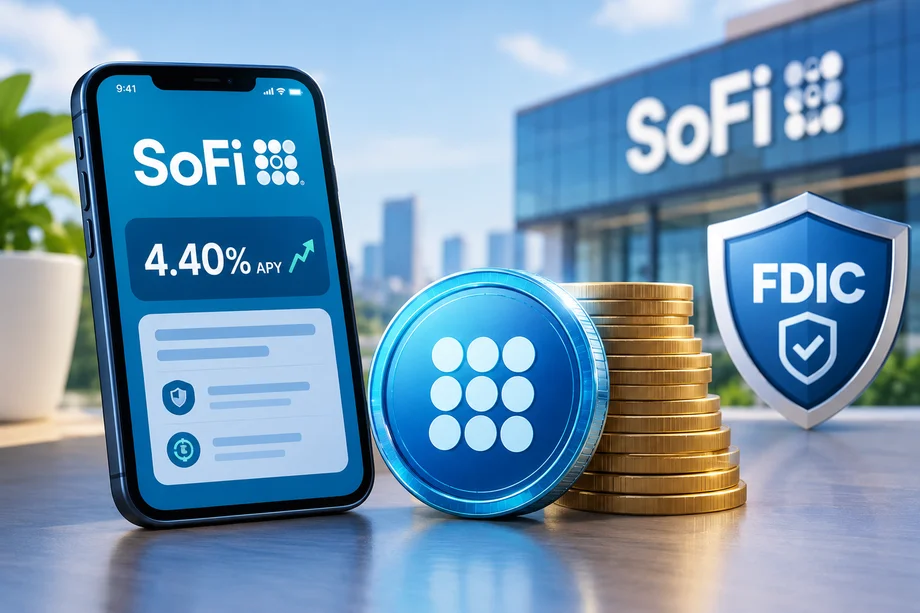
Nationally chartered bank launches SOFIE, allowing customers to earn interest on digital dollars before converting them for crypto trades or blockchain transfers
SoFi Technologies has released SoFi Earn, a tokenized consumer deposit product known as SOFIE that delivers a 4.40% annual percentage yield while carrying Federal Deposit Insurance Corporation protection. The offering, announced on October 22, 2026, is presented by the company as the first tokenized deposit issued by a nationally chartered U.S. bank for retail customers.
Each SOFIE unit represents one dollar held on deposit at SoFi Bank, N.A. Balances earn the stated variable rate and remain eligible for FDIC insurance subject to standard limits, generally $250,000 per depositor, per insured institution, and per ownership category. The rate can change at any time, with no minimum balance required, though fees may affect net returns. Interest accrues daily and is credited monthly.
How the Product Functions
Customers access SOFIE through their existing SoFi Crypto accounts. Funds stay within the bank’s deposit structure until the holder elects to convert them. Conversion occurs at a one-to-one ratio into SoFiUSD, the bank’s separate dollar-denominated stablecoin. Once converted, SoFiUSD can be used inside the SoFi app to purchase more than 40 supported cryptocurrencies or transferred around the clock to compatible external wallets over blockchain networks.
SOFIE itself does not circulate freely on public blockchains. It remains a bank liability. SoFiUSD, by contrast, functions as a payment instrument and does not carry FDIC insurance. The company stresses that once funds leave the SOFIE deposit form, they lose deposit-insurance status and become subject to the risks associated with digital assets.
SoFi cited Federal Reserve research estimating that approximately $64 billion, or 21.2% of the stablecoin market, resides in inactive, forgotten or rarely used wallets. The new product is positioned as a way for customers to keep funds productive until they are ready to deploy them for trading or transfers.
In an illustrative example provided by the firm, a $5,000 balance held in SOFIE at the 4.40% rate would generate roughly $220 over twelve months if the balance and rate remained constant.
Part of a Broader Digital Asset Expansion
SoFi Earn marks the company’s fifth cryptocurrency-related product introduction in less than a year. In November 2025 the bank resumed consumer crypto trading, becoming the first nationally chartered U.S. bank to offer the service directly to retail customers. SoFiUSD followed in December 2025 as the first stablecoin issued by a U.S. national bank and is now used to settle the firm’s entire card program across Mastercard’s global network, supporting a card portfolio expected to exceed $25 billion in annualized volume.
Earlier in 2026 SoFi launched Big Business Banking, enabling corporate clients to manage traditional deposits alongside stablecoins and other digital assets on a single regulated platform. The firm has also established a partnership with Kraken that includes distribution of SoFiUSD and access to institutional trading services.
Availability of SOFIE is expanding gradually to eligible SoFi Crypto members through November 2026. The product sits alongside the bank’s existing checking, savings, lending and investing services within the same mobile application, giving customers a single interface for both conventional banking and digital-asset activity.
SoFi reports more than 15.8 million members across its platform and states that its technology solutions serve more than 134 million global accounts. The launch occurs as other financial institutions continue to explore tokenized deposit structures and as U.S. regulators refine frameworks for payment stablecoins under recently finalized rules.
Disclaimer
This article was generated by AI using information from multiple industry sources. It has not been reviewed or verified by a human editor and may contain inaccuracies, omissions, or misinformation. Readers are encouraged to independently verify any information before making decisions based on its content.Tired of the noise?
Let the bots trade for you.
Trade 24/7, without emotion, with data-driven strategies.
Associated articles

SoFi Launches Bank-Issued Stablecoin for Nearly 15 Million Members
Revolut Secures Conditional OCC Approval for U.S. National Bank Charter
SoFi and Kraken Parent Link Banking Rails With Crypto Trading Infrastructure
Nu Expands to U.S. Market with Banking Suite and Stablecoin Global Account
SoFi Bank Activates SoFiUSD Stablecoin Settlement for $25 Billion Mastercard Card Program
Latest articles
CoinDCX Confirms Losses After Suspicious $16M Transfers From 2025 Hack Wallets

Robinhood Secures Dubai License for Crypto and Stock Trading, Middle East Launch Delayed to 2027

CZ Warns Crypto Users Over Two Critical PHP Vulnerabilities

Bybit Fintech FZE Receives VARA Licence for Dubai Spot Trading