Newsroom
Revolut Secures Conditional OCC Approval for U.S. National Bank Charter
4 September, 2026 / News / AI / Tags: revolut, bank, banking, conditional, charter
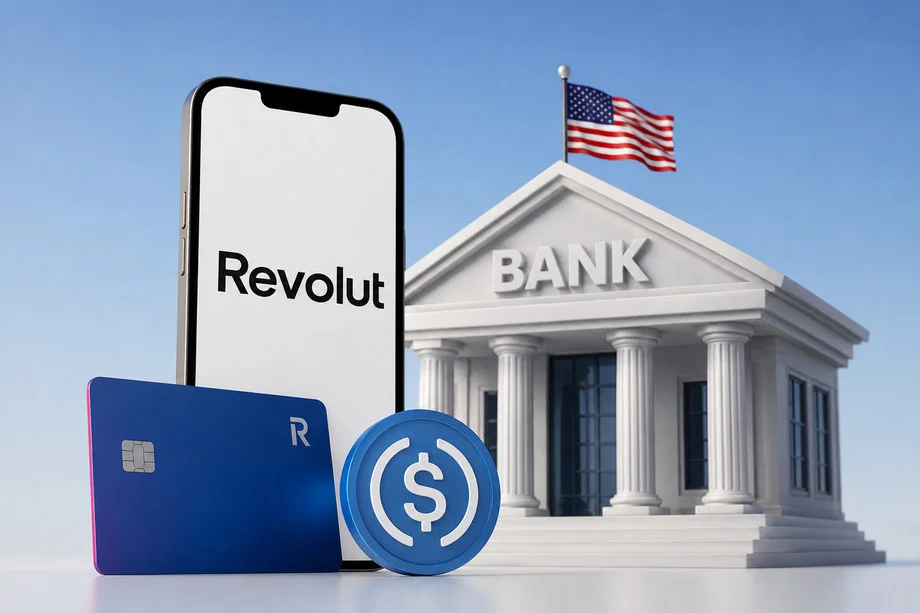
The fintech gains preliminary clearance to form Revolut Bank US, targeting a 2027 launch pending further federal approvals and planning deposits, credit, and stablecoin services
Revolut has obtained conditional approval from the Office of the Comptroller of the Currency to establish a national bank in the United States. The decision advances the London-based company's long-standing effort to operate under its own U.S. banking charter rather than through partner institutions.
The approval remains subject to additional conditions. Revolut must still secure deposit insurance from the Federal Deposit Insurance Corporation, gain clearance from the Federal Reserve, and receive final authorization from the OCC before the bank can open.
Timeline and Operational Plans
Revolut aims to launch the proposed bank, to be known as Revolut Bank US, National Association, in the first half of 2027. The entity is planned for Stamford, Connecticut, with an initial capital contribution of approximately $95 million and an expected workforce of about 160 employees.
Once fully authorized, the bank intends to provide checking accounts, credit cards, installment loans, and foreign exchange services. Multicurrency deposits, investment accounts, stock trading, and crypto trading form part of broader product ambitions. Business banking could follow the consumer launch, though mortgages are not included in the initial three-year plan.
A stablecoin is also listed among the intended offerings. Any such product would need to comply with the GENIUS Act and related OCC rules governing permitted issuers, reserves, redemptions, and supervision. Revolut has not released details on the stablecoin's currency, network, or launch timing.
Revolut currently serves U.S. customers through Lead Bank, an FDIC member. A national charter would allow the company to offer covered banking products directly under its own name.
Statements from Leadership
Revolut U.S. CEO Cetin Duransoy noted the company's appreciation for the OCC's process and stated that the conditional approval keeps the firm on track for a 2027 opening of the proposed national bank.
The company serves more than 80 million customers worldwide and has set a goal of reaching 100 million by mid-2027. The U.S. bank is positioned as a central element of that growth strategy.
Broader Regulatory Expansion
The U.S. step forms part of a wider campaign to secure banking status across multiple markets. Revolut launched banking operations in Mexico and has advanced regulatory processes in Brazil, Colombia, Peru, and Argentina. In 2026 it obtained banking licenses in France, Australia, and the United Kingdom, along with a payments license in the United Arab Emirates. Applications continue in South Africa and other jurisdictions.
In Europe the company already distributes EURR, a euro-backed stablecoin issued through a Luxembourg partner and available to selected customers in certain markets. Separate crypto authorizations are held under European frameworks and in Dubai, subject to final approvals.
Revolut has indicated it will rely on existing ATM networks rather than build physical branches for U.S. customers. The remaining regulatory steps will determine whether the 2027 target can be met and how quickly the full range of planned services becomes available.
Disclaimer
This article was generated by AI using information from multiple industry sources. It has not been reviewed or verified by a human editor and may contain inaccuracies, omissions, or misinformation. Readers are encouraged to independently verify any information before making decisions based on its content.Tired of the noise?
Let the bots trade for you.
Trade 24/7, without emotion, with data-driven strategies.
Associated articles

Nu Expands to U.S. Market with Banking Suite and Stablecoin Global Account

Sony Bank Gains Conditional OCC Approval for US Stablecoin Trust Bank
Rain Files for National Trust Bank Charter as Community Banks Challenge OCC Crypto Rules

Bastion Gains Conditional OCC Nod for National Trust Bank Charter

Block Seeks OCC Approval for National Trust Bank to Custody Bitcoin and Stablecoins
Latest articles

SkyAI Exits Solana Holdings Completely, Launches $201 Million Share Buyback

Strategy Buys 267 Bitcoin and Raises Preferred Share Buyback Cap to $3 Billion

Dormant 2013 Bitcoin Wallets Shift Over $67 Million After More Than a Decade

Binance Rolls Out AI Pro Tool for Chat-Based Automated Trading Strategies