Newsroom
SK Hynix Delivers Record Quarter on AI Memory Surge, Plans $75 Billion Shareholder Returns
29 October, 2026 / News / AI / Tags: won, hbm, trillion, memory, demand
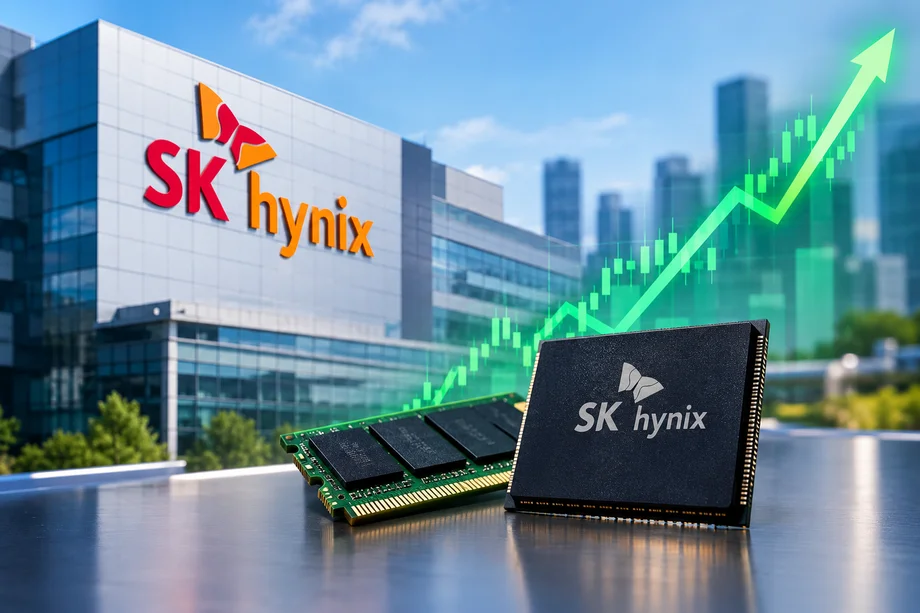
South Korean chipmaker posts first quarterly sales above 100 trillion won as HBM demand drives profits and long-term supply constraints
SK Hynix reported its strongest quarterly results on record, with third-quarter revenue and operating profit far exceeding analyst forecasts amid surging demand for high-bandwidth memory used in artificial intelligence systems. The company also outlined plans to return approximately 100 trillion won, or about $75 billion, to shareholders in 2026 and projected that memory supply shortages would persist through 2030.
Shares of the memory chipmaker rose sharply following the release, climbing about 10 percent in Seoul trading and advancing further in U.S. premarket activity. American depositary shares, which trade under the ticker SKHY and represent one-tenth of a common share, moved higher as investors responded to both the earnings beat and the expanded capital-return program.
Record Revenue and Profit Figures
Revenue reached 104.62 trillion won, or roughly $78 billion, marking a 328 percent increase from the prior year and a 32 percent rise from the second quarter. It was the first time quarterly sales surpassed the 100 trillion won threshold. Operating profit climbed 632 percent year over year to 83.33 trillion won, or about $62 billion, producing an operating margin near 80 percent. Both metrics exceeded consensus estimates, which had centered around 98 trillion won in revenue and 76.7 trillion to 77.5 trillion won in operating profit.
Net income rose 216 percent from a year earlier but declined sequentially, weighed down by non-operating expenses that included currency-related losses and valuation adjustments on investments. Average selling prices for DRAM advanced in the high-20 percent range from the second quarter, while NAND prices increased in the mid-20 percent range. Server DDR5 shipments grew more than 40 percent sequentially, and sales of higher-value products contributed meaningfully to the results.
Management attributed the performance to robust demand from AI data centers for high-bandwidth memory, or HBM, alongside server DRAM and enterprise solid-state drives. The company expects HBM4 shipments and revenue to surpass those of HBM3E in the fourth quarter.
Supply Constraints and Long-Term Commitments
SK Hynix stated that memory demand is expected to outstrip supply through 2030, citing the technical complexity of advanced manufacturing processes and the multi-year timelines required to construct new production facilities. The company indicated that its HBM and DRAM volumes through 2029 are effectively sold out. Customer demand for HBM currently exceeds available supply by more than double.
Long-term supply agreements have been signed with 14 major customers, including leading cloud providers. These contracts cover more than half of the firm’s total production capacity for 2027 and 2028, typically span five years, allow prices to adjust within agreed ranges, and include deposit provisions. The company plans a significant increase in capital investment in 2027 as the first phase of its Yongin manufacturing complex begins full-scale operations.
Chief Financial Officer Kim Woo-hyun noted that while some customers are scrutinizing project feasibility more carefully, overall spending on AI infrastructure is expected to continue. Demand from personal computer and smartphone makers is anticipated to soften under higher memory prices and tight supply, but growth in AI-related infrastructure is projected to offset that weakness.
Expanded Shareholder Return Program
The company announced plans to distribute approximately 100 trillion won, or $75 billion, to shareholders during 2026. The package includes cash dividends of at least 30 trillion won and share repurchases and cancellations totaling more than 60 trillion won. This incorporates a previously announced 40 trillion won buyback program that was completed in October.
The board approved a third-quarter dividend of 20,000 won per share and an additional 20 trillion won repurchase program, half of which is designated for share cancellation. A special dividend component stems from gains realized on the company’s investment in Japanese memory maker Kioxia. Management intends to raise the return target to more than 50 percent of cumulative free cash flow generated between 2025 and 2027.
Separately, the company halted its review of a potential initial public offering and pre-IPO fundraising for its U.S. subsidiary Solidigm, citing financial market volatility and a correction in chip stocks. Kwak stated that an IPO would not fully deliver the anticipated benefits under current conditions.
Analyst Reactions and Market Response
Several research firms updated their views after the results. Wedbush raised its price target to 3 million won from 2.56 million won, citing stronger-than-expected memory prices, higher shipment volumes, and increased shareholder returns. Citigroup lifted its fourth-quarter operating profit forecast to 107 trillion won from 89.8 trillion won and raised full-year estimates for both 2026 and 2027 while maintaining a 3 million won target. Wolfe Research reiterated an Outperform rating with a $250 target on the ADRs, pointing to HBM demand and potential free cash flow that could support substantial share repurchases.
JPMorgan described the results as a clear beat that demonstrates management’s confidence in a prolonged memory upcycle. Other analysts noted that the stock remains attractively valued relative to projected earnings despite its year-to-date gains.
Shares advanced roughly 12 percent at one point during Wednesday trading, bringing the company’s market value near $1.2 trillion. The move followed a period of volatility in which the stock had pulled back from earlier highs earlier in the year.
Competition in the HBM segment continues to develop, with reports that China’s CXMT plans to begin producing HBM3E chips in the coming months. Management expressed confidence that broadening AI adoption beyond a handful of large technology firms—into non-tech enterprises, sovereign projects, and on-premises deployments—would support sustained demand.

Disclaimer
This article was generated by AI using information from multiple industry sources. It has not been reviewed or verified by a human editor and may contain inaccuracies, omissions, or misinformation. Readers are encouraged to independently verify any information before making decisions based on its content.Tired of the noise?
Let the bots trade for you.
Trade 24/7, without emotion, with data-driven strategies.
Associated articles
Samsung Weighs Over 100 Trillion Won Shareholder Return on AI Memory Gains
Samsung Forecasts Record $80 Billion Quarterly Profit on AI Memory Demand
SK Hynix Shares Surge After Record $29 Billion Buyback as Bond Yields Ease
TSMC Posts Record Q3 Profit Surge on AI Chip Demand, Lifts Full-Year Outlook
Amazon Posts $62.6 Billion Profit, AWS Growth Hits Fastest Pace in Years on AI Demand
Latest articles

Singapore Police Probe Tampered Ledger Wallets Tied to $2.7 Million in Crypto Losses
BitGo and Jupiter Enable Institutional SOL Staking From Regulated Custody
BNB Chain Activates Jenner Hard Fork on BSC Testnet With Payment Lane

Predict.fun Confirms $400,000 USDT Unauthorized Transfers and Full Refunds