Newsroom
Samsung Forecasts Record $80 Billion Quarterly Profit on AI Memory Demand
8 October, 2026 / News / AI / Tags: samsung, memory, won, trillion, earnings
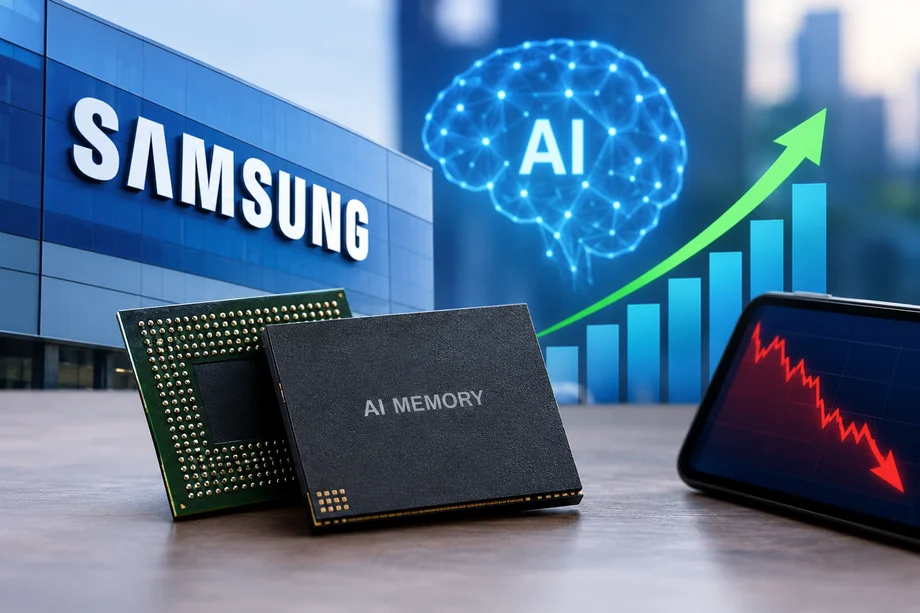
Samsung Electronics projects third-quarter operating profit of $80.2 billion, a more than sevenfold rise from the prior year, as demand for memory chips powering AI infrastructure pushes revenue to 195 trillion won
Samsung Sets New Record With Preliminary Q3 Earnings
Samsung Electronics disclosed preliminary results for the third quarter of 2026 that mark its fourth consecutive quarter of record earnings. The company forecasts operating profit of 107.4 trillion won, equivalent to $80.2 billion, up 783 percent from the same period last year. Revenue is expected to reach 195 trillion won, a 127 percent increase compared with the third quarter of 2025.
The operating margin is projected at 55.1 percent, the highest in the company’s history. This figure reflects the semiconductor division’s strong performance, particularly in high-bandwidth memory products used by artificial intelligence systems.
The guidance exceeds the previous quarter’s 89.5 trillion won in operating profit and slightly surpasses analyst forecasts. Full earnings details, including breakdowns by business unit, are scheduled for release later this month.
AI Memory Products Drive Earnings Growth
The surge stems primarily from elevated demand for memory chips essential to artificial intelligence computing. High-bandwidth memory, or HBM, stands out as a key contributor, with Samsung gaining market share. Its HBM position is expected to climb from around 20 percent to 34 percent this year.
Traditional DRAM and NAND flash offerings have also benefited from supply constraints that analysts say could persist into 2028. Memory prices have risen sharply, supporting higher margins across the industry.
Samsung’s Device Solutions division leads the earnings contribution. The company has expanded related investments and partnerships, including an agreement with French startup Mistral AI to deploy models across semiconductor operations.
Market Reactions Include Share Price Decline
Despite the record forecast, Samsung shares fell 0.7 percent following the announcement, extending recent losses that have pulled the stock below its June peak. The market did not view the result as a surprise, according to analysts.
Josh Gilbert, lead analyst for APAC at investment platform eToro, noted: “When expectations are so high for memory makers, the market doesn’t hand out points for effort.”
Investors are weighing whether current pricing power and margins can be sustained amid rising competition, including from Chinese producers, and a stronger Korean won that has pressured earnings estimates.
Longer-Term Outlook Points to Continued Growth
Full-year 2026 operating profit is projected to exceed 300 trillion won, with expectations reaching about 550 trillion won in 2027. Supply shortages are anticipated to constrain production through 2028, supporting price stability for key AI-related memory.
Multiyear supply agreements are improving visibility into demand. Samsung’s semiconductor performance is also aiding its broader technology supply chain.
| Metric | Q3 2026 Forecast | Q3 2025 Actual | Change |
|---|---|---|---|
| Operating Profit | 107.4 trillion won ($80.2 billion) | 12.17 trillion won | +783% |
| Revenue | 195 trillion won | 85.9 trillion won (approx.) | +127% |
| Operating Margin | 55.1% | Lower | Highest in history |
Industry Context and Implications
The results underscore the scale of AI-related hardware demand reaching global technology markets. Samsung remains the world’s largest memory-chip maker, and its performance draws particular scrutiny from investors focused on the sector.
Other memory producers, including those benefiting from similar AI-driven trends, have also seen gains, contributing to broader market rebounds in the space.
Disclaimer
This article was generated by AI using information from multiple industry sources. It has not been reviewed or verified by a human editor and may contain inaccuracies, omissions, or misinformation. Readers are encouraged to independently verify any information before making decisions based on its content.Tired of the noise?
Let the bots trade for you.
Trade 24/7, without emotion, with data-driven strategies.
Associated articles
Samsung Weighs Over 100 Trillion Won Shareholder Return on AI Memory Gains
Nvidia’s $92 Billion Earnings Test AI Infrastructure Boom Amid Rising Costs
Micron Posts $54.23 Billion Revenue Surge on AI Memory Demand, Raises Outlook
SK Hynix Shares Surge After Record $29 Billion Buyback as Bond Yields Ease

Amazon Posts $62.6 Billion Profit, AWS Growth Hits Fastest Pace in Years on AI Demand
Latest articles

Litecoin Marks 15 Years of Network Uptime as Grayscale Targets ETF Listing on NYSE Arca

Securitize Brings Major U.S. Stocks to Solana for Eligible Investors

Tikcoin Network Delays TIK Listing to December 12 After October Target Misses

Vitalik Buterin Urges Caution on Crypto Wallet Migrations Amid AI Cryptographic Threats