Newsroom
Sequans Sells Final 314 Bitcoin, Ends Corporate Treasury Strategy
25 September, 2026 / News / AI / Tags: sequans, convertible, debt, bitcoin, treasury
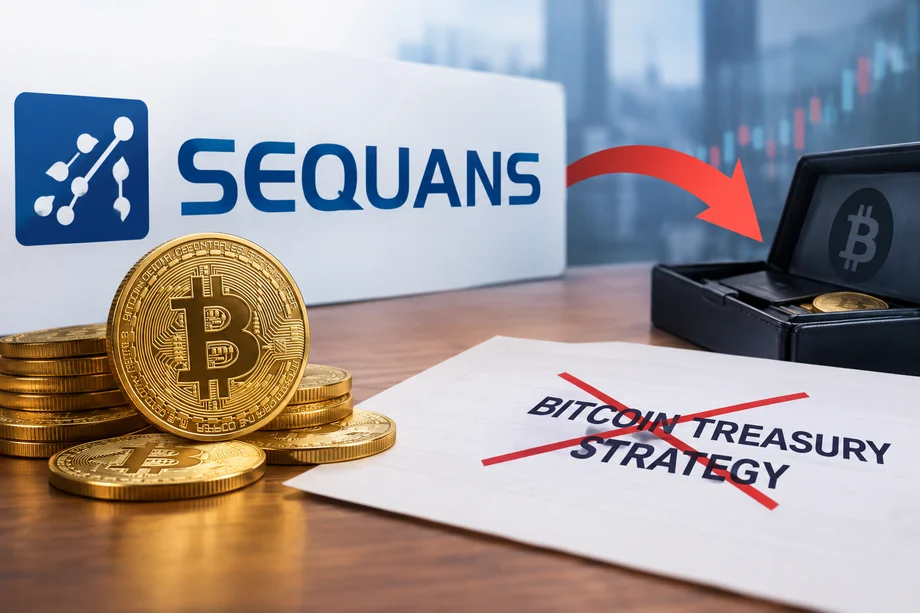
French semiconductor firm completes full exit from Bitcoin holdings after debt redemption, joining a wider 2026 trend of companies scaling back crypto treasuries
Sequans Communications has sold its remaining 314 Bitcoin, fully unwinding a corporate treasury strategy that once left the company holding more than 3,200 BTC. The France-based semiconductor maker confirmed the move in a Thursday statement, marking the end of an approach launched in mid-2025.
The exit follows the redemption of the company’s convertible debt in May. Management said the proceeds from earlier Bitcoin sales helped eliminate that obligation and strengthen the balance sheet. Sequans now holds no cryptocurrency and carries no outstanding debt beyond government-financed research and development commitments.
From Launch to Full Exit
Sequans introduced its Bitcoin treasury program in June 2025 after announcing a $384 million sale of equity securities and convertible secured debentures. At the time, CEO Georges Karam described Bitcoin as a premier asset and a compelling long-term investment, positioning the purchases as part of a broader treasury plan rather than short-term trading.
The company began reducing its exposure less than six months later. In November it sold 970 BTC to redeem half of its convertible debt. By May 2026 Sequans stated it was no longer pursuing the treasury strategy and would monetize the remaining Bitcoin over time. Thursday’s update confirmed that process is complete with the sale of the final 314 BTC.
With the crypto position closed, Sequans said it will refocus on its core cellular Internet-of-Things and software-defined radio businesses.
Part of a Broader Corporate Shift
Sequans’ departure aligns with a wider pattern observed in 2026. Matthew Sigel, head of digital assets research at VanEck, identified at least nine companies that fully liquidated or abandoned Bitcoin and crypto treasury strategies during the year, along with several others that reduced holdings.
Reasons cited across these exits include debt repayment needs, working capital requirements, shareholder return objectives, and changes in business strategy. One notable case involved UK-listed Satsuma Technology, which raised approximately $135 million through convertible loan notes in July 2025 to expand its Bitcoin treasury. A year later shareholders voted to return substantially all capital and cancel the listing, leading the board to authorize the sale of its entire 669 BTC position.
Other firms that fully liquidated Bitcoin holdings this year include Bitdeer, Genius Group, and Prenetics. Companies such as MARA Holdings and Empery Digital made substantial sales while retaining some form of treasury strategy, illustrating diverging approaches rather than a uniform retreat.
For Sequans the immediate priority is translating its renewed focus on cellular IoT and software-defined radio into operating results now that cryptocurrency exposure has been removed. The company’s simpler capital structure leaves fewer variables tied to Bitcoin price movements affecting treasury balances.

Disclaimer
This article was generated by AI using information from multiple industry sources. It has not been reviewed or verified by a human editor and may contain inaccuracies, omissions, or misinformation. Readers are encouraged to independently verify any information before making decisions based on its content.Tired of the noise?
Let the bots trade for you.
Trade 24/7, without emotion, with data-driven strategies.
Associated articles

Empery Digital Sells Half Its Bitcoin Treasury for $87 Million in Strategic Shift

Strategy Boosts Cash Reserves to $3.225 Billion While Maintaining Massive Bitcoin Holdings

Strategy Tests Bitcoin Liquidity With Small Sale as Saylor Signals Fresh Moves

Strive Buys 1,800 Bitcoin for $143 Million, Climbs to Fifth-Largest Public Corporate Holder

Strive Shares Rally as Bitcoin Treasury Firm Becomes First with Daily Dividend Payments
Latest articles

Babylon Labs Advances Proposal for Native Bitcoin Lending on Aave V4

TSMC Posts Record Q3 Profit Surge on AI Chip Demand, Lifts Full-Year Outlook
ASIC Opens Consultation on Capital and Custody Rules for Digital Asset Platforms

GTA 6 Leaker Cyberleek Drops Full Build Plan After Memecoin Collapse, Activates Dead Man’s Switch Threat