Newsroom
Senate Blocks Crypto Market Clarity Act Over Ethics Disputes
15 September, 2026 / News / AI / Tags: democrats, ethics, legislation, vote, opposed
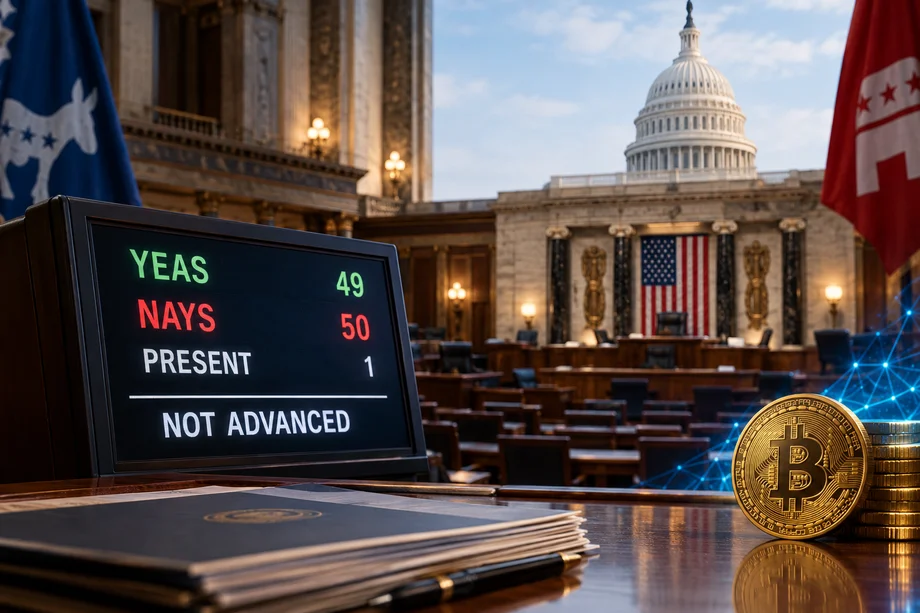
A procedural vote on the Digital Asset Market Clarity Act fails 49-50, short of the 60 votes needed, as disagreements over presidential crypto holdings and banking rules halt progress ahead of midterms
The U.S. Senate on Tuesday rejected a motion to advance the Digital Asset Market Clarity Act, a comprehensive bill intended to create the first major federal regulatory framework for cryptocurrencies. The 49-50 vote fell well short of the 60 votes required to end debate and move the legislation to the floor.
All Democrats opposed the measure, joined by several Republicans. The outcome leaves the effort stalled with limited time remaining before the November midterm elections and effectively ends prospects for passage in the current Congress.
Vote Outcome and Key Opponents
The motion to proceed failed after months of negotiations between the parties and the White House. Republican Sens. Susan Collins of Maine, Josh Hawley of Missouri and Jerry Moran of Kansas voted against advancing the bill. Sen. Thom Tillis of North Carolina also voted no for procedural reasons that would allow the measure to return later if needed.
Several Democrats who had previously supported advancing the bill out of the Senate Banking Committee in May ultimately opposed it on the floor. These included Sens. Angela Alsobrooks of Maryland, Ruben Gallego of Arizona, Mark Warner of Virginia and Raphael Warnock of Georgia.
The legislation, which cleared the House more than a year earlier, sought to clarify whether specific digital assets fall under securities or commodities rules. It would have assigned primary market oversight largely to the Commodity Futures Trading Commission while defining the Securities and Exchange Commission’s role over certain tokens.
Ethics Provisions at the Center of Dispute
Disagreements over rules governing elected officials’ cryptocurrency holdings proved the decisive barrier. Democrats insisted on strict requirements that would force high-ranking federal officials, including the president, to divest personal crypto business interests or place them in a blind trust while in office.
President Donald Trump and his family reported earning more than $1 billion from crypto-related ventures in 2025, according to financial disclosures. Those holdings became a focal point of Democratic objections throughout the negotiations.
Republicans incorporated more than 120 changes requested by Democrats, including late revisions that restricted elected officials from issuing cryptocurrencies, imposed requirements on certain holdings and expanded enforcement powers for state attorneys general. Sponsors argued these steps closed key gaps.
Democrats maintained that the final language contained remaining loopholes and left too much enforcement authority with administration-appointed officials. Sens. Alsobrooks and Gallego cited insufficient ethics language as their primary remaining concern before casting no votes.
Banking Concerns and Industry Reaction
Community banks opposed provisions that would have allowed rewards on stablecoin holdings, warning the change could draw deposits away from traditional lenders and reduce credit available to farmers and small businesses. Those worries contributed to Republican opposition alongside the ethics debate.
The crypto industry had invested heavily in the effort, with associated political action committees holding substantial cash reserves heading into the midterms. Fairshake, a leading crypto-aligned group, began the cycle with nearly $200 million on hand. Industry advocates framed the bill as essential for providing clear rules rather than leaving regulation to shifting agency decisions.
Bitcoin declined sharply following the vote, falling about 5 percent to trade near $75,039 by late afternoon.
Outlook After the Defeat
With the congressional calendar tightening and lawmakers preparing to return to their districts, Republican negotiators said the failure effectively ends any realistic chance of comprehensive crypto market-structure legislation before the next Congress convenes. Lummis, a lead architect of the bill who is retiring in January, stated the effort was over after more than a year of work and extensive concessions.
The White House had strongly supported the measure, presenting it as necessary to maintain U.S. competitiveness in digital assets. In the absence of new statute, attention is expected to shift to ongoing rulemaking by the Securities and Exchange Commission and the Commodity Futures Trading Commission.
The collapse marks another instance of Congress struggling to establish durable rules for rapidly evolving technologies. Similar divisions continue to shape parallel debates over artificial intelligence safeguards.
Disclaimer
This article was generated by AI using information from multiple industry sources. It has not been reviewed or verified by a human editor and may contain inaccuracies, omissions, or misinformation. Readers are encouraged to independently verify any information before making decisions based on its content.Tired of the noise?
Let the bots trade for you.
Trade 24/7, without emotion, with data-driven strategies.
Associated articles

Trump Backs Ethics Rules, Clearing Path for Senate Vote on CLARITY Crypto Bill

Senate Ethics Standoff Threatens Clarity Act Vote Before August Recess

Senate Schedules September 15 Vote on Crypto Market Structure Bill

Senate Races Against Clock on Crypto Market Structure Bill Ahead of August Break
Senate Republicans Release Final Clarity Act Draft With Trump-Backed Ethics Rules Ahead of Tuesday Vote
Latest articles

BloomTrading Pledges Refunds After Nearly $1 Million in Solana Wallet Drains

Jio Platforms Finalizes IPO Allotment Ahead of October 28 Market Debut

Monero Developer Seeks 45 XMR for Privacy and Wallet Upgrades

Musk Warns Over 200 AI Neoclouds Face Failure and Consolidation as Financing Tightens