Newsroom
RippleX Launches Ninth Smart Escrow Devnet with Rust Migration for XRPL
6 October, 2026 / News / AI / Tags: escrows, ripplex, devnet, escrow, ninth
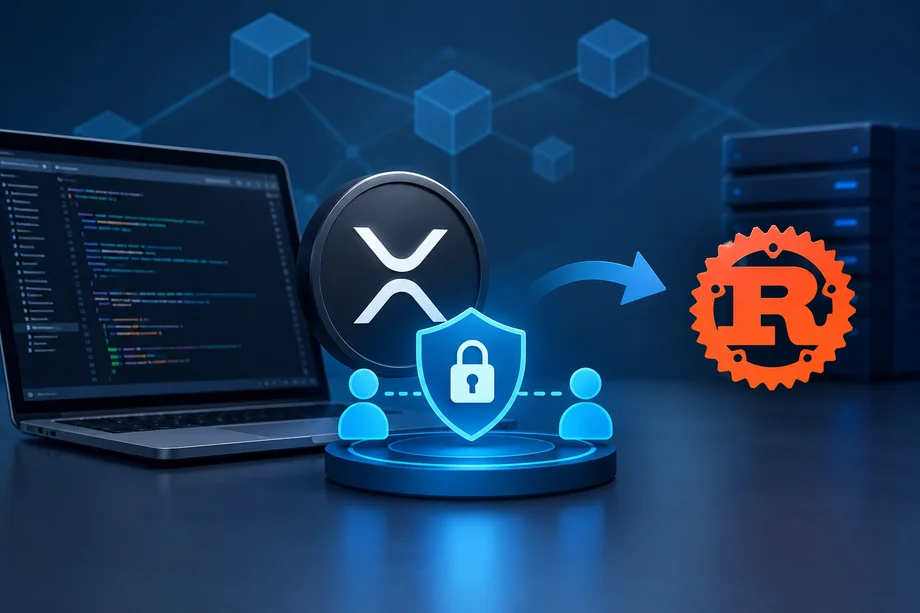
RippleX has released the ninth Smart Escrow Devnet build, completing a shift of WebAssembly integration to Rust and delivering performance gains of 30% to 50% for host function calls on the XRP Ledger
Developers working on the XRP Ledger have advanced programmable escrow capabilities with the deployment of the ninth version of the Smart Escrow Devnet. The update, issued by RippleX, moves the feature set closer to production readiness under the XLS-100 proposal while introducing substantial architectural refinements.
Mayukha Vadari, senior software engineer at RippleX and co-author of the Smart Escrows proposal, described the release as a notable step forward. She noted that the team continues to conduct thorough review and testing of the framework prior to any broader rollout. Developers seeking to experiment with the latest build must adjust their configurations to account for the introduced changes.
Architecture Shift Completes Migration to Rust
The ninth Devnet release centers on a fundamental infrastructure change: the full migration of the WebAssembly virtual machine integration from C++ to Rust. This transition establishes a unified entry point that manages gas accounting, error handling, and system checks in a more cohesive manner.
According to the development team, the Rust-based framework improves performance by 30% to 50% for every host function call. In parallel, the update standardizes naming conventions for host functions, ledger fields, transaction engine result codes, and execution entry points, aligning the testing environment more closely with production standards.
Expanding Conditional Transactions Beyond Basic Escrows
Standard escrows on the XRP Ledger currently allow users to lock assets until a predetermined time elapses or a cryptographic condition is satisfied. Smart Escrow builds on this foundation by permitting users to attach a WebAssembly program that defines custom logic for releasing funds.
This capability supports more intricate arrangements. Possible applications include requiring approval from a third-party notary, delaying transfers pending compliance verification, facilitating real estate transactions, managing auctions, or incorporating external data from oracles that meet predefined criteria. Assets would release only when the embedded program confirms that the necessary conditions have been fulfilled.
The XLS-100 proposal positions Smart Escrows as an initial layer of programmability for the XRP Ledger. It addresses use cases that extend past simple time-based or cryptographic locks, enabling conditional transactions governed by more detailed rules. The latest Devnet build continues the iterative process of refining this framework through ongoing testing and review.

Disclaimer
This article was generated by AI using information from multiple industry sources. It has not been reviewed or verified by a human editor and may contain inaccuracies, omissions, or misinformation. Readers are encouraged to independently verify any information before making decisions based on its content.Tired of the noise?
Let the bots trade for you.
Trade 24/7, without emotion, with data-driven strategies.
Associated articles

Ripple Teams with Clearpool and Cicada on Institutional Lending for XRP Ledger

Ripple Updates Developer Kit to Enable AI Agents Paying with XRP and RLUSD
Ripple Urges XRPL Community to Withdraw XLS-38 Cross-Chain Bridge Amendment
XRP Ledger Eyes October 9 Activation for Batch Transactions and Security Fix

Ripple and Stripe’s Privy Partner to Bring XRPL Wallets and AI Payments to Developers
Latest articles

BloomTrading Pledges Refunds After Nearly $1 Million in Solana Wallet Drains

Jio Platforms Finalizes IPO Allotment Ahead of October 28 Market Debut

Monero Developer Seeks 45 XMR for Privacy and Wallet Upgrades

Musk Warns Over 200 AI Neoclouds Face Failure and Consolidation as Financing Tightens