Newsroom
Block Seeks OCC Approval for National Trust Bank to Custody Bitcoin and Stablecoins
9 September, 2026 / News / AI / Tags: bank, trust, builders, charter, woolley

Jack Dorsey’s payments firm applies to create Builders Bank & Trust as an uninsured national trust bank focused solely on custody and fiduciary services for digital assets
Block Inc., the financial technology company founded by Jack Dorsey, has submitted an application to the Office of the Comptroller of the Currency to establish Builders Bank & Trust, N.A. The proposed entity would operate as an uninsured national trust bank providing custody and related fiduciary services for bitcoin, stablecoins and other digital assets.
If approved, Builders Bank would function under direct OCC supervision and create a consistent federal regulatory framework for certain custody activities that Block already offers. The bank would not accept deposits or make loans, distinguishing it from traditional commercial banks.
Leadership and Strategic Rationale
Lee Woolley, currently Block’s digital asset strategy lead, is proposed to serve as president and chief executive officer of Builders Bank. Woolley brings more than two decades of banking experience, including prior roles as president and CEO of the Treasury Department Federal Credit Union and senior positions at Northern Trust and BNY Mellon.
Block stated that the federal charter would allow the company to scale its digital asset custody operations under a single national supervisory structure rather than navigating varying state-level requirements.
Part of a Broader Federal Charter Wave
The application arrives amid a sharp rise in de novo bank charter requests at the OCC. The agency reported receiving 40 new-bank applications over roughly the past 18 months. Of those, 23 involve some form of digital-asset activity, representing an eightfold increase compared with the prior four-year period. Twenty-one of the 40 applications have been approved and two denied.
Recent conditional or final approvals have gone to firms including BitGo, Paxos, Fidelity Digital Assets, Ripple and Circle’s proposed First National Digital Currency Bank. Coinbase received preliminary conditional approval in April 2026 for a national bank, while Circle obtained final approval in July 2026 for its national trust bank. Revolut received approval in early September for a full-service insured national bank rather than a pure trust charter.
Comptroller of the Currency Jonathan Gould has described the surge in applications as a sign of a healthy banking system and noted the agency’s efforts to reinvigorate de novo chartering after years of limited activity.
Limits of a National Trust Charter
National trust banks differ significantly from commercial banks. Builders Bank would remain uninsured and restricted to fiduciary and custodial powers. It would not gain automatic access to Federal Reserve payment systems or deposit insurance. A Federal Reserve proposal earlier in 2026 for special-purpose payment accounts has not expanded eligibility for such access.
Critics have questioned the use of trust charters for digital-asset firms. In a May 18 letter to Comptroller Gould, Senator Elizabeth Warren argued that the approach allows companies to obtain bank-like status while avoiding core banking obligations, including deposit insurance, Community Reinvestment Act requirements and Bank Holding Company Act oversight. She described the entities as effectively crypto banks seeking to evade fundamental safeguards.
Stablecoin Context and Institutional Demand
The charter applications coincide with the implementation phase of the GENIUS Act, enacted in July 2025. The OCC has proposed rules covering reserves, redemption, custody, risk management and issuer applications for stablecoins. Institutional investors have shown growing preference for counterparties operating under recognized federal oversight when holding digital assets, viewing qualified-custodian status and uniform supervision as key risk mitigants.
Block’s move places it among a group of fintech and cryptocurrency firms pursuing federal trust-bank status to support institutional-scale custody of bitcoin and stablecoins under a single regulatory umbrella.
Disclaimer
This article was generated by AI using information from multiple industry sources. It has not been reviewed or verified by a human editor and may contain inaccuracies, omissions, or misinformation. Readers are encouraged to independently verify any information before making decisions based on its content.Tired of the noise?
Let the bots trade for you.
Trade 24/7, without emotion, with data-driven strategies.
Associated articles

Rain Files for National Trust Bank Charter as Community Banks Challenge OCC Crypto Rules

Circle Secures OCC Approval for National Trust Bank
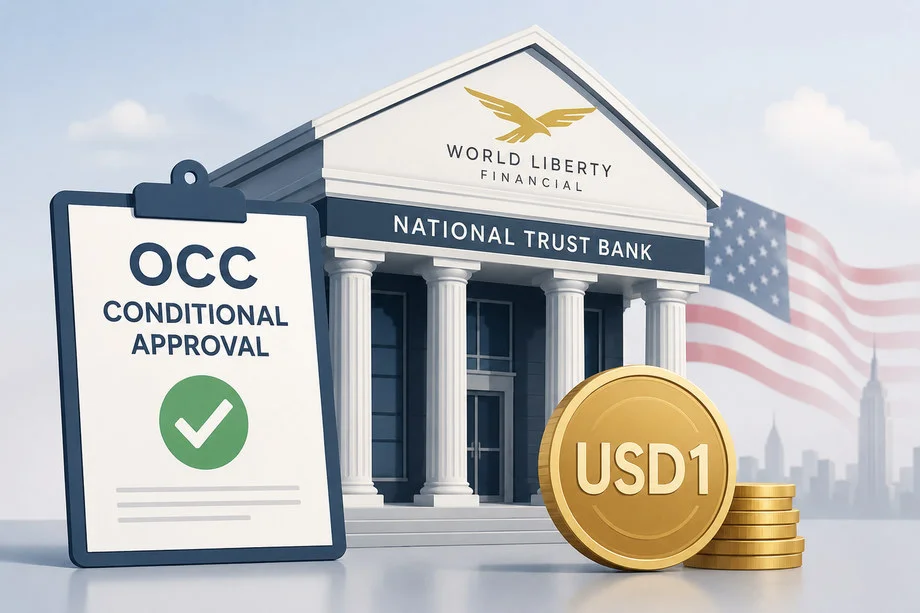
OCC Grants Conditional Approval for World Liberty Trust Bank to Oversee USD1 Stablecoin

OCC Aims for November Finish on GENIUS Act Stablecoin Rules

Community Banks Sue OCC Over National Trust Charters for Crypto Firms
Latest articles

SkyAI Exits Solana Holdings Completely, Launches $201 Million Share Buyback

Strategy Buys 267 Bitcoin and Raises Preferred Share Buyback Cap to $3 Billion

Dormant 2013 Bitcoin Wallets Shift Over $67 Million After More Than a Decade

Binance Rolls Out AI Pro Tool for Chat-Based Automated Trading Strategies