Newsroom
RedotPay Delays Planned $1 Billion US IPO Amid Legal Dispute and Regulatory Work
15 August, 2026 / News / AI / Tags: redotpay, binance, listing, kong, hong
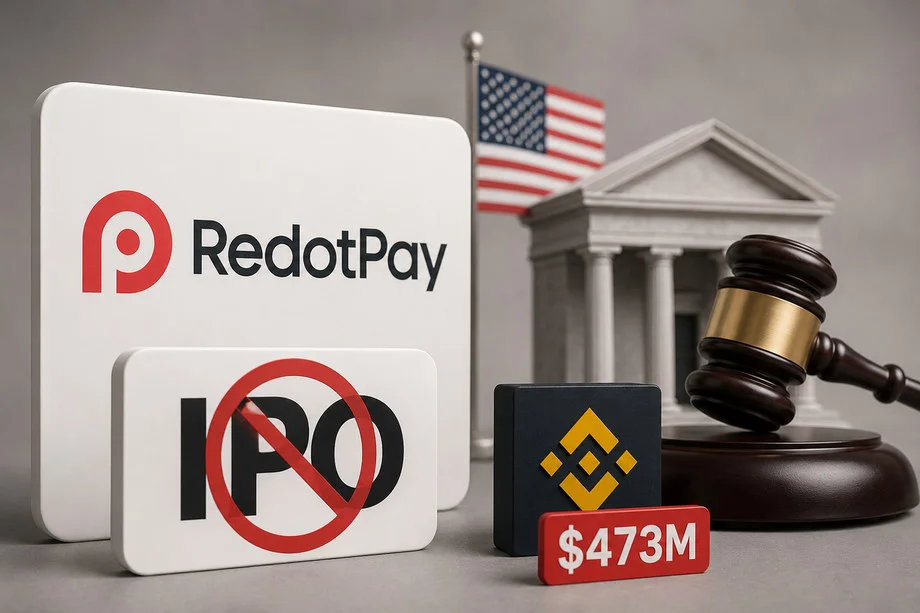
Hong Kong stablecoin payments firm RedotPay has postponed its US listing plans, now unlikely before 2027, while securing a money transmitter license and preparing a domestic product launch
Stablecoin payments company RedotPay has put on hold its planned United States initial public offering that was expected to raise more than $1 billion. The Hong Kong-based firm, which positions itself as the world’s largest stablecoin payment card issuer, is addressing legal matters and advancing regulatory steps needed for US market entry. The listing, first discussed earlier this year with a potential valuation above $4 billion, is now viewed as unlikely to proceed before 2027.
JPMorgan Chase, Goldman Sachs and Jefferies had been engaged to advise on the potential New York listing. A company spokesperson declined to discuss the IPO timetable directly, instead stressing ongoing priorities around compliance and expansion.
Lawsuit from Binance Affiliates Adds Pressure
The delay coincides with a substantial legal claim filed by Binance-affiliated entities in Hong Kong. The plaintiffs are seeking nearly $473 million in damages from RedotPay’s co-founders Gao Zhangpeng, Chan Wa Choi and Yao Chao. The suit alleges the founders used confidential information from prior work connected to Binance to establish a competing payments business and diverted roughly 470,000 customers.
According to the claims, the parties previously had a commercial arrangement under which Binance customers could use Binance Pay funds on the RedotPay platform for crypto-to-fiat conversions. Binance affiliates contend the arrangement was breached, including improper use of funds for card top-ups and the redirection of users to RedotPay’s own card product. A related proceeding is also underway in Singapore, where the two sides have offered differing accounts of the case status.
RedotPay has rejected the allegations. The company stated it is aware of the proceedings and will vigorously defend all claims, adding that the matter has no effect on its day-to-day operations.
US Expansion Moves Forward Despite Listing Pause
While capital-markets timing has shifted, RedotPay continues operational progress in the United States. The firm secured a money transmitter license this week and is preparing to introduce its stablecoin payment services domestically. The company has reported reaching 8.5 million users and described record levels for users, revenue, profit and margins in its most recent quarterly update.
Founded in 2023, RedotPay provides stablecoin-based payment cards, multicurrency wallets and global payout capabilities. It attained unicorn status in 2025 after successive funding rounds and has expanded services into multiple markets. Earlier this year the company also explored raising additional private capital of up to $150 million while adjusting its organizational structure to support growth.
The combination of the large unresolved claim and the need to complete regulatory processes for US operations has altered the path toward a public listing. RedotPay has not provided a revised timetable for when it might restart formal IPO preparations.
Background on the Proposed Offering
Reports of RedotPay’s interest in a US listing first appeared in February. At that stage the company was described as targeting a raise exceeding $1 billion at a valuation above $4 billion. Discussions with major investment banks advanced alongside internal efforts to professionalize operations as the business scaled from startup to unicorn status.
Stablecoin payment platforms typically require multiple licenses and clear regulatory standing before undertaking the scrutiny associated with a public offering. RedotPay’s recent US license approval represents a concrete step toward offering services in the world’s largest financial market, even as the IPO itself remains deferred.
The company has not indicated whether its relationships with the previously named underwriters remain active or how the legal proceedings in Hong Kong and Singapore may influence future capital-raising decisions. For now, management has directed attention toward compliance work, product readiness in the United States and continued business expansion.
Disclaimer
This article was generated by AI using information from multiple industry sources. It has not been reviewed or verified by a human editor and may contain inaccuracies, omissions, or misinformation. Readers are encouraged to independently verify any information before making decisions based on its content.Tired of the noise?
Let the bots trade for you.
Trade 24/7, without emotion, with data-driven strategies.
Associated articles

RedotPay Completes Pre-IPO Audit and Targets $5 Billion Valuation
BIS Chief Questions Stablecoins for Large-Scale Payments, Favors Tokenized Deposits

Visa Launches Search for New Stablecoin Settlement Partner After Mastercard Buys BVNK

Aave Labs Gains UK FCA Approval for Crypto Payment Expansion

Apple and Google Recruit Talent for Stablecoin and Blockchain Expertise in Payments
Latest articles

Revolut Services Disrupted by Google Cloud Power Event in London
Mt. Gox Trustee Extends Creditor Repayment Deadline to October 2027

JPMorgan Forecasts 10% Annual Bitcoin Returns, Surpassing Stocks and Gold Over Next Decade

Bitget Plans Acquisition of Licensed Thai Crypto Exchange to Enter Local Market