Newsroom
Polygon Open Money Stack Adds TRON Support to Link $94 Billion USDT Supply With U.S. Banking Rails
8 October, 2026 / News / AI / Tags: polygon, usdt, stack, tron, payouts

Polygon Labs has integrated TRON into its Open Money Stack, enabling businesses to handle USDT deposits, wallets, cross-chain transfers and fiat payouts through a single system connected to regulated U.S. payment infrastructure
Polygon Labs has expanded its Open Money Stack platform to include support for the TRON network, allowing companies to process Tether USDT payments across digital wallets, fiat rails and multiple blockchains. The update, which became available around October 7-8, 2026, connects TRON’s substantial USDT activity to licensed U.S. banking services, custodial and embedded wallets, and programmable settlement tools.
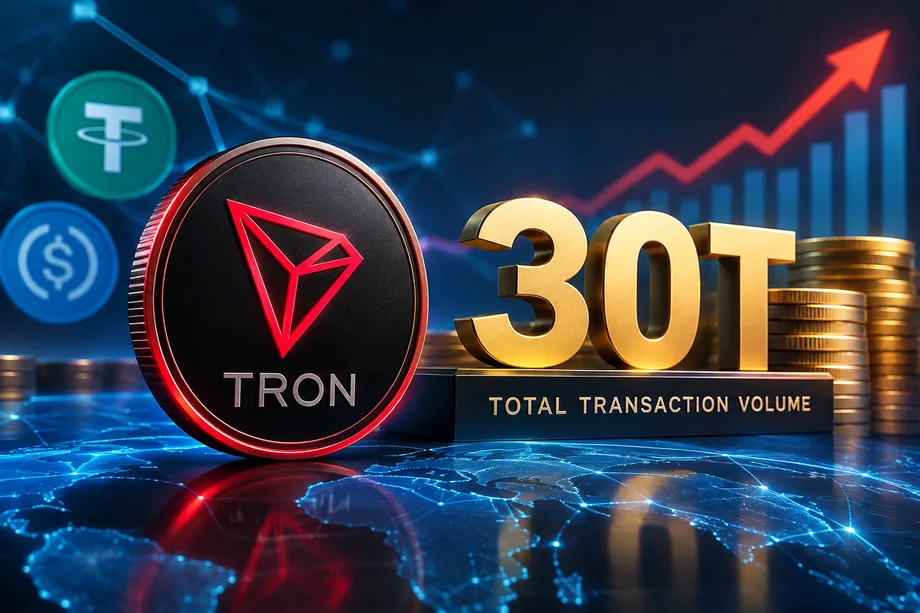
TRON currently holds more than $94 billion in circulating USDT, representing over half of Tether’s total supply across supported networks. The chain has recorded more than $30 trillion in cumulative stablecoin transfer volume and processed $2.1 trillion in USDT transfers during the second quarter of 2026 alone, according to data cited in the announcements. Average daily USDT transfer volume on TRON reached $22.8 billion in that period.
Single Integration for Deposits, Wallets and Payouts
Under the new capability, businesses can accept TRC-20 USDT deposits funded by bank transfer, debit card, cash or cryptocurrency. Funds can be held in custodial wallets managed by licensed providers or in embedded wallets that give users control of private keys while supporting familiar authentication methods. Companies may assign customers permanent TRON deposit addresses that remain active for recurring payments. Incoming transfers are automatically matched to the correct account, with balances then available for further transfers or withdrawals.
Payouts can be directed to bank accounts, cards, cash pickup locations or wallets. Polygon Ramps supplies the regulated fiat on- and off-ramps, backed by money-transmitter licenses covering 48 U.S. states. Businesses can convert between fiat and USDT, settle according to programmed rules, and keep existing wallet, compliance or ledger systems in place rather than adopting the full stack.
Cross-Chain Routing via Polygon Trails
Polygon Trails manages asset movement between TRON and supported Ethereum Virtual Machine-compatible networks. A business can receive USDT on TRON and deliver USDC on Ethereum, for example, within a single transaction flow. The underlying bridging and conversion remain hidden from the end customer. Programmable instructions determine when and where funds move, supporting use cases such as remittances and marketplace payouts.
The platform is aimed at fintech firms, remittance providers, exchanges and gig-economy platforms whose users already transact in USDT on TRON. Potential applications include markets such as the Philippines, Mexico, Argentina and Nigeria, where digital-dollar transfers support cross-border payments and worker payouts.
Polygon’s Stablecoin Activity and Broader Buildout
Polygon itself has processed more than $3 trillion in stablecoin transfers since September 2020. Volume reached $933 billion in 2025 and another $741 billion from the start of 2026 through September 29. The network reported approximately $3 billion in stablecoin supply and 4.9 million daily transactions in early October 2026. Users of the infrastructure have included Revolut, Paxos, Polymarket, Cash App, Deel and Tazapay. PayPal’s PYUSD became natively available on the stack earlier in 2026.
The Open Money Stack combines compliance tools, wallets, fiat access, routing and blockchain settlement into one application programming interface. Development has been supported by acquisitions announced in January 2026 totaling roughly $250 million for Coinme, which provides regulated fiat services, and Sequence, a wallet infrastructure provider. The Sequence deal is complete while the Coinme transaction remains pending.
Polygon said the TRON integration marks the first phase of broader network expansion. The company plans to add further blockchains where businesses and customers already transact, though no specific timetable or next targets were disclosed. Interested firms can request access to deposit addresses, wallet services, cross-chain routing and fiat payouts through the Open Money Stack team.
The addition does not turn TRON into a bank or eliminate licensing requirements for payment companies. It supplies a unified connection for components of a payment flow that previously required separate providers for banking access, wallets and cross-chain orchestration.


Disclaimer
This article was generated by AI using information from multiple industry sources. It has not been reviewed or verified by a human editor and may contain inaccuracies, omissions, or misinformation. Readers are encouraged to independently verify any information before making decisions based on its content.Tired of the noise?
Let the bots trade for you.
Trade 24/7, without emotion, with data-driven strategies.
Associated articles
TRON Blockchain Surpasses $30 Trillion in Transaction Volume

Mastercard Completes $1.8 Billion BVNK Acquisition to Link Crypto and Traditional Payments

MoneyGram Extends Cash Network to Solana via Ramps Service

Circle Deploys Native USDC and Cross-Chain Protocol on OKX X Layer

Revolut Delists USDT for European Users Under MiCA Rules
Latest articles

Litecoin Marks 15 Years of Network Uptime as Grayscale Targets ETF Listing on NYSE Arca

Securitize Brings Major U.S. Stocks to Solana for Eligible Investors

Tikcoin Network Delays TIK Listing to December 12 After October Target Misses

Vitalik Buterin Urges Caution on Crypto Wallet Migrations Amid AI Cryptographic Threats