Newsroom
NYSE Spent a Year Testing Avalanche for Tokenized Securities, Ava Labs Says
18 September, 2026 / News / AI / Tags: avalanche, nyse, charley, cooper, securities
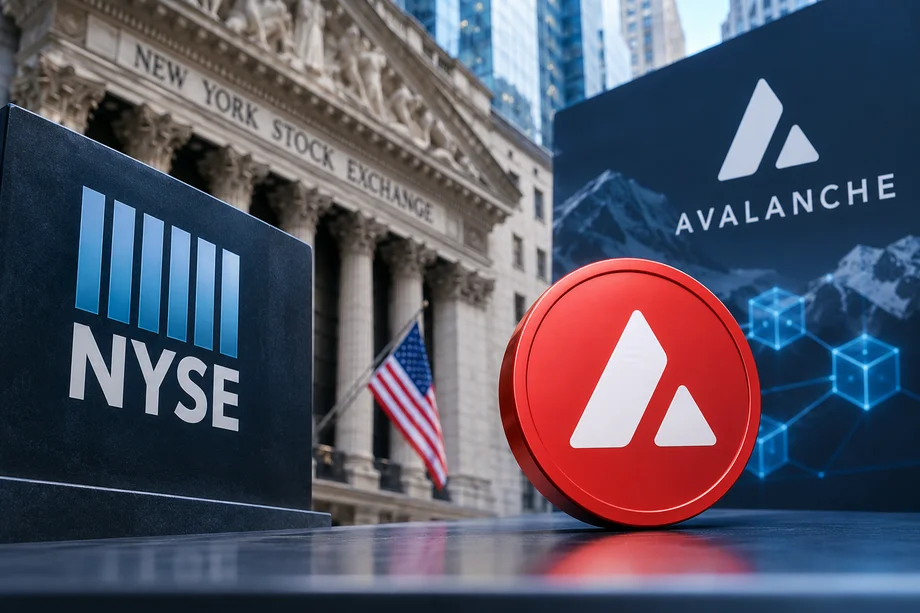
Ava Labs President Charley Cooper disclosed the year-long evaluation at the Avalanche Summit as the exchange advances plans for onchain settlement of tokenized stocks and ETFs
The New York Stock Exchange has conducted roughly a year of testing on Avalanche technology while developing infrastructure to support tokenized U.S. securities, according to Ava Labs President Charley Cooper. He made the comments Thursday during an appearance at the Avalanche Summit in New York.
Cooper said the exchange examined both the technical performance of the Avalanche network and the underlying economics of integrating it with existing systems. The discussions went beyond simple technology trials to assess whether Ava Labs understood the operational and business requirements of running one of the world’s largest securities markets.
Cooper described the engagement as having produced a close working relationship between the two sides. He stopped short of stating that Avalanche had been chosen as the blockchain for the planned platform and deferred further public comments to NYSE officials.
ICE Engagement and Platform Architecture
Intercontinental Exchange, the parent company of the NYSE, has remained actively engaged with the Avalanche team as it evaluates potential networks. Michael Blaugrund, ICE’s Head of Strategic Initiatives, appeared alongside Cooper at the summit and noted that Avalanche meets many of the firm’s requirements.
The NYSE first disclosed plans in January for a platform focused on the trading and blockchain-based settlement of tokenized U.S. stocks and exchange-traded funds, subject to regulatory approval. The design pairs the exchange’s existing Pillar matching engine with post-trade infrastructure built on blockchain rails. It is intended to operate as a separate digital venue rather than migrating the traditional equities market onto a distributed ledger.
Proposed features include continuous trading, immediate settlement, fractional share ownership, dollar-denominated orders, and funding via stablecoins. Holders of the tokenized securities would retain standard shareholder rights, including dividends and governance privileges. The architecture is being built to support multiple blockchain networks for settlement and custody rather than relying on a single chain.
Additional Infrastructure Partnerships
ICE has brought in external partners while the core trading and settlement system continues to take shape. At the end of August the company agreed to invest in tZERO and license its blockchain-related patents. tZERO is expected to contribute design work on digital transfer agent and broker-dealer systems that would support issuance, trading, and onchain settlement of public securities. The size of the investment and a launch timeline were not disclosed.
In March the NYSE signed a separate memorandum of understanding with Securitize, designating the firm as its first digital transfer agent eligible to mint blockchain-native securities for participating issuers. These arrangements leave the choice of underlying blockchain networks open, consistent with the multi-chain approach described for post-trade functions.
Broader Tokenization Activity and Regulatory Context
Avalanche has seen adoption in other regulated tokenization initiatives. In July, Japan’s Progmat platform migrated its security-token projects from Corda 5 to a dedicated Avalanche Layer 1. The move covered more than 452 billion yen, or approximately 2.88 billion dollars, in underlying assets and issued securities while adding Ethereum Virtual Machine compatibility.
In South Korea, Hanwha Investment & Securities completed a tokenized securities platform designed to operate on Avalanche and Hyperledger Besu. The development aligns with regulatory changes scheduled to take effect in February 2027 that will formally integrate blockchain-based securities into the country’s capital markets framework.
Regulatory conditions in the United States shifted this week when the Securities and Exchange Commission granted a five-year conditional exemption allowing eligible venues to facilitate trading of tokenized National Market System stocks through permissioned automated market makers and liquidity pools. The relief includes conditions on shareholder rights, smart-contract design, trading limits, and coordinated market halts.
Cooper pointed to the exemption when discussing the potential pace of onchain equity trading. He expects some venues to offer 24-hour weekday access within the next year, though he expressed uncertainty about whether the largest mainstream exchanges would move on the same timeline. Smaller platforms, he said, are advancing competitive cases to attract liquidity.
The NYSE has continued development work throughout 2026. In August, NYSE President Lynn Martin confirmed that the exchange was still advancing onchain settlement infrastructure after the initial January disclosure. No final selection of blockchain networks has been announced, and the project remains subject to regulatory approvals before any launch.

Disclaimer
This article was generated by AI using information from multiple industry sources. It has not been reviewed or verified by a human editor and may contain inaccuracies, omissions, or misinformation. Readers are encouraged to independently verify any information before making decisions based on its content.Tired of the noise?
Let the bots trade for you.
Trade 24/7, without emotion, with data-driven strategies.
Associated articles

Blockchain.com and NYSE Explore 24/7 Tokenized U.S. Stocks Trading
Nasdaq Invests $100 Million in Kraken Parent Payward at $21 Billion Valuation

OKXICE Submits SEC Filing for 24/7 Tokenized NYSE Stocks Under New Exemption

ICE Partners With tZERO on Tokenized Securities Infrastructure, Takes Stake

SEC Grants Five-Year Innovation Exemption for Onchain Tokenized Stock Trading
Latest articles

YieldMax Option Income ETFs Declare Weekly Distributions for October 9

Stablecoins Expand as Core Tools for SaaS and Ecommerce Operations

Crypto Experts Warn of AI Threat to Blockchain Encryption, Urge 'Bunker Mode'
Polkadot Launches DAO-Governed dotUSD Stablecoin as DOT Tests $1 Support