Newsroom
SEC Grants Five-Year Innovation Exemption for Onchain Tokenized Stock Trading
17 September, 2026 / News / AI / Tags: exemption, tokenized, relief, stocks, stock

The U.S. Securities and Exchange Commission approved temporary relief allowing limited trading of tokenized National Market System stocks on blockchain venues using automated market makers, excluding synthetic products
The U.S. Securities and Exchange Commission on September 17, 2026, issued an order establishing the Innovation Exemption, a temporary and conditional framework that permits certain platforms to facilitate trading of tokenized U.S. stocks on blockchain systems. The relief applies to Tokenized Securities Venues, or TSVs, which can operate permissioned automated market makers and liquidity pools for tokenized National Market System stocks without registering as traditional exchanges under the Securities Exchange Act of 1934.
The exemption also provides limited relief for certain liquidity providers, known as Covered Firms, from dealer registration requirements. It takes effect immediately and is set to expire five years after publication in the Federal Register. The Commission is soliciting public comments on the order to inform potential modifications and longer-term rulemaking.
Scope and Key Conditions of the Relief
Under the order, a tokenized NMS stock must represent an actual share that confers the same rights and privileges as the traditional equity, including voting rights, dividends, and other shareholder entitlements. Synthetic tokens that merely track a stock’s price without delivering ownership are excluded from the exemption.
TSVs must be U.S. persons and comply with Office of Foreign Assets Control sanctions programs. Access is restricted to participants cleared to trade tokenized NMS stock. Smart contracts must be public, auditable, and deployed on public permissionless distributed ledgers, even though the trading environment itself operates on a permissioned basis.
Venues face limits on the number of eligible stock symbols and overall trading volumes, calibrated according to limit up-limit down tiers. Trading in a tokenized stock must halt whenever the primary listing exchange suspends trading in the underlying security. Issuers must receive written notice before their stock is tokenized by an unaffiliated third party and may opt out.
Transaction data denominated in U.S. dollars, including price, size, time, pool address, end-of-day pool size, and daily volume, must be published at regular intervals. Additional requirements cover books and records, technology safeguards, and public disclosures about operations and affiliated-party transactions.
Context Following Legislative Developments
The order arrives days after the U.S. Senate failed to advance the CLARITY Act in a procedural vote. SEC Chairman Paul S. Atkins stated that the agency would continue its work on digital asset matters within its existing statutory authority regardless of congressional outcomes. The Commission has previously advanced related initiatives, including a joint interpretation with the Commodity Futures Trading Commission distinguishing securities from commodities and a proposed Reg Crypto Assets framework.
Commissioner Mark T. Uyeda described the Innovation Exemption as a controlled mechanism that generates real-world data on how tokenized stocks trade through automated market makers and liquidity pools. The framework is intended to support future policymaking by allowing the agency to observe market behavior under defined constraints.
Implications for Market Participants
The relief creates a defined pathway for platforms already serving U.S. customers, such as those operated by firms with regulated entities, to explore tokenized equity offerings if they satisfy the stated conditions. Potential features associated with tokenized stocks include trading outside traditional exchange hours, faster settlement, fractional ownership, and self-custody options, depending on each venue’s design.
Traditional exchanges have also tested related approaches. Nasdaq previously received approval to trial tokenized stock trading that maintains identical shareholder rights within a shared order book. Separately, the Commission has proposed updates to transfer-agent rules that could recognize blockchain records as part of official ownership documentation.
The exemption does not extend to derivatives or perpetual contracts linked to stocks, which remain outside its scope. Venues and liquidity providers seeking to rely on the relief must meet all eligibility and operational requirements, including ongoing transparency and compliance obligations.
Public feedback is requested on all aspects of the order, including data, case studies, and experiences from live or test environments, to guide any adjustments and subsequent rulemaking for onchain securities trading.
Disclaimer
This article was generated by AI using information from multiple industry sources. It has not been reviewed or verified by a human editor and may contain inaccuracies, omissions, or misinformation. Readers are encouraged to independently verify any information before making decisions based on its content.Tired of the noise?
Let the bots trade for you.
Trade 24/7, without emotion, with data-driven strategies.
Associated articles
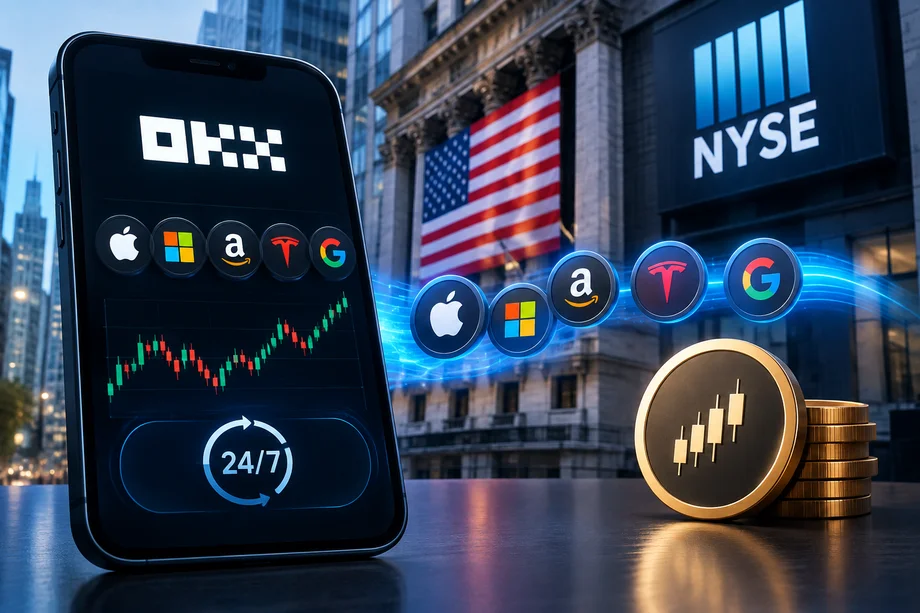
OKXICE Submits SEC Filing for 24/7 Tokenized NYSE Stocks Under New Exemption

SEC Delays Tokenization Exemption and Cancels Crypto Rules Meeting Amid CLARITY Act Talks

SEC Moves to Enable Trading of Tokenized Stocks on Crypto Platforms

Blockchain.com and NYSE Explore 24/7 Tokenized U.S. Stocks Trading

Uniswap Labs Rolls Out Permissioned Pools on v4 for Regulated Asset Trading
Latest articles

SpaceX Seeks $40 Billion Debt Package for Nvidia AI Chips Amid Orbital Compute Push

Hunter Biden Demands Market Makers Buy Back and Burn LAPTOP Tokens After Launch Crash

Circle and Tereina Integrate USDC and EURC Into SAP Enterprise Payment Systems

Tether Partners With Kazakhstan Central Bank on Tenge Stablecoin and Tokenization Study