Newsroom
Nvidia Reveals $21 Billion SpaceX Holding Amid Deepening AI Chip Alliance
16 August, 2026 / News / AI / Tags: nvidia, spacex, shares, rubin, musk
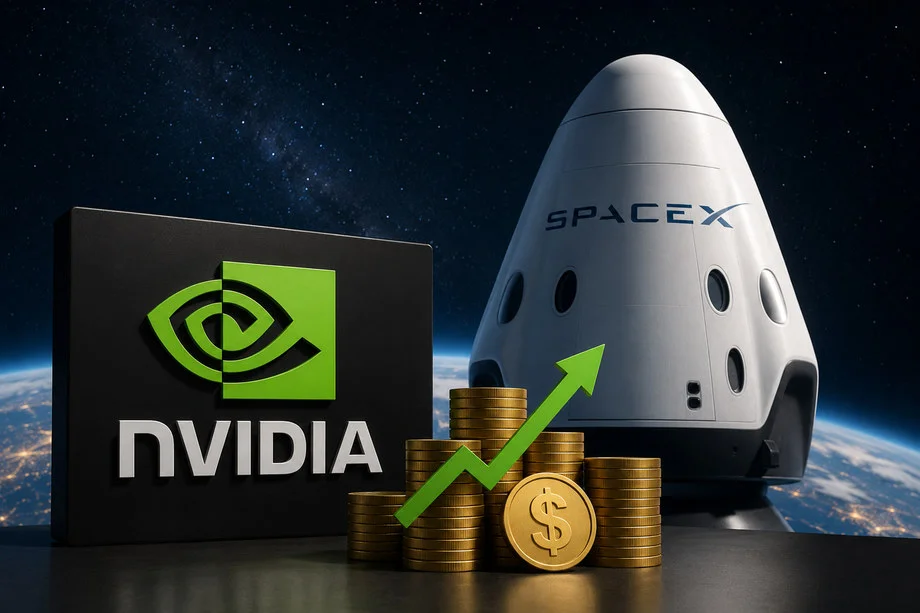
Chipmaker discloses 122.8 million Class A shares in regulatory filing, while SpaceX commits exclusively to Nvidia hardware for data centers
Nvidia has disclosed a substantial equity position in SpaceX, reporting ownership of 122.8 million Class A shares valued at approximately $21 billion as of June 30. The revelation came in a Securities and Exchange Commission filing and ranks as one of the chipmaker’s largest disclosed investments, trailing only its holding in Intel.
SpaceX shares have declined since the company’s June initial public offering. At more recent trading levels near $140, the same position is estimated at roughly $17 billion, down from the $170.86 level recorded at the end of the second quarter.
Origins of the Stake
The shares did not result from a direct purchase of SpaceX equity. Nvidia’s position traces to its earlier investment in xAI. That stake converted into SpaceX Class A shares after SpaceX acquired the artificial-intelligence laboratory earlier this year. Reports place Nvidia’s xAI commitment in the range of several billion dollars as part of a larger funding round completed in January, shortly before the combination.
The disclosure marks the first time Nvidia has publicly assigned a value to the resulting SpaceX holding. At the end of June the position stood as the company’s second-largest disclosed equity investment. Intel remained larger, with Nvidia reporting about 214.8 million shares valued near $30 billion at the same date; that stake has also declined in subsequent trading.
Exclusive Hardware Partnership
The equity link coincides with a tighter operational relationship. During SpaceX’s first earnings call as a public company, Elon Musk stated that the firm will rely exclusively on Nvidia processors for its data-center computing infrastructure.
Musk added that SpaceX expects a significant allocation of Nvidia’s upcoming Vera Rubin GPUs next year as the company expands its computing capacity. SpaceX aims to grow from roughly 2 gigawatts of computing power by the end of 2026 to closer to 10 gigawatts by the end of 2027, a scale that would rank among the largest AI infrastructure build-outs underway.
Broader Financing and Portfolio Moves
Separately, Nvidia has outlined plans for a financing package exceeding $500 billion involving major institutions, including Goldman Sachs and other large asset managers. Under the structure, Nvidia would partially support loans extended by the consortium, with the arrangements intended to help finance purchases of its chips by customers.
Nvidia has deployed more than $100 billion across AI-related companies over the past two years. The SpaceX position forms part of that wider pattern of equity investments that sit alongside hardware supply relationships.
Ownership Structure at SpaceX
A concurrent regulatory filing detailed Elon Musk’s own holdings. As of June 30 he held an economic interest of 48.4 percent valued near $906.9 billion and exercised voting control over more than 82 percent of the company through a combination of direct shares, trusts, restricted stock and options. Musk later noted on social media that a portion of the reported stake remains subject to performance-based vesting conditions and therefore does not represent fully vested ownership.
Other large institutional holders include Alphabet, whose stake has been valued in the tens of billions of dollars depending on the share price used. Nvidia ranks among the top corporate shareholders of the newly public company.
Market reaction to the Nvidia disclosure was muted. In after-hours trading, SpaceX shares rose modestly while Nvidia shares edged slightly lower. Year-to-date performance has diverged, with Nvidia advancing nearly 20 percent in 2026 while SpaceX has traded lower since its June debut.


Disclaimer
This article was generated by AI using information from multiple industry sources. It has not been reviewed or verified by a human editor and may contain inaccuracies, omissions, or misinformation. Readers are encouraged to independently verify any information before making decisions based on its content.Tired of the noise?
Let the bots trade for you.
Trade 24/7, without emotion, with data-driven strategies.
Associated articles

Norway’s Sovereign Wealth Fund Takes $81.9 Million Stake in BitMine for Indirect Ethereum Exposure

Berkshire Hathaway Lifts Alphabet Stake to Nearly $38 Billion, Ends Selling Streak

SpaceX Discloses $1.45 Billion Bitcoin Holdings in IPO Filing

Kinetics Fund Discloses Stake in Private Ripple Labs Shares via SEC Filing

Jane Street Rebuilds Bitcoin ETF Holdings to Nearly $1 Billion After Sharp First-Quarter Cut
Latest articles
SpaceX and Tesla Set Up Committees to Explore Merger That Would Combine Holdings of Over 30,000 Bitcoins

UK Banks Face Thousands of Complaints Over Crypto Transfer Restrictions

Ripple Backs SEC Proposed Crypto Asset Rules After $150 Million Legal Battle

Blockchain.com Introduces Options Trading on Seven Major Crypto Assets