Newsroom
New York City Weighs 12-Month Pause on Crypto Mining and AI Data Centers
9 September, 2026 / News / AI / Tags: plattsburgh, computing, mining, moratorium, council
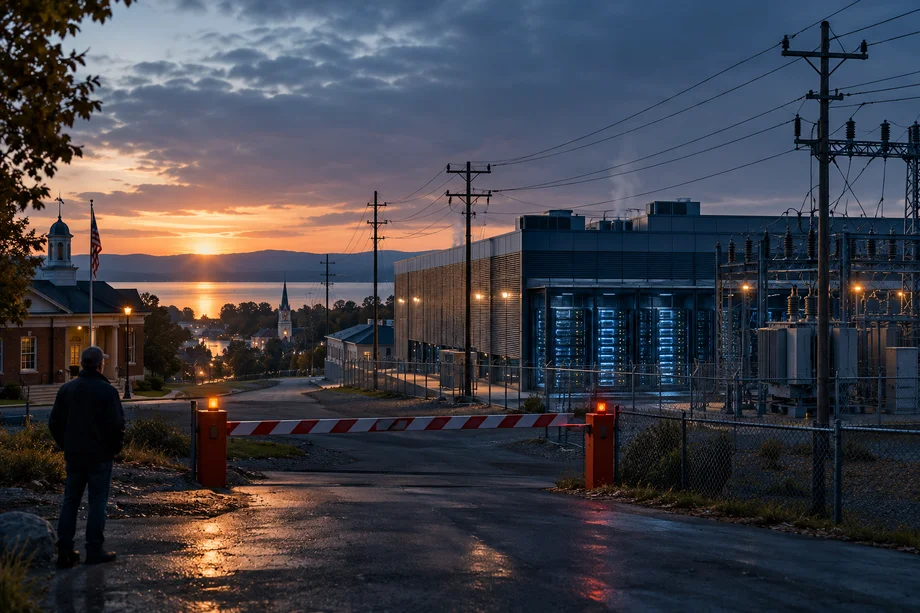
Plattsburgh officials consider a temporary land-use ban on high-energy computing facilities after a public hearing, with a council vote possible later this month
The city of Plattsburgh in New York is evaluating a proposed 12-month moratorium on land-use approvals for certain high-energy computing operations. The measure would cover cryptocurrency mining, artificial intelligence data centers and related facilities that demand significant power.
Details of the Proposed Moratorium
Local Law P-2, introduced by Mayor Wendell Hughes on August 20, would temporarily block city departments from issuing building permits, zoning permits, special-use permits, site-plan approvals and certificates of occupancy for covered projects. The restriction applies to new facilities, expansions, building conversions and the reopening of previously idle sites.
Facilities fall under the proposal if they primarily engage in cryptocurrency mining, blockchain validation, AI computing, machine learning, cloud computing, digital asset processing, server farms or colocation services and require High Density Load Service or a connected electrical demand of at least 300 kilowatts. Ordinary commercial or industrial businesses would not be affected solely by electricity use; computing must be the primary purpose.
Existing lawful operations could continue during the pause, including routine maintenance, ordinary repairs and equipment replacements that do not materially raise electricity demand or computing capacity. Expansions or intensifications requiring municipal approval would be prohibited. Operators facing extraordinary hardship could seek relief through a public hearing and written findings by the Common Council.
The city owns and operates the Plattsburgh Municipal Lighting Department. Officials noted that large power users can influence utility planning, reserve capacity, capital spending, reliability and municipal finances. One potential data center project could require around 50 megawatts against the city’s approximate 105-megawatt total allocation.
Public Process and Next Steps
The Common Council held a public hearing on September 3 to gather resident input on the draft law. As of early September reporting, the mayor had not approved the measure. The council’s next regular meeting is scheduled for September 17. The proposal also requires county review and compliance with New York’s State Environmental Quality Review Act before any adoption.
If enacted, the moratorium would take effect upon filing with the New York secretary of state and last 12 months unless repealed early or extended by further local law. City officials described it as a temporary planning tool to support updates to zoning regulations that currently do not fully address newer high-energy computing categories. Topics under review may include appropriate zoning districts, electrical thresholds, utility infrastructure, noise, cooling systems, fire protection, emergency response, battery storage, decommissioning and financial assurance.
Historical Context in Plattsburgh
Plattsburgh was among the first U.S. jurisdictions to restrict commercial Bitcoin mining. In March 2018 the Common Council adopted an 18-month moratorium after mining operations increased demand for the city’s allocation of low-cost hydroelectric power. When that allocation was exceeded, the city purchased more expensive electricity on the open market, raising costs for residents. Officials later established special-use permit requirements addressing noise, fire safety and heat from mining equipment.
The current proposal is broader. It encompasses AI, cloud computing and large data centers alongside cryptocurrency mining, reflecting the growing overlap between the sectors. Both industries seek locations with available grid connections, cooling capacity and substantial power supplies.
Industry Backdrop
Many cryptocurrency mining companies have shifted operations toward artificial intelligence and high-performance computing amid rising power costs, operational challenges and fluctuating token prices. One example involves a firm that ended Bitcoin mining at a Michigan facility while preparing the site for an AI computing customer after a substantial decline in its Bitcoin holdings.
No publicly traded miner or data center operator has disclosed a material project directly affected by the Plattsburgh proposal. The September 17 council meeting remains the next confirmed milestone as the city continues its review process.

Disclaimer
This article was generated by AI using information from multiple industry sources. It has not been reviewed or verified by a human editor and may contain inaccuracies, omissions, or misinformation. Readers are encouraged to independently verify any information before making decisions based on its content.Tired of the noise?
Let the bots trade for you.
Trade 24/7, without emotion, with data-driven strategies.
Associated articles

Bitcoin Enters First Hashrate Bear Market as Miners Pivot to AI

Nscale Secures $3.36 Billion Pre-IPO Financing Amid Push Toward NYSE Listing

Bitcoin Miners Invest Billions in AI Infrastructure as Returns Trail Spending

Public Bitcoin Miners Cut Hashrate 13.4% as AI Demand Reshapes Operations

HIVE Stock Surges Over 35% on Plans for Massive $2.55B Toronto AI Data Center
Latest articles

SkyAI Exits Solana Holdings Completely, Launches $201 Million Share Buyback

Strategy Buys 267 Bitcoin and Raises Preferred Share Buyback Cap to $3 Billion

Dormant 2013 Bitcoin Wallets Shift Over $67 Million After More Than a Decade

Binance Rolls Out AI Pro Tool for Chat-Based Automated Trading Strategies