Newsroom
Iran Eases Currency Controls to Allow Bitcoin and USDT in Export Trade Amid Sanctions
9 September, 2026 / News / AI / Tags: iran, iranian, usdt, exporters, sanctions

Iran’s central bank has relaxed foreign-exchange rules, enabling businesses to settle cross-border payments and repatriate earnings with Bitcoin and USDT as traditional banking channels remain restricted by U.S. measures
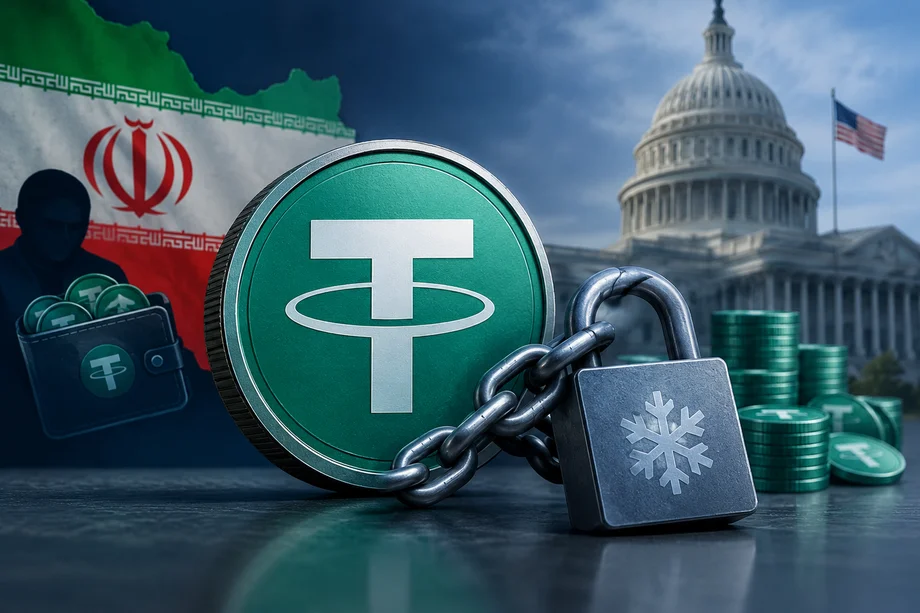
Iran’s central bank has quietly eased strict foreign-exchange controls, giving exporters greater flexibility to receive payments and return overseas earnings through cryptocurrency channels. The shift allows companies to use Bitcoin and the dollar-pegged stablecoin USDT for cross-border trade settlements via domestic platforms, reducing reliance on official government exchange systems that have long required conversion at less favorable rates.
Under the adjusted approach, exporters may bring foreign proceeds home through local digital-asset exchanges or apply those earnings directly toward imports of raw materials and goods. Officials have encouraged firms to repatriate funds by available means rather than insisting solely on state-supervised banking routes. This change comes as access to conventional correspondent banking has narrowed under sustained U.S. sanctions.
Crypto Activity Already Substantial
On-chain data show that cryptocurrency flows linked to Iran reached roughly $10 billion in 2025, according to blockchain analytics firms. One analysis placed the figure near $9.9 billion, while another estimated the broader ecosystem above $7.8 billion. Four major domestic exchanges handled the majority of that volume, with one platform accounting for more than half of observed activity.
USDT has emerged as the preferred asset for commercial payments because of its dollar linkage and relatively low transfer costs on certain networks. Bitcoin continues to play a role both in settlement and as a store of value. Iran has also maintained a meaningful presence in global Bitcoin mining, estimated in earlier assessments at around 4.5 percent of network hashrate, supported in part by subsidized electricity.
The Iranian rial has experienced severe depreciation, trading at levels exceeding 2 million per U.S. dollar on the open market while inflation has remained elevated. Digital assets have provided an alternative for businesses seeking more stable pricing and settlement options outside the constrained traditional system.
U.S. Enforcement Actions Intensify
Washington has responded with expanded measures targeting Iran’s digital-asset sector. In April, authorities moved against approximately $344 million in USDT linked to Iranian networks. Subsequent freezes included more than $130 million in July tied to central-bank-related wallets. In June, four Iranian exchanges—Nobitex, Wallex, Bitpin and Ramzinex—were sanctioned for operating within the country’s financial sector and facilitating activity connected to designated entities.
By late August, U.S. officials formally designated digital assets as a sanctionable sector of Iran’s economy under existing executive authority. Enforcement efforts have also reached intermediaries alleged to have processed oil-related payments involving Iranian military-linked groups. Overall freezes and sanctions actions against Iran-linked crypto assets during 2026 have exceeded $1 billion in combined value.
Blockchain analytics have identified substantial flows associated with Iran’s Islamic Revolutionary Guard Corps, which accounted for more than half of certain quarterly on-chain activity in one assessment. Separate reporting indicated that the central bank itself acquired at least $507 million in USDT, which was used in efforts to support the domestic currency.
Practical Implications for Trade
The policy adjustment expands options for Iranian exporters and importers operating under restricted banking access. Companies can now settle a portion of trade obligations through digital assets without first routing all foreign currency through official channels at administered rates. Domestic crypto platforms serve as the primary conversion points for repatriated value.
At the same time, U.S. rules treat Iranian digital-asset exchanges as Iranian financial institutions. Transactions involving those platforms can expose counterparties to sanctions risk, including secondary measures. Stablecoin issuers retain the ability to freeze tokens at specific addresses, limiting the effectiveness of certain assets when enforcement targets are identified.
More than 20,000 individuals and companies have been cited as still holding substantial unrepatriated export earnings outside the country. The central bank’s more flexible stance aims to draw a greater share of those funds back into the domestic economy through available channels, including cryptocurrency.
The developments illustrate the ongoing contest between efforts to maintain trade flows under sanctions pressure and coordinated measures to disrupt alternative financial pathways. Blockchain transparency continues to support identification and disruption of designated activity even as digital assets offer settlement flexibility where conventional systems are constrained.

Disclaimer
This article was generated by AI using information from multiple industry sources. It has not been reviewed or verified by a human editor and may contain inaccuracies, omissions, or misinformation. Readers are encouraged to independently verify any information before making decisions based on its content.Tired of the noise?
Let the bots trade for you.
Trade 24/7, without emotion, with data-driven strategies.
Associated articles

US Slaps 25% Tariffs on Brazil Targeting Pix Payment System

US Treasury Sanctions Shelbit and Aban Tether Over Alleged Iran Sanctions Evasion
Senate Report Calls Tether USDT a Lifeline for Iran as Issuer Reports $550 Million in Freezes

US Treasury Freezes $131 Million in Iran-Linked Crypto Wallets

Russia’s New Crypto Framework Takes Effect, Opening Regulated Trading in Bitcoin, Ethereum and USDT
Latest articles

SkyAI Exits Solana Holdings Completely, Launches $201 Million Share Buyback

Strategy Buys 267 Bitcoin and Raises Preferred Share Buyback Cap to $3 Billion

Dormant 2013 Bitcoin Wallets Shift Over $67 Million After More Than a Decade

Binance Rolls Out AI Pro Tool for Chat-Based Automated Trading Strategies