Newsroom
House Chair French Hill Says SEC, CFTC Crypto Rules Fall Short, Eyes Lame-Duck CLARITY Vote
8 October, 2026 / News / AI / Tags: hill, duck, clarity, lame, cftc
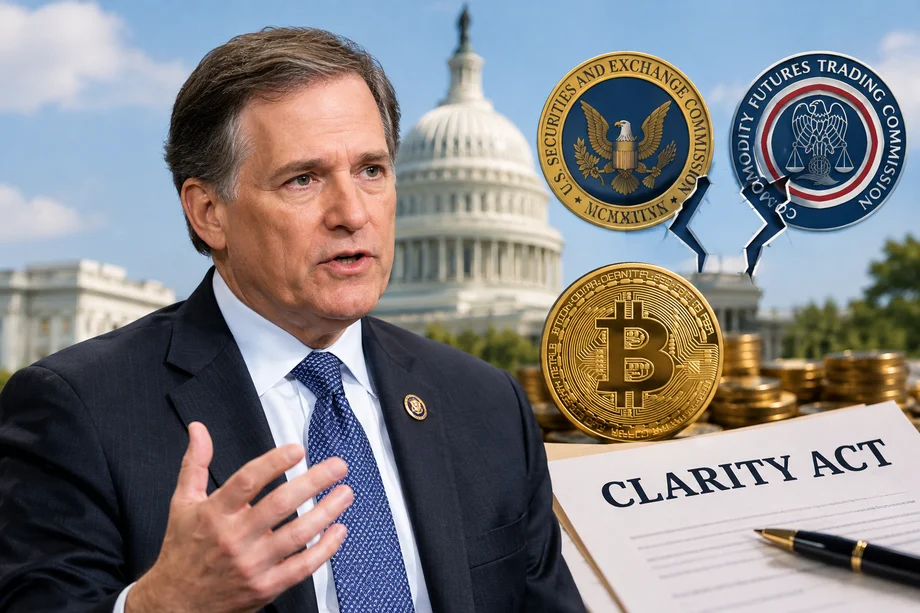
Rep. French Hill argues agency actions lack permanence and pushes for Congress to pass the Digital Asset Market Clarity Act in the post-election session
House Financial Services Committee Chair French Hill said this week that recent crypto-related steps by the Securities and Exchange Commission and the Commodity Futures Trading Commission do not deliver the lasting framework the industry needs. Speaking in a Fox Business interview, the Arkansas Republican called for Congress to revive and pass the Digital Asset Market Clarity Act, known as the CLARITY Act, during the upcoming lame-duck session.
Hill credited the agencies for advancing rules after the Senate failed to move the bill forward last month, yet maintained that only legislation can provide durable clarity. He argued that agency policies can be revised by future regulators or challenged in court, while a statute offers greater permanence.
Agency Moves Follow Senate Setback
The Senate blocked consideration of the CLARITY Act in mid-September. A procedural motion to open debate received 49 votes in favor and 50 against, with one senator absent. Supporters fell 11 votes short of the 60 needed for cloture. Republican Sen. Thom Tillis voted no in order to preserve the ability to revisit the measure later.
The House had approved its version of the bill, H.R. 3633, in July 2025 by a 294-134 margin that included support from 78 Democrats. Any Senate version with material differences would still require agreement between the two chambers before reaching the president.
After the September vote, SEC Chair Paul Atkins and CFTC Chair Michael Selig announced plans to proceed with crypto regulation under direction from President Donald Trump. The CFTC has advanced proposals covering aspects of market structure and enforcement. The SEC has issued interpretations on asset categories, proposed offering exemptions, and granted a conditional exemption for tokenized-stock trading. Hill acknowledged these efforts but said they remain insufficient.
Narrow Legislative Window and Leadership Gaps
Hill pointed to the limited calendar ahead. The Senate is scheduled for only 22 session days between the November midterm elections and the seating of the next Congress in January 2027. During that lame-duck period, members will know whether they are returning or departing, a factor that could influence voting calculations on unfinished business such as the CLARITY Act.
Both agencies currently operate with significant leadership vacancies. Seven commissioner seats are empty across the SEC and CFTC. At the SEC, Commissioner Hester Peirce announced her resignation the previous week, leaving Chair Atkins and Commissioner Mark Uyeda. At the CFTC, Selig serves as both chair and sole commissioner.
Negotiations on the bill previously centered on ethics provisions, consumer protections, illicit-finance safeguards, and treatment of stablecoin rewards. Democratic negotiators cited unresolved ethics language covering current and future presidents as well as members of Congress. Republican sponsors said their September draft incorporated more than 120 changes sought by Democrats, including ethics measures, a role for state attorneys general, and Treasury authority related to deposit flows into stablecoins.
Former Democratic congressman Tim Ryan has said a lame-duck agreement remains possible if both sides return to talks and make concessions. He identified ethics, consumer protection, illicit finance, and stablecoin rewards as open issues and argued that businesses making long-term investments need rules that outlast any single administration.
Path Forward Remains Uncertain
Hill framed the choice as one between temporary regulatory adjustments and a statutory market structure that assigns clear roles. Under the proposed CLARITY framework, qualifying digital commodities would generally fall under CFTC oversight while securities-related activity would remain with the SEC. The bill would also establish registration requirements for certain digital commodity exchanges and related participants.
Whether lawmakers can bridge remaining differences in the short post-election window will determine if the legislation advances before the next Congress convenes. In the meantime, the SEC and CFTC continue to develop rules under their existing authorities while operating with reduced commissioner capacity.
Disclaimer
This article was generated by AI using information from multiple industry sources. It has not been reviewed or verified by a human editor and may contain inaccuracies, omissions, or misinformation. Readers are encouraged to independently verify any information before making decisions based on its content.Tired of the noise?
Let the bots trade for you.
Trade 24/7, without emotion, with data-driven strategies.
Associated articles

House Schedule Cut Puts CLARITY Act Passage Before Midterms at Risk
Senate Faces Critical September 15 Vote on Crypto Market Structure Bill
SEC and CFTC Signal Agency-Led Crypto Rules After Senate Blocks Clarity Act

Crypto PAC Fairshake Backs 32 House Incumbents With $6 Million Opening Push for 2026 Midterms

Trump Urges Senate to Advance CLARITY Act in Critical Week
Latest articles

Anthropic Releases Cheapest Claude Haiku 5.5 Model Ahead of IPO

Litecoin Marks 15 Years of Network Uptime as Grayscale Targets ETF Listing on NYSE Arca

Securitize Brings Major U.S. Stocks to Solana for Eligible Investors

Tikcoin Network Delays TIK Listing to December 12 After October Target Misses