Newsroom
F2Pool Co-Founder Calls Zcash Rally Narrative-Driven Amid Top-10 Surge
8 September, 2026 / News / AI / Tags: wang, zcash, privacy, zec, narrative

Chun Wang questions ZEC fundamentals after the privacy coin climbed past $1,100 and entered the market’s top ranks following a multi-thousand-percent yearly gain
Zcash has drawn fresh scrutiny from a prominent mining executive after the privacy-focused cryptocurrency posted one of the strongest performances among major digital assets. The token recently traded near $1,130, placing its market capitalization around $19 billion and pushing it into the top ten cryptocurrencies by value.
The advance marks a gain of more than 2,300 percent over the preceding twelve months and roughly 125 percent in the most recent thirty days. Market participants have linked the move to several catalysts, including the conversion of Grayscale’s Zcash Trust into a U.S.-listed spot exchange-traded fund in August, renewed attention on privacy coins, tighter circulating supply dynamics, and short-covering activity.
Wang Labels the Move a Narrative Bid
F2Pool co-founder Chun Wang publicly challenged the sustainability of the rally. Posting under the handle @satofishi, he described the price action as a “narrative bid” driven more by market storytelling, exchange listings, and speculative demand than by measurable growth in network usage or fundamental strength.
Wang argued that market capitalization alone does not establish comparable real-world utility. He contrasted Zcash with networks that have demonstrated broader application, stating that temporary factors such as short squeezes and listing-related buying should not be equated with organic adoption.
Concerns Over Token Distribution and Funding
A central point of Wang’s critique focused on Zcash’s early issuance model. During the network’s first four years, 20 percent of every block reward was directed to the Founders’ Reward. That allocation totaled approximately 2.1 million ZEC, equivalent to 10 percent of the planned maximum supply of 21 million coins, and went to founders, employees, advisers, and early investors.
After the Founders’ Reward ended with the Canopy upgrade in 2020, a development fund continued to receive a similar share of block rewards for several years. Wang maintained that this history distinguished Zcash from protocols whose issuance flowed primarily to miners and complicated direct comparisons with projects that followed more transparent distribution paths.
Subsequent changes altered the recipients. Since late 2024, the protocol has directed a portion of rewards to community grants and a lockbox mechanism rather than direct payments to the original corporate entities. Wang’s comments nevertheless treated the cumulative early allocations as a lasting structural feature.
Governance Disputes and Privacy Model
Wang also referenced ongoing organizational friction within the Zcash ecosystem. In January, the entire Electric Coin Company team departed following a dispute with Bootstrap, the nonprofit that oversaw the company. Former executives described the exit as a constructive discharge; Bootstrap’s board cited fiduciary and legal considerations. Development continued under a new entity, and the blockchain itself experienced no interruption, yet the episode illustrated persistent governance tensions among the groups responsible for core software, funding, and related products.
On the privacy front, Wang noted that shielded transactions remain optional rather than mandatory. Historically, a substantial share of ZEC has moved through transparent addresses visible on standard block explorers. He characterized the optional design as limiting the practical privacy benefits relative to the marketing narrative surrounding the project.
Orchard Vulnerability and Subsequent Upgrade
The most technical element of the criticism concerned a vulnerability in the Orchard shielded pool. Security researchers identified an under-constrained circuit issue that theoretically could have allowed the creation of counterfeit ZEC without detection on the public ledger. The flaw existed from Orchard’s activation in May 2022 until an emergency fix in early June 2026.
Developers reported no evidence of exploitation. Because of the privacy properties of the pool, however, they cannot cryptographically prove that no counterfeit coins were ever created. In July the network activated the Ironwood upgrade, which introduced a new formally verified shielded pool, halted new deposits into Orchard, and established an accounting checkpoint to contain any residual risk.
Wang presented these events as additional reasons the current valuation lacked sufficient fundamental support. Market data at the time of his comments showed ZEC consolidating near the upper end of its recent range while broader cryptocurrency prices, including Bitcoin, traded in a relatively narrow band.
The debate leaves open questions about how market participants will weigh narrative momentum against documented protocol history as the privacy sector continues to attract capital.

Disclaimer
This article was generated by AI using information from multiple industry sources. It has not been reviewed or verified by a human editor and may contain inaccuracies, omissions, or misinformation. Readers are encouraged to independently verify any information before making decisions based on its content.Tired of the noise?
Let the bots trade for you.
Trade 24/7, without emotion, with data-driven strategies.
Associated articles
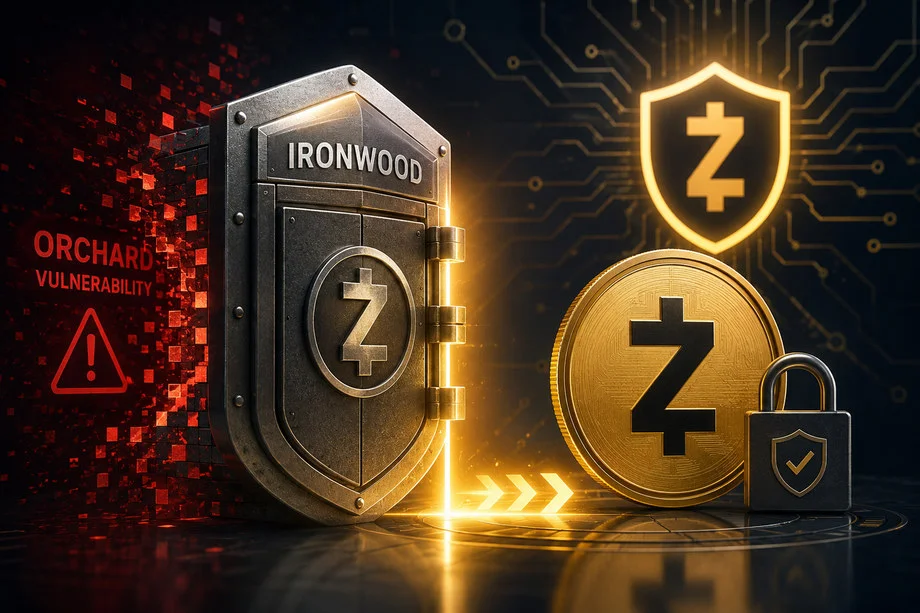
Zcash Activates Ironwood Upgrade, Sealing $1.7B Orchard Pool After Vulnerability
Zcash Crashes Amid Orchard Vulnerability as Arthur Hayes Exits Position

Zcash Rapidly Fixes Critical Orchard Bug as ZEC Price Surges Over 10%

Zcash Rebounds Strongly After Critical Orchard Bug and Launches Historic Ironwood Upgrade

Zcash Rebounds 30% as Developers Defend Supply Integrity After Bug Scare
Latest articles
Revolut Services Disrupted by Google Cloud Power Event in London
Mt. Gox Trustee Extends Creditor Repayment Deadline to October 2027

JPMorgan Forecasts 10% Annual Bitcoin Returns, Surpassing Stocks and Gold Over Next Decade

Bitget Plans Acquisition of Licensed Thai Crypto Exchange to Enter Local Market