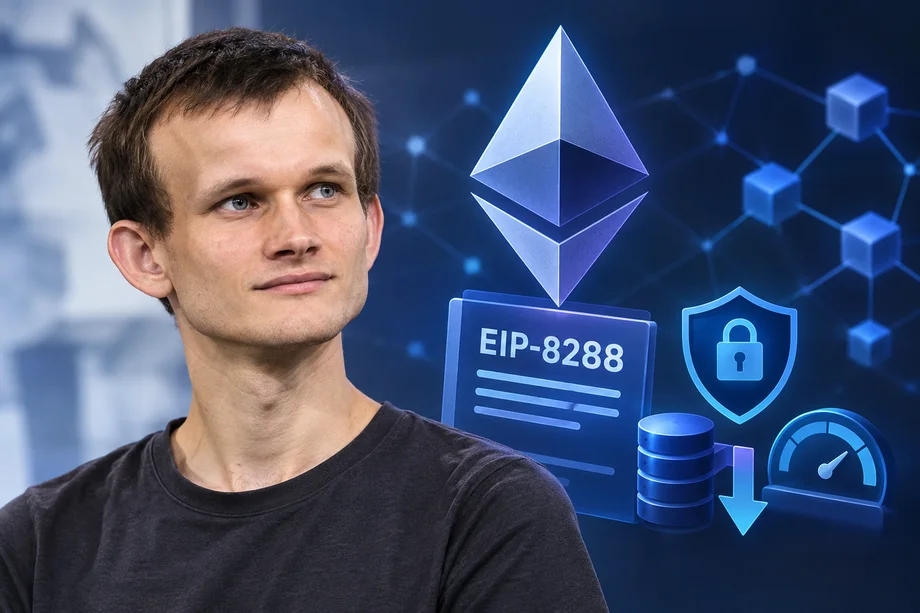
Newsroom
Ethereum Foundation Sets December 2029 Deadline for Full Quantum-Resistant Layer 1
8 September, 2026 / News / AI / Tags: quantum, hegot, cluster, forks, protocol

Protocol cluster prioritizes post-quantum security across execution, consensus and data layers, with Hegotá upgrade as the critical first milestone
The Ethereum Foundation’s Protocol cluster has established December 2029 as the target date for making the network’s base layer fully resistant to quantum computing attacks. The goal covers all three core layers—execution, consensus and data—and is treated as a fixed commitment until at least January 2027.
In a priorities document published this week, the cluster described the date as its “north star.” The timeline matches independent migration targets already set by Google, Cloudflare and Microsoft. Officials noted that a sufficiently powerful quantum computer capable of breaking current public-key cryptography, often called Q-day, could arrive as early as 2030 under aggressive assumptions. Most credible estimates place the risk later, and some researchers believe it may never materialize. Because the timing cannot be controlled, the Foundation assigned itself a self-imposed deadline rather than waiting for greater certainty.
The December 2029 deadline will remain non-negotiable until a formal reassessment in January 2027 that will incorporate input from outside experts on the actual pace of quantum computing progress.
Hegotá Upgrade as the Scheduling Gatekeeper
The next major hard fork after Glamsterdam, known as Hegotá, is not itself the post-quantum upgrade. Implementation work is expected to begin in late 2026 once Glamsterdam ships. Hegotá’s role is to keep the subsequent sequence of forks on track so the 2029 target remains achievable.
Under the current roadmap, full post-quantum readiness sits five hard forks after Glamsterdam. Meeting the December 2029 date requires an average cadence of roughly 7.2 months between forks. The schedule is described as aggressive and leaves limited margin for delays. Forks will need to overlap rather than proceed strictly in sequence, with research and specification work for later stages advancing in parallel with earlier implementations.
A contingency milestone called minimum viable post-quantum protection is also planned. It is designed to keep the network operational through an earlier-than-expected Q-day, though with reduced security guarantees while the full suite of upgrades is completed.
Mandatory Proposals and Extensive Review Process
The Protocol cluster evaluated 62 Ethereum Improvement Proposals proposed for Hegotá. Approximately 60 researchers and engineers from nine teams contributed 397 evaluation comments, producing the first unified tier list of its kind for a single network upgrade.
Two proposals received the highest “must-ship” designation. FOCIL, formally EIP-7805, strengthens censorship resistance by allowing committees of validators to enforce inclusion of eligible transactions from the public mempool. Frame Transactions, EIP-8141, introduces native account abstraction at the protocol level. It separates validation, gas payment and execution into modular components, enabling accounts to adopt new signature schemes without requiring a separate hard fork for each change. The design also opens a direct path toward post-quantum authentication and supports features such as payment of transaction fees in tokens other than ETH.
Additional proposals that support these priorities include steps to begin retiring certain withdrawal credentials still tied to current cryptography and mechanisms that help private transactions benefit from the new inclusion guarantees.
Cryptographic Risks and Planned Protections
Existing quantum computers pose no immediate threat. The vulnerability lies in the mathematics underlying the signatures users create to move funds and the signatures validators use to reach consensus. Once an account broadcasts a transaction, its public key becomes permanently visible on-chain. A sufficiently advanced quantum machine could, in theory, derive the corresponding private key from that public key under the current secp256k1 elliptic-curve system.
Planned work after Hegotá includes the introduction of hash-based signature schemes such as leanSPHINCS, post-quantum attestations for validators, a public-key registry, and further changes to data availability and consensus cryptography. Cryptographic agility on the execution layer is a priority so that signature schemes can be updated more flexibly once the foundational changes are in place.
Post-quantum readiness is one of five long-term research arcs guiding the Protocol cluster’s work. The others address fast finality, privacy, state management and zkEVM development. Formal verification is expected to serve as shared tooling across these efforts.
The Foundation has framed the multi-year program as an ecosystem-wide undertaking that will require coordinated effort from client teams, researchers, security reviewers and the broader community to maintain the necessary pace through 2029.

Disclaimer
This article was generated by AI using information from multiple industry sources. It has not been reviewed or verified by a human editor and may contain inaccuracies, omissions, or misinformation. Readers are encouraged to independently verify any information before making decisions based on its content.Tired of the noise?
Let the bots trade for you.
Trade 24/7, without emotion, with data-driven strategies.
Associated articles

Ethereum Developers Draft Post-Quantum Deposit Contract to Retire BLS Signatures
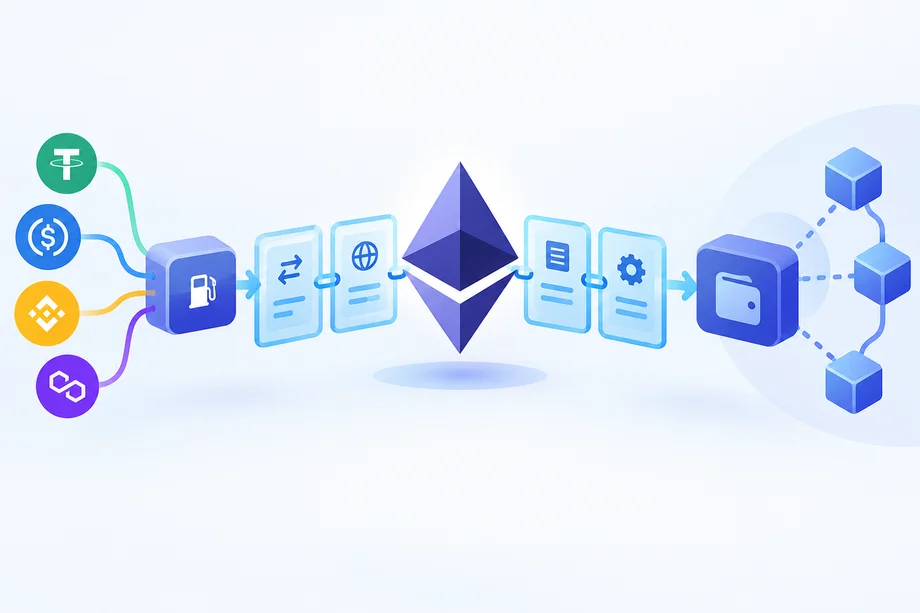
Ethereum Schedules Frame Transactions for 2027 Hegotá Upgrade to Enable Native Account Abstraction

Solana Advances Quantum-Resistant Security with Quantumglow Proposal

G7 Urges Immediate Shift to Quantum-Resistant Encryption as Crypto Networks Face Upgrade Pressures

Sui Targets Q1 2027 Mainnet for Native Quantum-Safe Account Authentication
Latest articles

SkyAI Exits Solana Holdings Completely, Launches $201 Million Share Buyback
Strategy Buys 267 Bitcoin and Raises Preferred Share Buyback Cap to $3 Billion

Dormant 2013 Bitcoin Wallets Shift Over $67 Million After More Than a Decade

Binance Rolls Out AI Pro Tool for Chat-Based Automated Trading Strategies