Newsroom
BitGo Sued for $141 Million by DWF Labs Firms Over Alleged Early Token Sales
9 October, 2026 / News / AI / Tags: dwf, bitgo, falcon, maas, esports
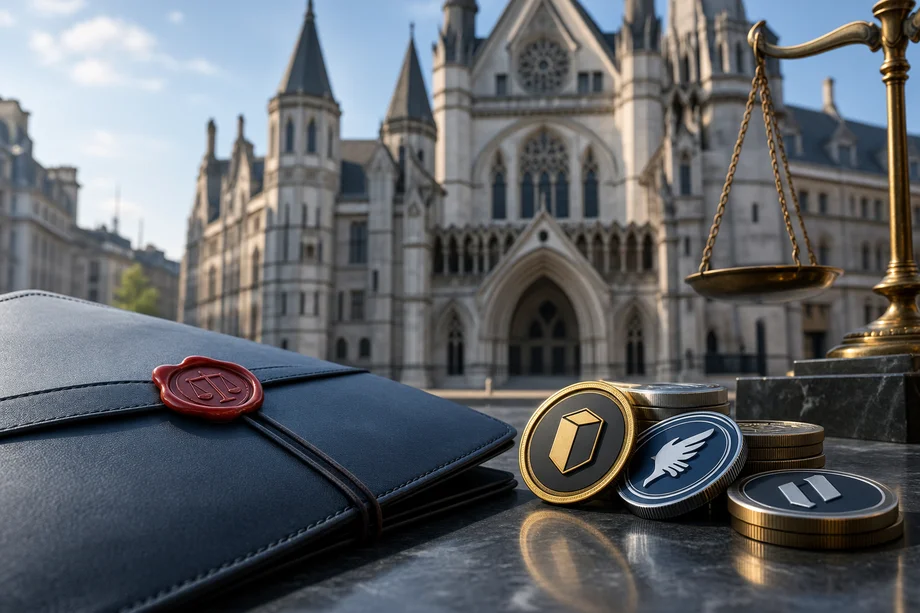
DWF Maas and Falcon Digital have filed a lawsuit in London’s High Court against crypto custodian BitGo, accusing it of breaching private OTC agreements by moving locked Falcon Finance and ESPORTS tokens to exchanges roughly two months before the first unlock
DWF Maas and Falcon Digital, companies linked to crypto market maker DWF Labs, have sued BitGo in London’s High Court for $141 million. The plaintiffs allege the custodian violated terms of discounted over-the-counter token purchases by transferring Falcon Finance (FF) and ESPORTS tokens to exchanges before contractual lock-up and vesting periods expired.
Details of the Alleged Breach
According to the filings, the disputed agreements required buyers to hold tokens for an initial three-month lock-up period, followed by staged vesting releases. DWF Maas and Falcon Digital claim BitGo breached this by moving the assets early, which they say increased selling pressure in a thin market and reduced the value of the plaintiffs’ remaining holdings.
The companies raised concerns with BitGo in April and May but received no assurances that the restrictions would be upheld. The lawsuit seeks compensation for the claimed financial harm.
Tokens and Transaction Background
The case centers on two specific digital assets. Falcon Finance (FF) and ESPORTS were acquired at a discount through private deals structured with lock-up commitments. BitGo allegedly transferred portions to exchanges approximately two months ahead of the first scheduled unlock date.
ESPORTS had previously experienced a sharp price decline in May 2026, with more than 90 percent of its value wiped out in a matter of hours amid large token movements. While the earlier event involved DWF-linked addresses, the London suit does not establish a direct causal link to the custodian’s actions.
Falcon Finance shares founding leadership with DWF Labs through co-founder Andrei Grachev, who has referenced independent attestations of asset withdrawals in prior custody changes.
Broader Context and Connections
The dispute occurs amid tight business ties between the parties and World Liberty Financial. DWF Labs completed a $25 million strategic purchase of WLFI tokens in April 2025 to support liquidity for the project’s USD1 stablecoin. Falcon Finance also received a $10 million investment from World Liberty in July 2025 for USDf-to-USD1 conversions.
BitGo serves as the exclusive custodian and issuer for USD1, which has seen nearly $4.3 billion in circulation across multiple blockchains. World Liberty is now advancing plans to assume these roles through its newly approved national trust bank, a development that could reduce BitGo’s involvement with the stablecoin.
| Tie | Party | Details |
|---|---|---|
| DWF Labs | DWF Maas, Falcon Digital | Market maker and investor; $25 million WLFI purchase |
| BitGo | Custodian of USD1 reserves | Exclusive issuer and custodian role |
| World Liberty Financial | All parties | Strategic investments and USD1 infrastructure links |
The new trust bank charter received preliminary conditional approval on August 14, 2026, with final determination still pending conditions. This shift marks one of several ongoing legal matters for BitGo following its NYSE listing and acquisitions.
Legal and Regulatory Landscape
BitGo has declined to comment on the London case. The allegations remain untested in court, and no judgment has been issued. The company faces separate disputes, including a $100 million-plus claim against Galaxy Digital over a terminated $1.2 billion acquisition and shareholder litigation tied to its January 2026 IPO.
The London filing highlights complexities in private token transactions, where discounted pricing often comes with resale restrictions. Such arrangements aim to stabilize markets but can create enforcement challenges when parties later seek to exit positions.
As the case moves forward, observers will watch for developments in contract interpretation, market impact assessments, and any regulatory scrutiny related to crypto custody practices. The outcome could influence future dealings in OTC token sales and lock-up structures across the industry.


Disclaimer
This article was generated by AI using information from multiple industry sources. It has not been reviewed or verified by a human editor and may contain inaccuracies, omissions, or misinformation. Readers are encouraged to independently verify any information before making decisions based on its content.Tired of the noise?
Let the bots trade for you.
Trade 24/7, without emotion, with data-driven strategies.
Associated articles

Justin Sun Secures Partial Court Victory Keeping Claims Against World Liberty Public
Trump-Backed World Liberty Financial Readies App and USD1 Payments for Online Merchants

Aster and World Liberty Financial Roll Out USD1 RWA Boost Phase 1 With Major Token Rewards

Digital Chamber Challenges NY Lawsuit Over 39,069 Dormant Bitcoin Wallets

Public Citizen Estimates $4.7 Billion Investor Losses from Trump Family Crypto Ventures
Latest articles
Blockchain.com Seeks CFTC Approval to Launch U.S. Event Contracts and Crypto Derivatives

New York Bans Celsius Founder Mashinsky for Life, Secures Up to 35 Million in Settlement

Bessent Warns of $1 Billion Iran Crypto Seizure as US Tightens Sanctions

MARA Holdings Transfers 996 Bitcoin Worth $81 Million to Galaxy Digital