Newsroom
Bank of Russia Requires Eight-Question Test for Crypto Purchases
27 November, 2026 / News / AI / Tags: qualified, offices, questions, must, validity
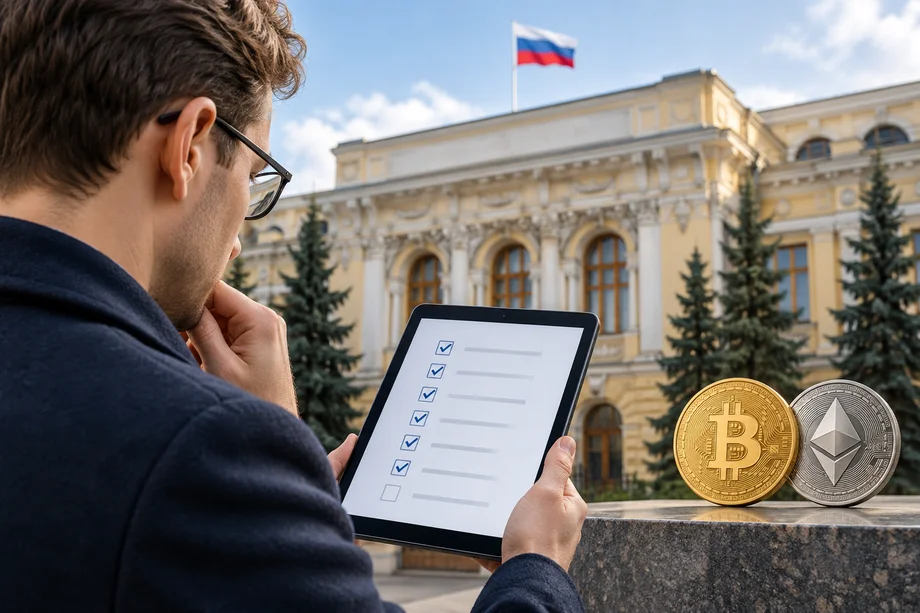
Individual investors must score at least seven correct answers before buying digital assets through licensed channels, with tighter limits for non-qualified buyers
The Bank of Russia has approved mandatory testing standards that require individual Russian residents to pass an eight-question exam before purchasing cryptocurrencies through licensed brokers or exchange offices. The rules, confirmed on November 26, 2026, apply to both qualified and non-qualified investors and form part of broader customer protection standards.
Investors must answer at least seven of the eight questions correctly. The electronic test is free. Those who fail receive one opportunity to retake it the same day using a completely new set of questions. Firms administering the test must record the questions shown, the answers submitted and the timing of the assessment, then notify the investor of the result by the next business day.
Test Content and Validity Rules
Questions are drawn from eight thematic categories covering the regulatory framework for digital currencies, the technology underlying crypto assets, information security, the characteristics of different tokens, transaction restrictions, address flagging and the risks of sharp price declines. Exchange offices may present all questions at once or one at a time.
A passing result remains valid for one year. The validity period begins on the later of two dates: the day the investor passed the test or the day of the investor’s most recent qualifying crypto transaction. Active traders can therefore extend the period through continued activity, while inactive accounts will eventually require a retest.
Later retakes within a 14-calendar-day window must exclude every question from the most recent attempt and half of those from the prior attempt. After 15 days those restrictions no longer apply.
Different Rules for Non-Qualified Investors
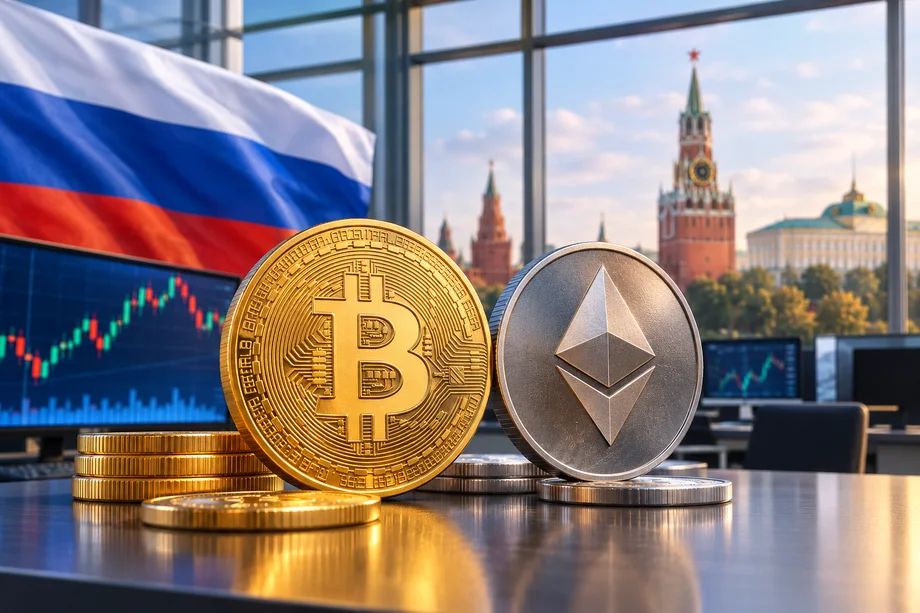
All individual residents must pass the test regardless of prior investor status. After that, the rules diverge. Non-qualified investors may purchase only three assets: Bitcoin, Ether and Tether’s USDT. These assets were selected on the basis of market capitalization, average daily trading volume and multi-year pricing history on foreign exchanges.
Non-qualified buyers also face an annual purchase limit of 300,000 rubles, equivalent to approximately $3,650 at current exchange rates. The ceiling applies per intermediary, so spreading transactions across multiple brokers does not increase the overall allowance. A broker counts the combined ruble value of purchases made during the calendar year.
Qualified investors face no equivalent spending limit and may access a wider range of digital assets.
Legal and Market Context
The testing regime builds on the Federal Law “On digital currencies and digital rights,” which entered into force on September 1, 2026. Retail access rules that opened Bitcoin, Ether and USDT trading through brokers, trust managers and crypto exchange offices took effect on November 17. Organized exchanges received permission to begin crypto trading from November 22 once their trading rules receive approval.
Moscow Exchange has scheduled a pilot program for December 1, 2026, starting with Bitcoin, Ether and USDT. The exchange plans to use its existing securities trading systems and to operate on the same schedule as its equity market, with settlement through the National Clearing Centre.
Before the first purchase or sale, exchange offices must deliver a written risk notice warning that investors may lose money or earn less than expected. The notice may be provided through an online account, mobile application or on paper, and firms must be able to demonstrate when it was given.
The Bank of Russia has framed the testing requirement as a measure of investor protection intended to ensure that buyers understand the risks associated with volatile digital assets before committing funds through regulated channels.
Disclaimer
This article was generated by AI using information from multiple industry sources. It has not been reviewed or verified by a human editor and may contain inaccuracies, omissions, or misinformation. Readers are encouraged to independently verify any information before making decisions based on its content.Tired of the noise?
Let the bots trade for you.
Trade 24/7, without emotion, with data-driven strategies.
Associated articles
Russia Opens Regulated Retail Access to Bitcoin, Ethereum and USDT With Annual Purchase Caps
Russia Finalizes Crypto Rules for Retail Trading Starting November 17
Russia Authorizes Regulated Crypto Trading on Exchanges From November 22

Russia's Central Bank Approves Bitcoin, Ethereum and USDT for Exchange Trading Under New Rules

Russia’s New Crypto Framework Takes Effect, Opening Regulated Trading in Bitcoin, Ethereum and USDT
Latest articles

Binance Hackers Route Over $600 Million Through THORChain as Laundering Efforts Widen
Binance Auto-Closes WLFI Futures as Open Interest Drops 77% in 90 Minutes

Binance Founder Zhao Weighs Legal Action Over Netflix's Portrayal of Him in FTX Drama
Bybit Withholds Full Postmortem of $1.4 Billion February 2025 Hack