Newsroom
Russia Opens Regulated Retail Access to Bitcoin, Ethereum and USDT With Annual Purchase Caps
18 November, 2026 / News / AI / Tags: qualified, bank, russia, retail, digital
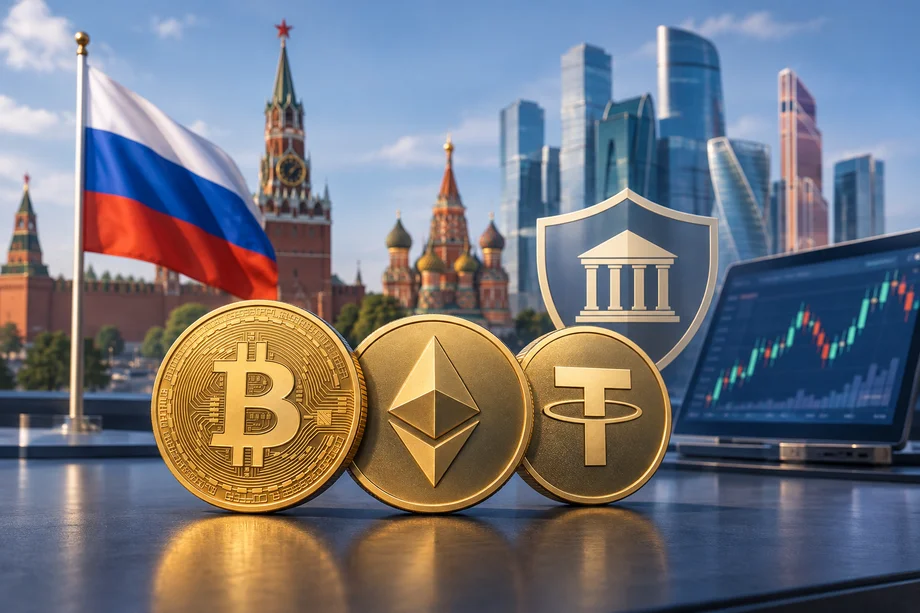
Non-qualified investors may buy the three assets through licensed intermediaries from November 17 under a 300,000-ruble yearly limit per provider, while exchange trading follows later this month
New rules from the Bank of Russia took effect on November 17, 2026, permitting ordinary retail investors to acquire Bitcoin, Ethereum and Tether’s USDT through regulated financial intermediaries. The change marks the first formal domestic channel for non-qualified buyers to purchase these assets under the country’s digital currency framework.
Purchases by non-qualified investors are limited to 300,000 rubles per year through each intermediary. At the central bank’s official exchange rate near 82.5 rubles per dollar, the ceiling equals roughly 3,600 U.S. dollars. The limit applies separately to every broker, trust manager or registered cryptocurrency exchange operator, rather than as a single total for each individual.
Qualified investors face no equivalent annual ceiling and may access a broader set of digital assets. Both groups of buyers must complete a knowledge test and review risk disclosures before executing any transactions. Intermediaries are required to track the combined ruble value of cryptocurrencies acquired on behalf of each non-qualified client within a calendar year.
Selection Criteria and Asset Classification
The central bank selected Bitcoin and Ethereum as eligible digital currencies, while classifying USDT as a foreign digital instrument. Criteria included market capitalization, average daily trading volumes and at least five years of historical pricing data drawn from foreign exchanges. Officials stated that the approach aims to shield non-qualified investors from sharp and unpredictable price swings by restricting the list to the most liquid assets.
The ordinance governing retail access was dated September 11 and published on November 6. It forms part of the broader Federal Law on Digital Currencies and Digital Rights, whose main provisions entered force on September 1.
Exchange Trading Timeline and Institutional Readiness
Organized exchange trading of cryptocurrencies may begin on November 22 once the central bank approves each venue’s trading rules. Moscow Exchange has scheduled a pilot phase for Bitcoin, Ethereum and USDT starting December 1. Trading hours will align with the exchange’s existing stock market schedule, and settlements will integrate into the National Clearing Centre’s unified system. Same-day and next-day settlement options, along with swap transactions, are planned.
Several major institutions have already secured licenses. Sberbank received approval for cryptocurrency exchange services and intends to offer its first products through existing customer platforms on December 1. Other entities, including VTB and T-Invest Lab, appear on the central bank’s registers of digital depositories and cryptocurrency exchange operators.
However, two large retail brokers reported that their applications remain unavailable. T-Bank’s head of blockchain technology development said clients cannot yet access cryptocurrencies in the bank’s app because a market standard for the required knowledge test has not been published. The bank’s crypto exchange and digital custody services are in final live testing, with a phased rollout planned once the standard appears. VTB’s brokerage unit is testing processes in its investment app and expects to open trading first to qualified investors who complete the test.
Ongoing Restrictions and Market Context
The legislation continues to prohibit the use of cryptocurrencies for payment of ordinary goods and services inside Russia. Exporters and importers face different treatment and may use digital currencies for international trade without the same transaction ceilings applied to retail buyers. Residents must report foreign cryptocurrency holdings to tax authorities, and transfers of domestically purchased assets abroad remain possible through regulated intermediaries.
Authorities have indicated plans to phase out direct peer-to-peer cryptocurrency trading by July 2027, channeling activity into licensed venues. Digital depositories handle recording and transfer of cryptocurrencies and digital rights, while registered exchange operators may buy and sell outside organized markets using their own funds. Institutions admitted under transitional rules must meet recordkeeping requirements immediately and achieve full compliance by September 1, 2027.
Market participants note that Russian investors have long used offshore platforms. Some industry figures estimate that domestic traffic already accounts for a notable share of activity on large Asian exchanges. The new domestic limits and testing requirements are expected to influence how quickly retail demand shifts to licensed local channels.
| Investor Category | Eligible Assets | Annual Purchase Limit | Knowledge Test |
|---|---|---|---|
| Non-qualified (retail) | Bitcoin, Ethereum, USDT | 300,000 rubles per intermediary (approx. $3,600) | Required |
| Qualified | Broader set of digital assets | None | Required |
Exchanges must register participating brokers, trust managers and central counterparties, maintain order and transaction records, monitor activity and report results to the central bank under procedures similar to those used for other financial instruments. The overall framework places cryptocurrency activity under continuous regulatory oversight while keeping domestic payment use restricted.


Disclaimer
This article was generated by AI using information from multiple industry sources. It has not been reviewed or verified by a human editor and may contain inaccuracies, omissions, or misinformation. Readers are encouraged to independently verify any information before making decisions based on its content.Tired of the noise?
Let the bots trade for you.
Trade 24/7, without emotion, with data-driven strategies.
Associated articles

Russia’s New Crypto Framework Takes Effect, Opening Regulated Trading in Bitcoin, Ethereum and USDT

Russia's Central Bank Approves Bitcoin, Ethereum and USDT for Exchange Trading Under New Rules
Russia Authorizes Regulated Crypto Trading on Exchanges From November 22

Russia Finalizes Crypto Rules for Retail Trading Starting November 17
Putin Signs Russia’s First Comprehensive Crypto Law, Opens Regulated Trading
Latest articles

Binance Wallet Closes $500 Million Anthropic Tokenized Stock Campaign After Cap Hit

XRP Ledger Secures Independent Verification of Architecture and Resiliency Under Global Framework

ZachXBT Claims Indian Authorities Wrongly Froze $3M Gate Account in Scam Probe

Vitalik Buterin Urges Crypto to Build Long-Term Stability Like Housing