Newsroom
Aave V4 Debuts Externally Curated Lending Markets Managed by Sentora on Ethereum
23 October, 2026 / News / AI / Tags: sentora, aave, ousd, pyusd, rlusd
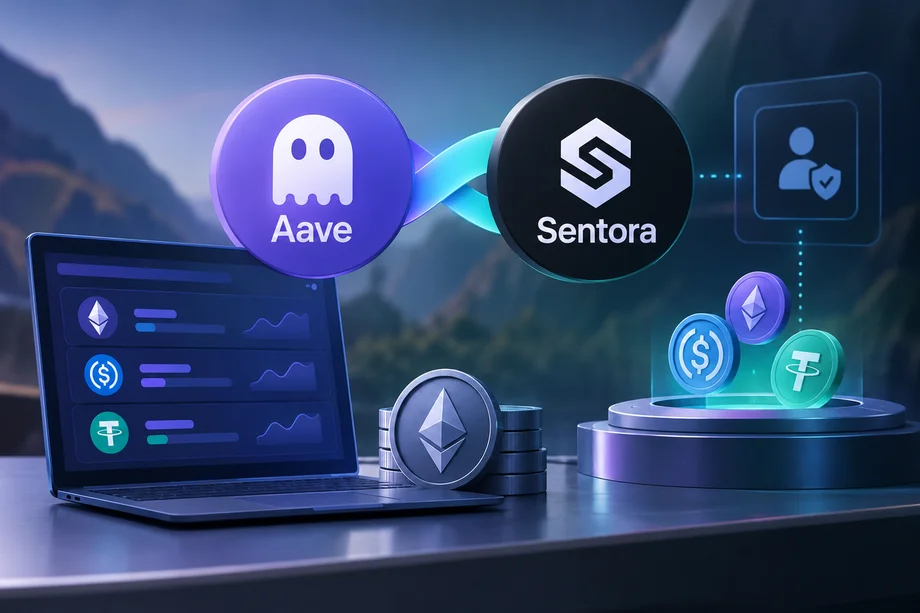
Institutional DeFi platform Sentora operates three new markets enabling borrows of RLUSD, PYUSD and OUSD against selected collateral under Aave governance safeguards
Aave has activated its first externally curated lending markets on version 4, partnering with institutional DeFi platform Sentora to launch three dedicated markets on Ethereum. The markets allow users to borrow Ripple’s RLUSD, PayPal’s PYUSD and Origin’s OUSD against yield-bearing and blue-chip crypto assets, marking the initial real-world deployment of external curation under Aave V4’s Hub-and-Spoke design.
Sentora manages the markets, setting collateral requirements, interest rate curves, price oracles and liquidation parameters. The Aave DAO retains ownership of the underlying contracts and maintains oversight of changes that could increase risk for lenders. Users access the markets through Aave Pro, the interface for the protocol’s curated lending products.
Three Markets, Shared Liquidity Hub
All three markets draw from a dedicated Sentora Liquidity Hub on Ethereum that holds the assets available for borrowing and supplies liquidity to the individual markets. Despite sharing the Hub, each market operates under separate borrowing conditions and risk controls.
The RLUSD Yield market permits borrowing of RLUSD against four collateral assets: USDe, PRIME, mWIN and PST. The OUSD Yield market accepts the same collateral set but supports borrowing of OUSD. The Bluechip market enables borrowing of RLUSD, PYUSD or OUSD against kBTC, a Bitcoin-backed asset.
Each Spoke market receives borrowing and supplying limits from its connected Hub. Those limits govern how much liquidity a market can draw or contribute. Individual borrowing positions remain accounted for separately within each Spoke, so users can hold positions across markets without combining collateral and debt into a single exposure.
Governance Safeguards and Risk Controls
Although Sentora operates the markets independently, the arrangement keeps key controls with Aave governance. Any change that raises market risk must pass through a 48-hour timelock before taking effect. New collateral assets require Aave governance review prior to listing.
Aave V4’s architecture separates liquidity holding from market-level risk parameters. Liquidity Hubs maintain accounting for supplied assets, while Spokes define which assets borrowers may use, how much they can borrow and the conditions under which positions become eligible for liquidation. Emergency controls can further restrict activity when required.
Borrowing costs under V4 partly depend on utilization of available liquidity. Higher utilization generally increases rates for borrowers and yields for suppliers. An additional risk premium based on collateral quality may apply, so borrowers posting riskier assets can face higher interest charges.
Sentora’s Role and Broader Context
Sentora describes the deployment as the first governance-approved Hub-and-Spoke arrangement operated by an external curator on Ethereum. The company has allocated more than $2 billion across on-chain strategies and incorporates more than 1,000 risk models into each strategy. Its Sentora Risk Radar system now provides block-level economic risk analytics for Aave V4, beginning with the Sentora-managed Hub and its markets.
The markets introduce regulated, institution-grade stablecoins into specialized Aave V4 venues. RLUSD and PYUSD in particular have seen growing institutional interest, with custody and other infrastructure services expanding around them. A planned PYUSD Yield market appears in Sentora’s architecture materials, though its collateral assets remain unconfirmed and only the three announced markets are currently active.
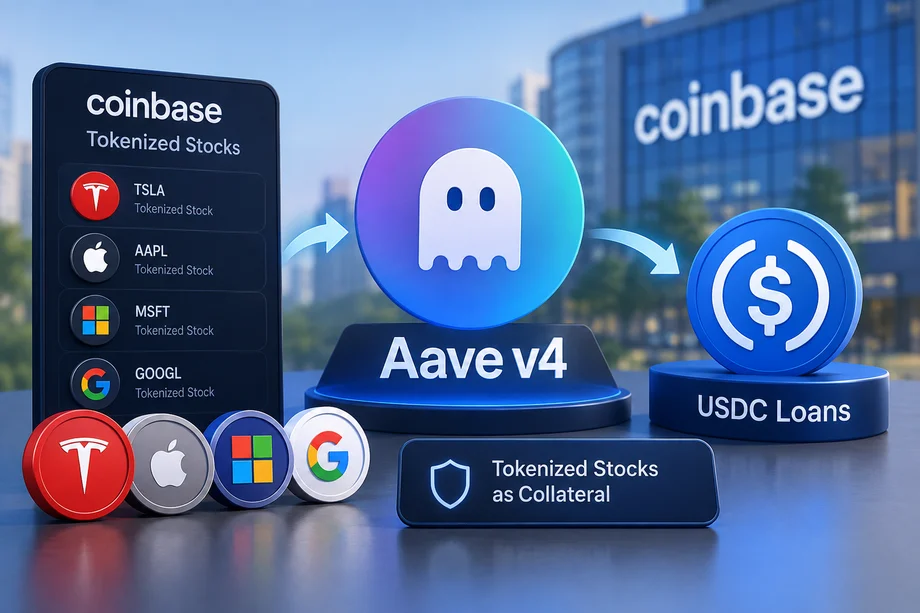
Aave V4 has previously supported specialized products, including an equities market on Base that accepts Coinbase tokenized stocks as collateral for USDC loans. Protocol deposits on V4 surpassed $1 billion in September alongside roughly $310 million in active loans. The protocol has also expanded V4 beyond Ethereum, including a launch on Avalanche targeting institutional real-world asset and tokenized credit use cases.
The Sentora markets contribute to the protocol’s revenue streams under DAO ownership while isolating risk within their own liquidity Hub. Access remains available through Aave Pro on Ethereum.

Disclaimer
This article was generated by AI using information from multiple industry sources. It has not been reviewed or verified by a human editor and may contain inaccuracies, omissions, or misinformation. Readers are encouraged to independently verify any information before making decisions based on its content.Tired of the noise?
Let the bots trade for you.
Trade 24/7, without emotion, with data-driven strategies.
Associated articles

Aave V4 Launches on Avalanche to Support Tokenized Asset Lending
Aave V4 Enables USDC Loans Against Coinbase Tokenized Stocks on Base
Ether.fi Expands App With Tokenized Stocks, Portfolio Loans and Broader Fiat Access

Ledger Rolls Out Bitcoin-Backed Stablecoin Loans in Wallet App via Morpho
Aave Plans to Deprecate 75 Low-Adoption Reserves and Exit Six Blockchains
Latest articles

HSBC Begins Phased Rollout of HKD-Backed RedCoin Stablecoin to 3.3 Million PayMe Users

Solana Meme Coin Kimchi Plunges 98% After Pump.fun Co-Founder Removes Promotion

Ethereum Delays Glamsterdam Hoodi Testnet Activation Over Gas Security Risks

US Banks Restrict AI Agents After Detecting Unauthorized Account Access