Newsroom
ZetaChain Tokenholders Approve Wind-Down of Layer-1 Network and ZETA Migration to Solana
21 September, 2026 / News / AI / Tags: zetachain, zeta, anuma, solana, proposal
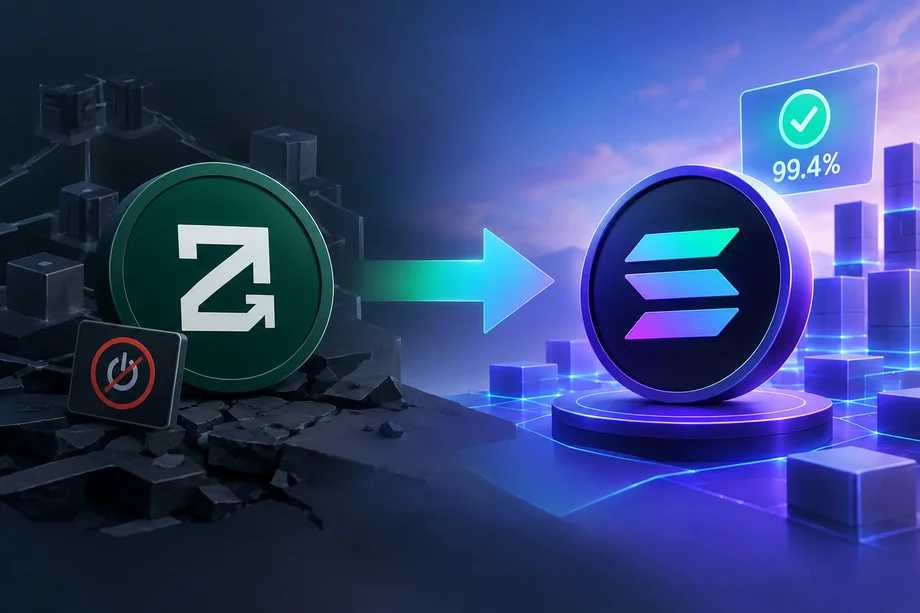
Governance Proposal 68 passed with 99.4% support, clearing the way for a 1:1 conversion of the native token to Solana’s SPL standard while the project shifts focus to its private AI application
ZetaChain tokenholders have approved a plan to retire the project’s independent Layer-1 blockchain and migrate its native ZETA token to Solana. Governance Proposal 68 closed with 99.4% of votes in favor and 58% participation, exceeding the network’s 40% quorum requirement. Opposition and abstentions each accounted for 0.3% of the tally.
The decision authorizes core contributors to prepare a follow-up proposal that will set the technical details of the transition. Until that second vote occurs, the existing ZetaChain network, its validators and staking rewards remain fully operational.
Migration Mechanics and Timeline
Under the approved framework, native ZETA will convert into a Solana SPL token at a one-to-one ratio. The ticker and total supply will stay unchanged, and no new tokens will be created. Existing vesting schedules will continue on their original dates. Balances will adjust from the current 18 decimal places to nine, with any remainder below the new precision rounded down.
The current proposal covers only ZETA native to the ZetaChain Layer 1. Tokens already issued on Ethereum and BNB Chain fall outside its scope. A second governance proposal will define the snapshot block height for balances, the window for withdrawing assets linked to other chains, the claim process on Solana, the exchange conversion period and the final network shutdown block. Core contributors have stated they will not submit that proposal until major exchanges confirm their technical procedures for handling the swap.
During the interim period, validators will continue securing the chain and staking rewards will keep accruing. Post-migration staking arrangements on Solana remain under active exploration and have not yet been finalized.
Strategic Pivot to Private AI
ZetaChain said maintaining a Cosmos SDK-based Layer 1 no longer supports its primary objective of building private artificial-intelligence applications. The project intends to redirect resources previously devoted to blockchain maintenance toward Anuma, its multi-model AI platform, and the associated Private Memory Layer.
Anuma launched in February and has attracted more than 300,000 users. The application has processed over one million requests across 35 different AI models. Its design centers on encrypted memory that remains under user control as individuals move between models. ZETA already functions inside Anuma as a staking asset that generates service credits; that utility is expected to continue after the token becomes native to Solana.
The project originally launched in 2021 with a focus on cross-chain interoperability. In 2023 it raised $27 million from investors that included Blockchain.com, Jane Street Capital, Human Capital and Sky9 Capital to develop its Layer-1 network. The shift away from operating an independent chain follows a broader pattern in which several projects have elected to retire standalone networks in favor of established ecosystems.
Operational Context and Precedents
ZetaChain cited the ongoing coordination required among validators for Cosmos SDK upgrades and security patches as a continuing operational burden. The proposal also referenced recent upstream vulnerability management efforts across the Cosmos EVM ecosystem as an illustration of the resource demands involved in sustaining an independent chain.
In April the project experienced a $334,000 exploit targeting its cross-chain gateway contract. Funds were drained from wallets controlled by ZetaChain across Ethereum, Arbitrum, Base and BNB Smart Chain. The team later acknowledged that an earlier bug-bounty report describing the vulnerability had been dismissed as intended behavior, prompting an internal review of security processes.
Similar Layer-1 wind-downs have been proposed or executed by other projects. BounceBit elected to retire its standalone blockchain after an authorization flaw was exploited and migrated its token to BNB Smart Chain. Harmony has advanced a proposal to shut down its Layer 1 and move its native token to Ethereum as an ERC-20 token.
Once the migration and shutdown are complete, Solana’s validator set will provide security for the ZETA token. The project has pointed to Solana’s transaction speeds, low fees and expanding infrastructure for AI agents as practical advantages for its new focus. Until the second governance proposal passes and the migration executes, all balances, staking positions and network operations on ZetaChain remain unchanged.

Disclaimer
This article was generated by AI using information from multiple industry sources. It has not been reviewed or verified by a human editor and may contain inaccuracies, omissions, or misinformation. Readers are encouraged to independently verify any information before making decisions based on its content.Tired of the noise?
Let the bots trade for you.
Trade 24/7, without emotion, with data-driven strategies.
Associated articles
Harmony Proposes Full Shutdown of Layer-1 Network and ONE Token Shift to Ethereum

BNB Chain Prepares Pasteur Hard Fork for August 25 Activation

The Sandbox Contains Cross-Chain SAND Mint Exploit After Unauthorized Tokens Flood Base

Moonbeam Pivots to Base Network for AI Agent Infrastructure

MANTRA Token Hits Record Low as Blockchain Halts After Software Exploit
Latest articles

Franklin Templeton Seeks SEC Relief for Blockchain Trading of Tokenized Funds

Cyber Capital Founder Labels XRP Decentralization Claims as Fraud Amid Closed-Source Update

DOJ Reviews Binance Compliance With 2023 Settlement Amid Iran Sanctions Probe

EU Tech Chief Says AI Act Equips Bloc to Manage Rogue AI Risks