Newsroom
MANTRA Token Hits Record Low as Blockchain Halts After Software Exploit
21 August, 2026 / News / AI / Tags: mantra, endpoints, vulnerability, project, upstream
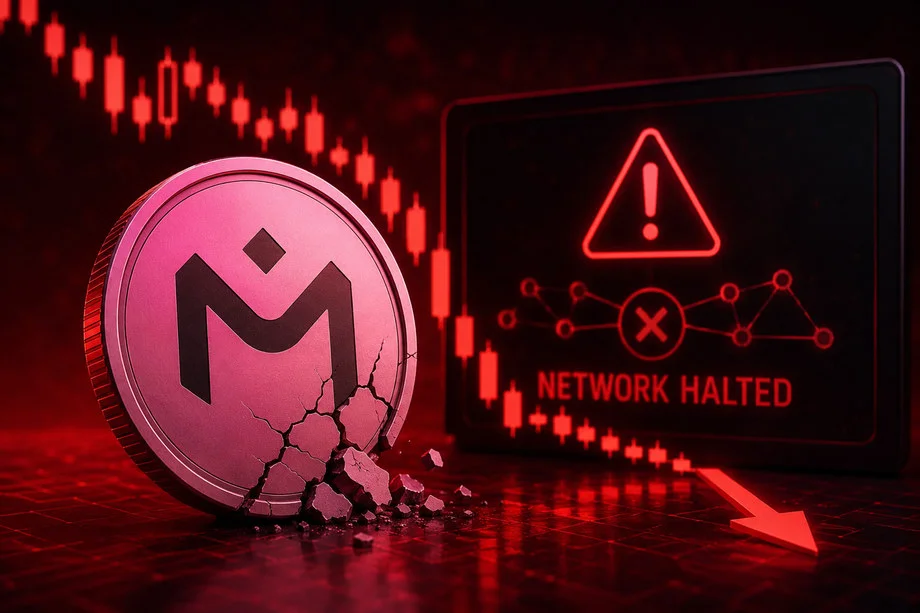
MANTRA’s token dropped 18.5% to an all-time low of $0.004126 before a partial rebound, as the network froze transactions following an upstream vulnerability exploit and investigation
MANTRA’s native token fell sharply late Thursday, reaching a new record low just minutes before the blockchain stopped producing blocks. The project later confirmed an attacker had exploited a vulnerability in an upstream software dependency, prompting a full network halt as a precaution.
According to market data, the token declined from $0.005060 to $0.004126 around 11:10 p.m. UTC. It subsequently recovered to approximately $0.0044, remaining down roughly 10% over 24 hours. Trading volume rose nearly 600% to about $24 million during the period.
Network Halt and Investigation Details
The last recorded block on MANTRA Chain was number 17,449,398, produced at 11:13 p.m. UTC. The project announced the halt about 30 minutes later, stating it was aware of an incident affecting the chain and had frozen all endpoints and transactions while investigating.
A subsequent status update identified the issue as an exploit of a vulnerability in software used by the chain but developed outside the network. The team said it had identified the vulnerability and was preparing a patched release. Validators remain offline while developers test the fix and coordinate a potential restart.
The outage impacts public endpoints, validators, bridge migration operations, and MANTRA-managed Inter-Blockchain Communication relays. The project stated it would not resume operations until confident the network was safe. It is tracing fund movements and working with exchanges but has not disclosed the specific software involved, the attack method, or whether any assets were lost. Assessment of the full impact remains ongoing.
Affected exchanges, including Upbit, paused deposits and withdrawals of the token. Trading on centralized platforms can continue without on-chain transfers. The team advised users that no action was required and warned against unsolicited recovery offers.
Background of Prior Challenges
The latest disruption follows a turbulent period for the project. In April 2025, the former OM token collapsed more than 90%, falling from about $6.30 to below $0.50 and erasing more than $5 billion in market value. The project attributed that episode to forced exchange liquidations.
In January, the team implemented layoffs and restructuring after CEO John Patrick Mullin described 2025 as the most challenging year. Inveniam Capital Partners, which invested $20 million in the project in 2025, announced plans in June to acquire MANTRA. The deal is expected to close in the third quarter.
MANTRA positions itself as an EVM Layer 1 blockchain focused on real-world assets such as funds and bonds. The current token followed a March 2026 rebrand and one-for-four denomination change that replaced the prior OM ticker without altering holders’ proportional ownership.
At the time of the latest reports, the network remained offline with no confirmed timeline for restart. The project has promised further updates as the investigation and patching process advance.

Disclaimer
This article was generated by AI using information from multiple industry sources. It has not been reviewed or verified by a human editor and may contain inaccuracies, omissions, or misinformation. Readers are encouraged to independently verify any information before making decisions based on its content.Tired of the noise?
Let the bots trade for you.
Trade 24/7, without emotion, with data-driven strategies.
Associated articles
Cosmos Labs Advises EVM Chains to Halt Validators Amid Multi-Network Security Incident
Harmony ONE Plunges After Unauthorized Mint of 4 Billion Tokens
ZetaChain Tokenholders Approve Wind-Down of Layer-1 Network and ZETA Migration to Solana

Base Blockchain Recovers After Two-Hour Outage Disrupting Block Production

Solana Approaches Finality Threshold After Routing Fault Knocks Nearly 29% of Stake Offline
Latest articles

NIP Group Expands Bitcoin Mining Fleet With 4.47 EH/s Acquisition

Collins Wallet Sends 500 BTC Worth $41.52 Million to Coinbase Prime After Decade of Inactivity

Mastercard Launches Early Access to AI Agent Payments Following Successful Demo

Injective Partners with BDACS to Launch KRW1 Won Stablecoin for Tokenized Asset Settlement