Newsroom
Wall Street Banks Position Tokenization as Growth Driver for Trading and Payments
18 October, 2026 / News / AI / Tags: goldman, sachs, tokenization, fargo, wells
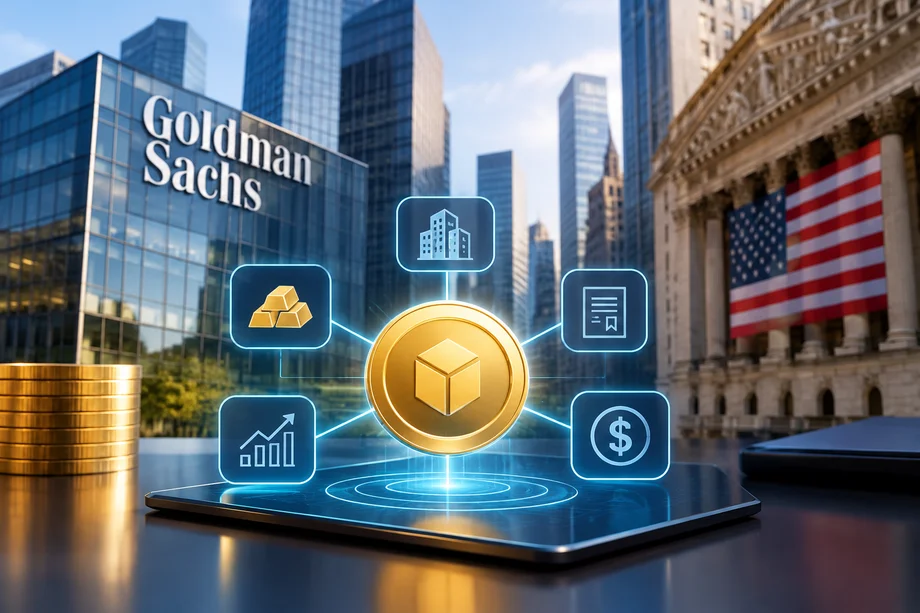
Goldman Sachs, Wells Fargo and Morgan Stanley executives framed blockchain-based asset representation as a means to expand products, speed settlements and support advisory services rather than displace existing businesses
Major U.S. banks are treating tokenization of financial and real-world assets as a practical extension of their current operations. During third-quarter earnings calls this month, leaders at Goldman Sachs, Wells Fargo and Morgan Stanley outlined specific applications in trading, cross-border payments and wealth management without assigning revenue projections to the technology.
Tokenization involves representing ownership rights to assets such as bonds, funds or deposits as digital tokens on a blockchain. Proponents say the approach can streamline transfers, improve recordkeeping and enable faster settlement compared with conventional systems.
Goldman Sachs Focuses on Trading Expansion
Goldman Sachs Chief Executive Officer David Solomon addressed questions about whether tokenization, decentralized finance and prediction markets could reduce the firm’s trading revenue. He responded that the technologies are more likely to increase activity.
Solomon compared the shift to the earlier transition toward electronic equity trading roughly five decades ago. At that time, concerns arose that automation would erode trading desks, yet Goldman Sachs adapted and expanded its equities franchise. He indicated tokenization could follow a parallel course.
The bank has already tokenized bonds, certain money market funds and real estate holdings for selected clients. It operates the proprietary GS DAP platform for blockchain-based financial infrastructure and joined the July launch of a tokenization service by the Depository Trust & Clearing Corporation. Solomon said the firm is now assessing larger-scale uses of that service.
He noted that current activity remains limited. Tokenization could reduce costs, automate processes and enhance liquidity across asset classes, yet existing volumes stay modest relative to traditional markets. Goldman Sachs also expressed public support for the CLARITY legislation to provide clearer rules, while continuing discussions with regulators on digital asset frameworks.
The comments came as Goldman Sachs reported strong results, including $18.68 billion in quarterly net revenue. Equities revenue rose 72 percent year over year to $6.4 billion, with equities financing revenue reaching a record $3.37 billion.
Wells Fargo Advances Tokenized Payments
Wells Fargo highlighted operational progress with tokenized deposits. The bank’s system is already handling cross-border payments, completing some transfers in two minutes or less. Executives presented the capability as relevant to its international payment flows, where faster settlement could support existing client relationships.
Volume remains low at present, consistent with the early stage of broader industry adoption. The focus stays on practical efficiency gains in money transmission rather than speculative new products.
Morgan Stanley Links Faster Movement to Advisory Demand
At Morgan Stanley, Chief Financial Officer Sharon Yeshaya connected tokenization to the firm’s large wealth management franchise. Quicker and more flexible asset transfers, she suggested, would not diminish the need for professional guidance. Instead, clients navigating new options for moving assets and liabilities could generate additional demand for advice.
The bank views blockchain infrastructure as a potential enhancement to services such as lending, cash management and portfolio oversight within its multitrillion-dollar wealth platform. Digital assets currently represent a limited share of overall activity, yet internal work continues on integrating the technology into core offerings.
Shared View Across Institutions
Across the three firms, executives portrayed tokenization as complementary to established businesses rather than a competitive replacement. Goldman Sachs concentrated on trading and product expansion, Wells Fargo on payment speed, and Morgan Stanley on advisory opportunities arising from greater asset mobility.
None of the calls quantified potential revenue from tokenized products. Industry activity, including tokenized bonds and funds already issued by various institutions, remains small relative to traditional markets. Regulatory clarity continues to shape the pace of institutional participation.
The discussions occurred against a backdrop of growing experimentation with blockchain representations of equities, bonds and commodities intended for continuous trading with fewer geographic limits. Banks are evaluating infrastructure investments and pilot programs while monitoring how these tools may alter settlement, distribution and client engagement over time.

Disclaimer
This article was generated by AI using information from multiple industry sources. It has not been reviewed or verified by a human editor and may contain inaccuracies, omissions, or misinformation. Readers are encouraged to independently verify any information before making decisions based on its content.Tired of the noise?
Let the bots trade for you.
Trade 24/7, without emotion, with data-driven strategies.
Associated articles
Morgan Stanley Delays Tokenized Stock Trading to First Quarter of 2027

SWIFT Launches Blockchain Ledger for Tokenized Deposit Pilot with 17 Banks

Taurus Connects Tokenization Platforms to Swift Blockchain Ledger for Bank Tokenized Deposits
KB Securities Partners With Securitize and Optimism to Tokenize Korean Funds on OP Mainnet
Wells Fargo in Talks With Kraken Parent Payward for Crypto Trading Liquidity
Latest articles
Ripple CTO Emeritus Flags Phishing Scam Aimed at SecuX Wallet Users Amid App Disruptions

Ledger Faces Scrutiny Over Delayed Warnings on Hardware Wallet Tampering
Higher Bank Deposit Rates Linked to Slower Stablecoin Expansion, BIS Research Shows

Nine Firms Object to Tokenized Share Trading on OKXICE Platform