Newsroom
Ukraine Parliament Approves Virtual Assets Law With Tax Rules and Dual Oversight
25 November, 2026 / News / AI / Tags: virtual, ukraine, tax, hryvnia, licensing
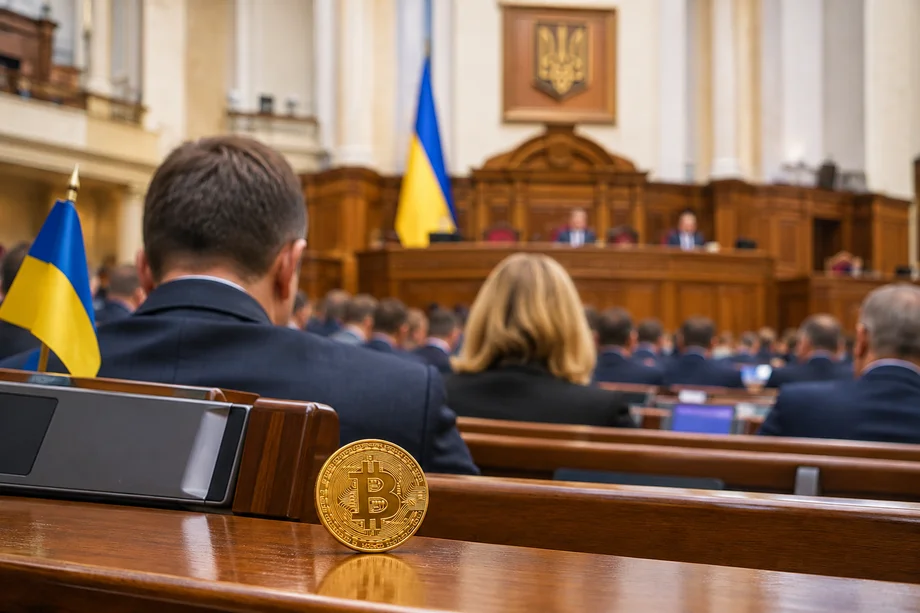
Lawmakers voted 271-8 for Bill No. 10225-d on Nov. 25, creating licensing, tax and supervisory rules for crypto that take effect July 1, 2027, and align with EU standards
Ukraine’s Verkhovna Rada adopted comprehensive legislation legalizing and regulating the cryptocurrency market on November 25, 2026. Bill No. 10225-d, known as the law “On Virtual Assets,” passed its second reading and final form with 271 votes in favor and eight against. The measure establishes a regulatory framework, tax treatment for virtual asset profits, and licensing requirements for service providers. It is scheduled to enter into force on July 1, 2027.
The legislation amends the Tax Code and related acts. It defines virtual assets broadly to cover digital assets and tokens. Companies offering trading, exchange or custody services will need authorization and must meet information disclosure, risk management and market integrity standards. Providers holding client assets are required to keep those holdings separate from their own corporate funds, a step intended to strengthen protections for retail users.
Split Regulatory Responsibilities
Oversight is divided between two institutions. The National Securities and Stock Market Commission will handle licensing of virtual asset service providers, supervision of their activities and enforcement of market conduct rules. It will also have authority to seek court orders against unlicensed operators.
The National Bank of Ukraine will oversee the monetary and payment aspects. Its remit includes transactions involving the hryvnia and virtual assets, certain digital payment tokens, foreign exchange operations linked to crypto, and the broader implications of such activity for the banking system. The division of roles followed negotiations between the two regulators. Earlier concerns raised by the central bank regarding foreign token issuers and potential market concentration were addressed through technical amendments before the finance committee recommended final adoption.
Lawmakers examined more than 2,500 amendments during the legislative process. The bill first cleared an initial reading in September 2025 with 246 votes.
Tax Treatment and Revenue Expectations
Profits realized from the sale of virtual assets will be subject to an 18 percent personal income tax rate plus a 5 percent military levy. A transitional regime applies to assets acquired before the law takes effect: those holdings will face a reduced rate of 5 percent personal income tax plus the 5 percent military levy through the end of 2028. Exchanges of one virtual asset for another will not trigger a taxable event. Certain smaller profits and tokens received without payment are also exempt.
Cryptocurrency exchanges and custody providers will be required to file annual reports on transactions involving Ukrainian residents. Reduced penalties will apply during a transitional compliance period.
Member of Parliament Yaroslav Zheleznyak has indicated the framework is projected to generate approximately 15 billion hryvnia, or about $331.5 million, in additional annual budget revenue once fully operational.
Officials stated that the goal is to allow innovation while safeguarding financial stability and national security.
Alignment With International Commitments
The legislation was prepared with the European Union’s Markets in Crypto-Assets regulation in view. It also fulfills commitments Ukraine has made to the International Monetary Fund and the European Union under the Ukraine Facility program. Authorities expect the formal rules to encourage domestic and foreign investment in financial technology, bring previously unregulated activity under supervision, and support orderly market growth.
The National Securities and Stock Market Commission will now develop the secondary regulations needed to implement licensing, operational standards and supervisory procedures for authorized virtual asset businesses.
Disclaimer
This article was generated by AI using information from multiple industry sources. It has not been reviewed or verified by a human editor and may contain inaccuracies, omissions, or misinformation. Readers are encouraged to independently verify any information before making decisions based on its content.Tired of the noise?
Let the bots trade for you.
Trade 24/7, without emotion, with data-driven strategies.
Associated articles
Ukraine Central Bank Rejects Crypto Regulation Bill Over Sovereignty and Monopoly Risks

Germany Drafts 25% Flat Tax on Crypto Gains Starting 2028

EU Issues 230 MiCA Licenses as July Deadline Approaches with Germany Leading

Hungary Scraps Crypto Validator Rules as First MiCA License Issued

Monaco Moves to Overhaul Crypto Rules with New Bill Aligned to EU MiCA Standards
Latest articles

SEC Staff Issues No-Action Relief for Molecule’s Research Token Sales

Trezor Firmware Update Blocks Known Spy Implants in Hardware Wallets

Monad MON Token Plunges to Record Low After 16.6 Billion Insider Unlock

French Senate Rejects Crypto Wallet Disclosure and Related Tax Measures