Newsroom
Ukraine Central Bank Rejects Crypto Regulation Bill Over Sovereignty and Monopoly Risks
5 November, 2026 / News / AI / Tags: ukraine, national, bank, monetary, draft
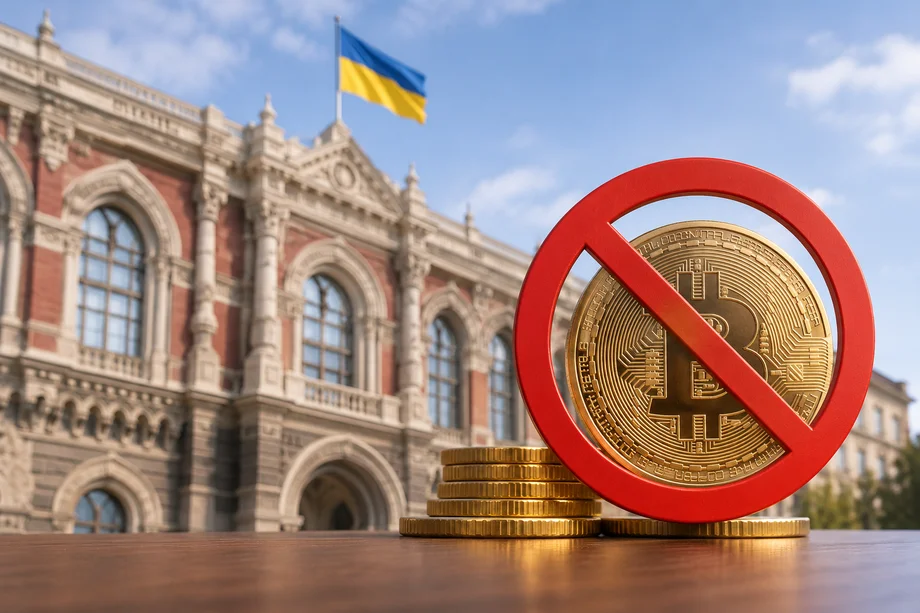
The National Bank of Ukraine has withheld support for draft law No. 10225-d, citing threats to monetary control, unequal rules for foreign tokens and potential market concentration ahead of a planned parliamentary vote
Ukraine’s National Bank has formally opposed the latest version of the country’s virtual assets bill, stating that key safeguards agreed during earlier negotiations were omitted from the text recommended for final approval. The regulator issued its position on November 4 after a parliamentary committee advanced the legislation for a second reading.
Draft law No. 10225-d aims to create a detailed regulatory framework for cryptocurrency trading and taxation, drawing on the European Union’s Markets in Crypto-Assets rules and International Monetary Fund guidance. The National Bank supports regulation in principle but argues the current draft falls short of protecting financial stability and monetary sovereignty.
Concerns Over Foreign Tokens and Oversight Gaps
The central bank identified the treatment of foreign-issued tokens as a primary risk. Some of these assets could operate as electronic money inside Ukraine without equivalent supervision in their home jurisdictions. Officials warned that unrestricted entry could interfere with monetary policy transmission, weaken the national payment system and undermine the country’s control over its currency.
The National Bank requested authority to evaluate such tokens before they circulate and to limit their use when necessary, applying the same standards already available for domestically issued assets. It also objected to any simplified admission process that would allow overseas issuers to avoid requirements imposed on Ukrainian companies, noting that such differences could produce regulatory arbitrage and leave portions of the market outside effective supervision.
Licensing Rules Raise Monopoly and Corruption Questions
A second set of objections focused on the authorization of cryptocurrency trading platforms. The National Bank initially favored an open system in which any operator meeting clear criteria could receive a license. It later accepted a compromise proposed by the National Securities and Stock Market Commission that would limit the first group of platforms to three entities chosen through competitive selection.
The revised draft removes that numerical limit and leaves the number of authorized operators during the first five years entirely to the securities commission’s discretion. The central bank argued that the change lacks adequate protections against anticompetitive practices and creates openings for potential abuse in the licensing process.
Under the current text, the securities commission would serve as the primary market regulator while the National Bank retains oversight of electronic money tokens. The legislation is scheduled to take effect on July 1, 2027, if adopted.
Legislative Timeline and Process Criticisms
The Verkhovna Rada’s Committee on Finance, Tax and Customs Policy recommended the bill for second reading and full adoption on November 4, with 20 members voting in favor. Lawmakers had previously approved the measure at first reading in September 2025. A plenary vote is expected later in November.
The National Bank said it received the final committee version only late on November 3, leaving insufficient time for review. Deputy Governor Oleksii Shaban presented the institution’s concerns during the committee meeting, yet the format did not permit a detailed discussion of the outstanding issues. Officials described the overall preparation process as insufficiently transparent and noted that several previously agreed compromises were excluded from the text.
Taxation provisions in the draft include a preferential 5 percent rate on qualifying cryptocurrency profits through the end of 2028. Crypto-to-crypto exchanges would remain untaxed, and virtual asset transactions would fall outside the value-added tax system.
The National Bank has called on parliament to reopen the disputed sections and restore input from all institutions and industry participants involved in the earlier drafting work. It stated that market development and the protection of monetary and financial stability can proceed together if the necessary safeguards are restored before final adoption.
Disclaimer
This article was generated by AI using information from multiple industry sources. It has not been reviewed or verified by a human editor and may contain inaccuracies, omissions, or misinformation. Readers are encouraged to independently verify any information before making decisions based on its content.Tired of the noise?
Let the bots trade for you.
Trade 24/7, without emotion, with data-driven strategies.
Associated articles

Russia Advances Revised Crypto Bill for Second Reading

Greece Drafts 10% Tax on Crypto Gains With €500 Exemption

France Finance Committee Approves Tax on Crypto-to-Stablecoin Swaps From 2027

South Korea Officials to Consult Crypto Exchanges Amid Push to Delay 22% Tax

Trump Urges Senate to Advance CLARITY Act in Critical Week
Latest articles

Injective Token Climbs as Canary Staked INJ ETF Begins Trading on Nasdaq

US Regulators Contact Banks Over Cyber Risks After $6.3 Billion Binance Breach

DuckDuckGo Courts Schools After Google Links Search Access to AI Tools

Binance Revokes All SignalPlus API Keys After Potential Security Alert