Newsroom
The Clearing House Selects Quant for US Tokenized Deposit Network
26 September, 2026 / News / AI / Tags: clearing, deposits, house, tokenized, quant

The Clearing House has chosen Quant to supply the technology layer for its On-Chain Money Initiative, enabling settlement of tokenized deposits with links to RTP and CHIPS systems starting in the first half of 2027
The Clearing House announced on September 24 that it selected Quant to deliver the interoperability, orchestration and transaction-management capabilities for a planned U.S. network that will clear and settle tokenized deposits. The system is designed to operate alongside existing payment infrastructure, specifically connecting to the RTP and CHIPS networks operated by The Clearing House.
Scope of the On-Chain Money Initiative
Tokenized deposits function as digital representations of funds held at commercial banks. Under the initiative, these deposits remain liabilities of the issuing institutions and continue to carry the regulatory protections and supervisory oversight that apply to conventional bank deposits. The blockchain element allows the claims to be recorded, programmed and transferred according to predefined rules while preserving the underlying banking relationship.
Quant will coordinate how tokenized deposits move among participating financial institutions and ensure the new network interfaces with the traditional rails already used for wire transfers, ACH, check-image and real-time payments. The Clearing House’s networks currently clear and settle more than $2 trillion each day.
Participating institutions are expected to gain access to the network in the first half of 2027. The project is intended to support corporate treasury operations, liquidity management, cross-border payments and settlement involving digital assets. Payments can be structured to execute automatically once agreed conditions are satisfied.
Project Background and Participants
The On-Chain Money Initiative was first announced in June 2026. It is backed by a group of major U.S. financial institutions that includes BNY, Citi, PNC, Regions, Santander and Wells Fargo. The Clearing House itself is owned by 25 of the largest U.S. banks and operates core payment systems that underpin the domestic financial market.
The selection of Quant followed a competitive evaluation process. The technology provider will supply the layer that enables coordination across member banks while maintaining continuity with the RTP and CHIPS platforms already in daily use.
Parallel Developments
On the same day the U.S. selection was announced, Quant was identified as the technology provider behind the Great British Tokenised Deposit project in the United Kingdom. That initiative involves major UK banks including Lloyds, Barclays, NatWest and HSBC and has already completed its first live interbank transactions using tokenized sterling deposits. The coincidence places the same vendor at the center of tokenized-deposit infrastructure in two major financial markets.
Within the United States, banks are pursuing more than one approach. While The Clearing House is building a shared network for tokenized deposits, other institutions have issued proprietary bank stablecoins for specific use cases. The shared model under development by The Clearing House is intended to keep the deposits inside the existing regulatory perimeter of commercial bank money rather than treating them as separate digital assets.
The combination of programmable functionality and continued deposit protections is positioned for institutional applications that require both automation and regulatory continuity. The network remains under development and is not yet available for live operations.

Disclaimer
This article was generated by AI using information from multiple industry sources. It has not been reviewed or verified by a human editor and may contain inaccuracies, omissions, or misinformation. Readers are encouraged to independently verify any information before making decisions based on its content.Tired of the noise?
Let the bots trade for you.
Trade 24/7, without emotion, with data-driven strategies.
Associated articles

HSBC and Standard Chartered Complete First Live Tokenized Deposit Deal on Swift Ledger

UK Banks Complete First Interbank Tokenized Deposit Transfers
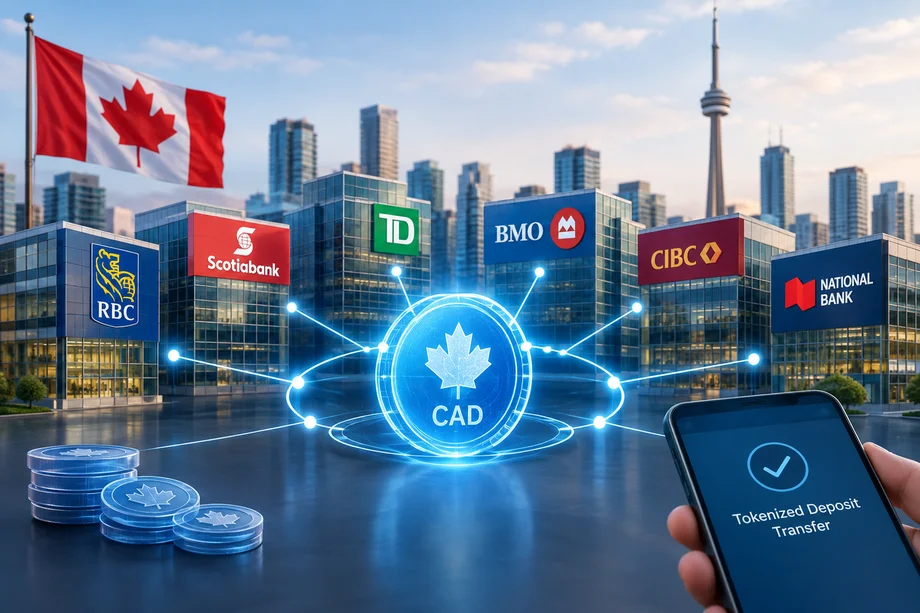
Canada’s Big Six Banks Launch Pilot for Shared Tokenized CAD Deposits

SWIFT Launches Blockchain Ledger for Tokenized Deposit Pilot with 17 Banks

Wells Fargo Builds Stablecoin Capabilities Amid Unclear U.S. Demand
Latest articles

Network School Acquires Farcaster, Rebrands as Network State Protocol with New User Rules

US Judge Rejects Gemini and CFTC Bid to Void $5 Million Settlement

Capital B Posts $78 Million H1 Loss on Bitcoin Impairment While Expanding Holdings

Solana Accelerate China Event in Shanghai Suspended After Police Presence Reported