Newsroom
Thailand SEC Files Criminal Case Against Bitget, Sets Dec. 5 Platform Block
7 November, 2026 / News / AI / Tags: bitget, thailand, thai, gmo, complaint
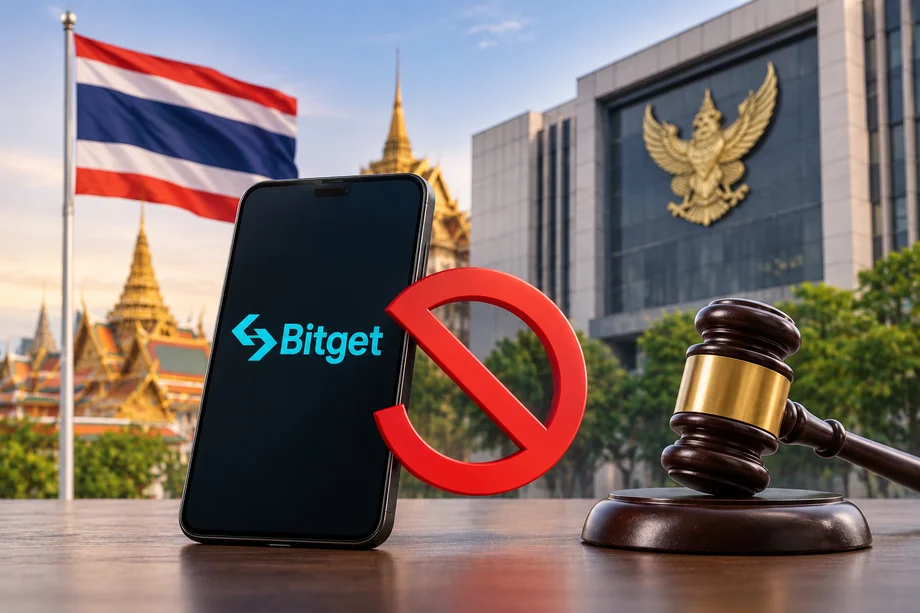
Regulator accuses exchange operator of unlicensed Thai services from 2022-2025 and seeks access restrictions while a local acquisition remains pending
Thailand’s Securities and Exchange Commission has filed a criminal complaint against BG Limited, the operator of the Bitget cryptocurrency exchange, alleging it provided unlicensed digital-asset trading services to Thai users between 2022 and 2025. The agency also notified the Ministry of Digital Economy and Society to block access to Bitget’s website, related domains and mobile application starting December 5.
The complaint, lodged with the Economic Crime Suppression Division on November 5, further names Kritsana Kritsananuwat as an alleged supporter. Authorities state that the individual promoted Bitget through Facebook and YouTube channels.
Details of the Allegations
According to the SEC, BG Limited operated a trading system in the ordinary course of business, charged fees for transactions, maintained a Thai-language website capable of displaying values in baht, and actively solicited Thai customers. Promotional activity included social-media accounts such as “Bitget Thailand” on X, “BGB Thai Holder” on Telegram and “bitgetthailand” on TikTok.
The regulator determined that these activities constituted operation of a digital-asset exchange under Section 3 of the Emergency Decree on Digital Asset Businesses B.E. 2561 (2018) without the required license, a violation of Section 26 that carries penalties under Section 66. The case now proceeds to an inquiry official, then to prosecutors and the courts. The complaint itself does not represent a finding of guilt.
Access Restriction Timeline
The SEC submitted Bitget’s website, additional domains and application for blocking under a 2025 royal decree authorizing restrictions on unlicensed trading platforms. From December 5 the public will be unable to reach the platform through those channels. The agency has not specified an exact start time for the restriction.
Similar access blocks were previously applied to other unlicensed platforms, including Bybit and OKX, in mid-2025. Licensed exchanges remain the focus of Thailand’s regulatory framework, which includes multi-year capital-gains tax relief limited to trades conducted on SEC-regulated venues.
Pending Local Acquisition
The enforcement action coincides with Bitget’s announced plan to acquire GMO-Z.com Cryptonomics (Thailand),a Bangkok-based digital-asset exchange and brokerage that already holds Thai licenses. The transaction would be executed through BTGT Management (Thailand) Ltd., with GMO Internet and its Thai holding company transferring their combined stakes of approximately 49 percent and 50.94 percent, respectively.
Completion remains subject to regulatory approval. GMO Internet Group has postponed the effective date of the share transfer from October 31 to November 30, citing ongoing work on Thai regulatory applications and closing procedures. That revised date falls five days before the planned Bitget access block.
Bitget CEO Gracy Chen stated that Thailand forms an important part of Southeast Asia’s digital-asset market and that the acquisition would allow the firm to establish local operations under applicable rules. The SEC has not indicated whether the criminal complaint will affect review of the change-of-control application. Bitget’s terms of use, updated in October, already list Thailand among jurisdictions where its services are prohibited.
The regulator’s statement does not mention the GMO-Z transaction. Bitget has not issued a public response addressing the complaint alongside its acquisition announcement.
Next Steps for the Case
The criminal matter against BG Limited and the named individual will advance through standard investigative and prosecutorial channels. Separately, the access-block request follows established procedures previously used against other unlicensed platforms. Thai users still holding assets on Bitget face a practical deadline of December 5 to arrange transfers or withdrawals if they choose to do so.
Whether the pending acquisition of the licensed local operator proceeds on the revised November 30 timetable, or faces additional scrutiny linked to the complaint, remains an open regulatory question.
Disclaimer
This article was generated by AI using information from multiple industry sources. It has not been reviewed or verified by a human editor and may contain inaccuracies, omissions, or misinformation. Readers are encouraged to independently verify any information before making decisions based on its content.Tired of the noise?
Let the bots trade for you.
Trade 24/7, without emotion, with data-driven strategies.
Associated articles

Bitget Plans Acquisition of Licensed Thai Crypto Exchange to Enter Local Market

Bitget Ends Crypto Services for Japan Residents by Year-End

Vietnam Imposes Steep Fines on Unlicensed Crypto Trading Ahead of Regulated Market Launch

Thailand Cracks Down on High-Value USDT Trades in Grey Capital Fight

Thailand SEC Advances Draft Rules for Local Spot Bitcoin and Ether ETFs
Latest articles

Peter Schiff Mocks Strategy’s Bitcoin Strategy as Holdings Near $75,500 Cost Basis

Microsoft Phases Out Oracle AI Capacity Rental Over Older Nvidia Hardware

Suspicious Bets Precede NYT/Siena Poll Releases on Prediction Markets

Nubank and Mercado Pago Halt Crypto Transfers After Provider Outage