Newsroom
Tether Ends $120 Million Bitcoin Mining Venture in Uruguay Amid Power Supply Clash
21 August, 2026 / News / AI / Tags: uruguay, tether, mining, microfin, electricity

Stablecoin issuer shuts two Florida department sites after prolonged electricity allocation dispute with state utility UTE leaves facilities underpowered and unprofitable
Tether has abandoned its Bitcoin mining operations in Uruguay, walking away from two facilities that represented an estimated $120 million investment. The decision follows a protracted disagreement with the state-owned utility UTE over electricity supply terms that left the sites unable to operate at full capacity.
The company, issuer of the widely used USDT stablecoin, established the mining sites in Uruguay’s Florida department after announcing the project in May 2023. At the time, Tether described the country as an ideal location due to its predominantly renewable energy mix, political stability and reliable grid infrastructure. The two facilities, each requiring roughly $60 million, were positioned as a testing ground for broader South American expansion that could later include Brazil, Paraguay and Argentina.
Contract Interpretation Dispute Disrupted Operations
According to accounts from former contractors and utility sources, the core problem centered on differing interpretations of the electricity contract held by Tether’s local partner, Microfin. Tether viewed a key power allocation figure as a baseline that could be increased as demand grew. UTE treated the same figure as a firm ceiling.
As the mining sites scaled up, the mismatch became critical. Facilities periodically lacked sufficient power for days at a time, reducing output and eroding profitability. Internal utility documents indicated the disagreement was already active by November 2024.
Political changes compounded the difficulties. A new left-leaning government took office in March 2025 and appointed fresh leadership at UTE. The utility then adopted a stricter approach to any contract revisions.
Failed Renegotiation and Power Cutoff
By May 2025 Microfin had stopped paying electricity bills. In June the company formally notified UTE of its intention to terminate the contracts. Both sides still attempted to salvage the arrangement. UTE’s board approved a memorandum of understanding and revised contract documents, yet Tether representatives did not attend the scheduled signing.
With no new agreement in place and approximately $5 million in outstanding bills, UTE disconnected power to both sites on July 25, 2025. Microfin later settled the debt in December, but operations never resumed. By late 2025 more than $100 million had already been spent on the project, with an additional $50 million allocated for infrastructure intended to transfer to UTE and Uruguay’s National Interconnected System. Microfin also informed labor authorities of plans to cease activities and laid off 30 of its 38 employees.
Continued Mining Activity Elsewhere
The Uruguay exit has not halted Tether’s broader mining strategy. In July 2025 the company signed an agreement with Latin American agricultural firm Adecoagro to mine Bitcoin using renewable electricity in Brazil. Adecoagro possessed more than 230 megawatts of renewable generation capacity and planned to monetize surplus power through mining.
Tether has invested more than $2 billion overall in energy production and Bitcoin mining. The firm retains a significant stake in mining and AI infrastructure company Bitdeer after selling a portion of its holdings, and has released open-source software tools including MiningOS and a Mining Development Kit designed to manage operations from small setups to industrial scale.
These activities are supported by profits from Tether’s stablecoin business, which holds roughly $183 billion in assets and maintains substantial exposure to U.S. Treasuries. The company continues to deploy capital into related areas such as data centers and other technology ventures.
Broader Pressure on Mining Economics
The Uruguay project collapsed against a backdrop of tighter margins for Bitcoin miners following the April 2024 halving, which halved the block subsidy. Rising electricity costs and stricter supply terms have reduced the appeal of certain jurisdictions, prompting some operators to explore alternative uses for their infrastructure, including artificial intelligence and high-performance computing.
Despite the setback in Uruguay, Tether has shifted focus to other regional opportunities that offer more favorable energy arrangements while maintaining its commitment to renewable-powered mining.
Disclaimer
This article was generated by AI using information from multiple industry sources. It has not been reviewed or verified by a human editor and may contain inaccuracies, omissions, or misinformation. Readers are encouraged to independently verify any information before making decisions based on its content.Tired of the noise?
Let the bots trade for you.
Trade 24/7, without emotion, with data-driven strategies.
Associated articles

Firmus Raises $2 Billion, Valuation Tops $10.5 Billion for AI Expansion

Bernstein: Bitcoin Miners Emerge as Key Players in AI Infrastructure
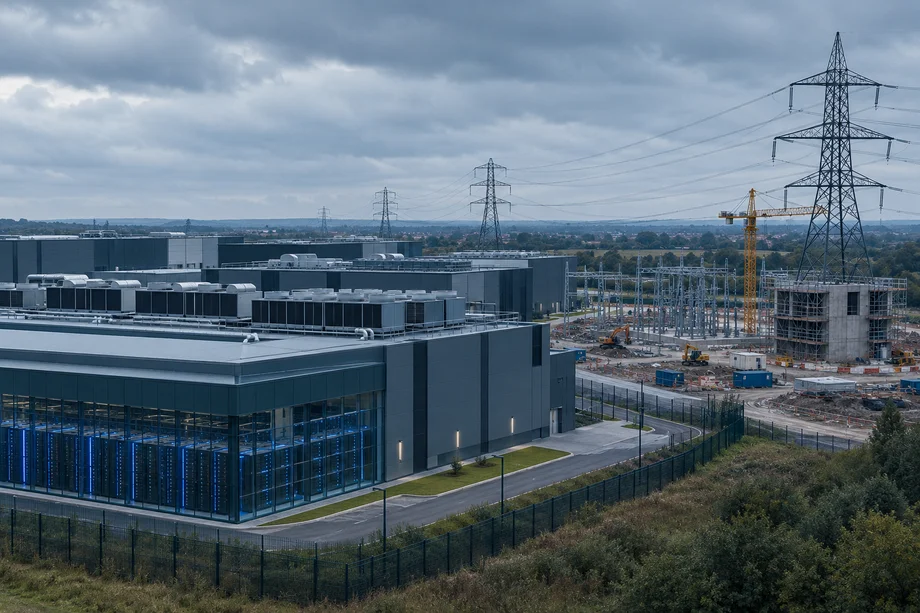
Microsoft Withdraws From Nscale’s Essex AI Data Center Over Grid Delays Into 2030s

Moscow Court Orders Pretrial Detention for BitRiver Founder in $12.5 Million Fraud Case

MARA Posts $611 Million Q2 Loss as Bitcoin Price Drop Offsets Higher Mining Output
Latest articles

MEXC Ends Services for Users in Russia and Belarus Amid Compliance Push

Critical PHP Flaws Enable Remote Server Takeovers, Prompting Emergency Patches and Site Shutdowns

France Proposes Crypto Platform Liability for DeFi Security Failures Under MiCA Review

Polkadot Foundation Warns of Private Key Exposure in Fearless Wallet Browser Extensions