Newsroom
South Korea’s Largest Bank Prepares Blockchain Cross-Border Payments on Kinexys
26 July, 2026 / News / AI / Tags: kinexys, kookmin, south, bank, settlement

KB Kookmin Bank will introduce a Kinexys-powered service in August 2026 for U.S. dollar transfers serving import and export firms across ten countries, linking blockchain settlement with existing SWIFT rails
KB Kookmin Bank, South Korea’s largest lender by assets, plans to roll out a blockchain-based cross-border payment service for corporate clients in August 2026. The offering will rely on J.P. Morgan’s Kinexys platform and initially support U.S. dollar transactions involving ten markets.
The bank signed an agreement with J.P. Morgan on blockchain remittance services and publicly announced the initiative on July 26. It will become the first South Korean financial institution to deploy Kinexys for payment services directed at import and export companies.
Service Scope and Integration
The first phase prioritizes U.S. dollar payments across South Korea, the United States, Singapore, Saudi Arabia, India, Thailand, Qatar, the United Arab Emirates, Bahrain and South Africa. Customers will access the service through KB Kookmin Bank’s domestic branches and its Singapore branch.
Rather than replacing SWIFT, the system will connect Kinexys with the existing messaging and correspondent banking network. This arrangement supports near-real-time transfers and foreign exchange settlement while preserving established compliance checks, account structures and foreign exchange processes. The platform operates around the clock, allowing corporate transfers outside conventional banking cut-off times.
The bank has not disclosed customer fees, transaction limits or the precise August launch date.
Kinexys Platform Details
Kinexys, previously known as Onyx, functions as a bank-led blockchain network for institutional payments, asset tokenization and near-real-time settlement. J.P. Morgan has expanded the platform to support multiple currencies. In June it added blockchain deposit accounts denominated in Australian dollars, Hong Kong dollars, Japanese yen, Chinese yuan and Singapore dollars, bringing total currency coverage to eight and enabling continuous payments along with programmable treasury operations.
Other institutions have already applied the network for corporate flows. Qatar National Bank began using Kinexys for U.S. dollar payments in 2025, enabling transfers outside normal hours and shortening certain settlement times to minutes. Additional users have included Axis Bank, Mitsubishi Corporation and EBANX, with the latter reporting reductions in some internal cross-border transfers from more than 24 hours to minutes.
KB’s Broader Blockchain Activity
The upcoming payment service builds on earlier digital-asset work within KB Financial Group. In June the bank completed a $100 million two-year U.S. dollar digital bond issuance through HSBC’s Orion platform. Settlement occurred in three business days, compared with five days under the prior process.
KB Kookmin also participates in a government-backed tokenized deposit initiative. South Korea’s Ministry of Economy and Finance selected nine banks, including KB Kookmin, to test linkages between tokenized deposits and public-sector spending systems. The pilot is scheduled for the fourth quarter of 2026 and will incorporate programmable conditions on a shared ledger.
Separately, KB Kookmin Card has advanced a hybrid payment design that combines stablecoin wallets with traditional credit lines, drawing on Avalanche and OpenAsset infrastructure.
Institutional Context
According to S&P Global Market Intelligence’s 2026 Asia-Pacific bank ranking, KB Financial Group held approximately $552.76 billion in assets and ranked 28th in the region, confirming its position as South Korea’s largest lender. The scale of its corporate client base provides a substantial network for the new service.
The launch coincides with wider institutional experimentation in tokenized deposits and blockchain settlement. In one recent cross-border test, J.P. Morgan, Mastercard, Ripple and Ondo Finance used Kinexys for payment instructions and U.S. dollar settlement while moving a tokenized Treasury asset on the XRP Ledger.
For KB Kookmin’s corporate customers engaged in overseas trade, supplier payments and foreign exchange settlement, the primary operational change will be access to extended hours and faster settlement along the selected corridors. The bank has not indicated whether additional currencies or markets will follow the initial phase.
Disclaimer
This article was generated by AI using information from multiple industry sources. It has not been reviewed or verified by a human editor and may contain inaccuracies, omissions, or misinformation. Readers are encouraged to independently verify any information before making decisions based on its content.Tired of the noise?
Let the bots trade for you.
Trade 24/7, without emotion, with data-driven strategies.
Associated articles
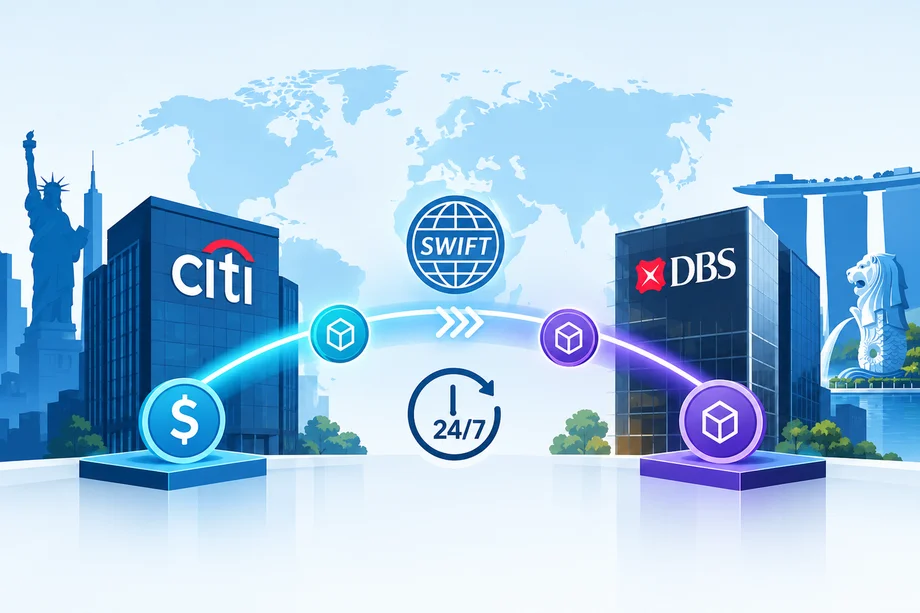
Citi and DBS Complete First Weekend Tokenized USD Payment via Swift Ledger

JPMorgan Extends JPM Coin Deposit Token to Ethereum for Institutional Clients

Jeonbuk Bank Deploys Ripple Payments for Faster Business Cross-Border Transfers

SWIFT Launches Blockchain Ledger for Tokenized Deposit Pilot with 17 Banks
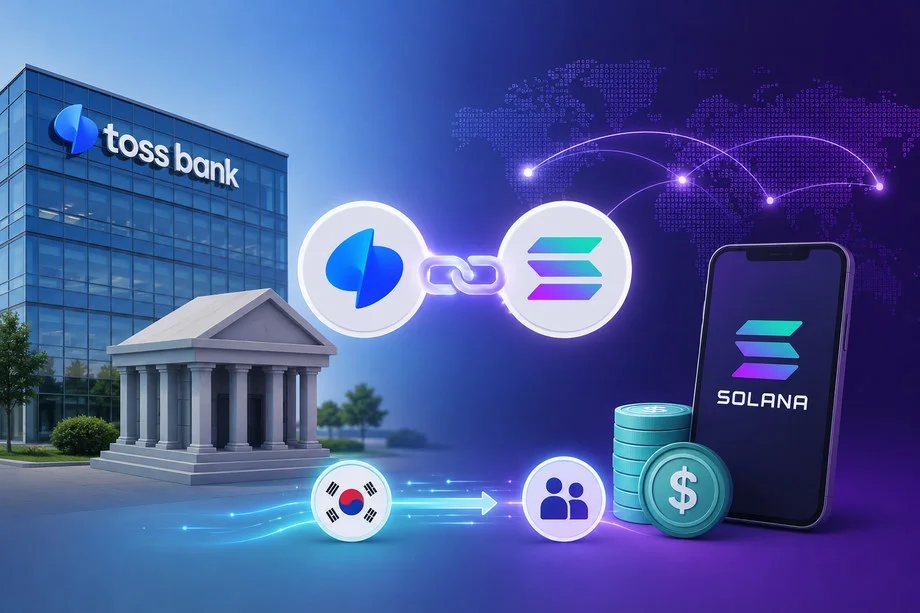
Toss Bank Partners with Solana for Stablecoin Remittance Pilot
Latest articles
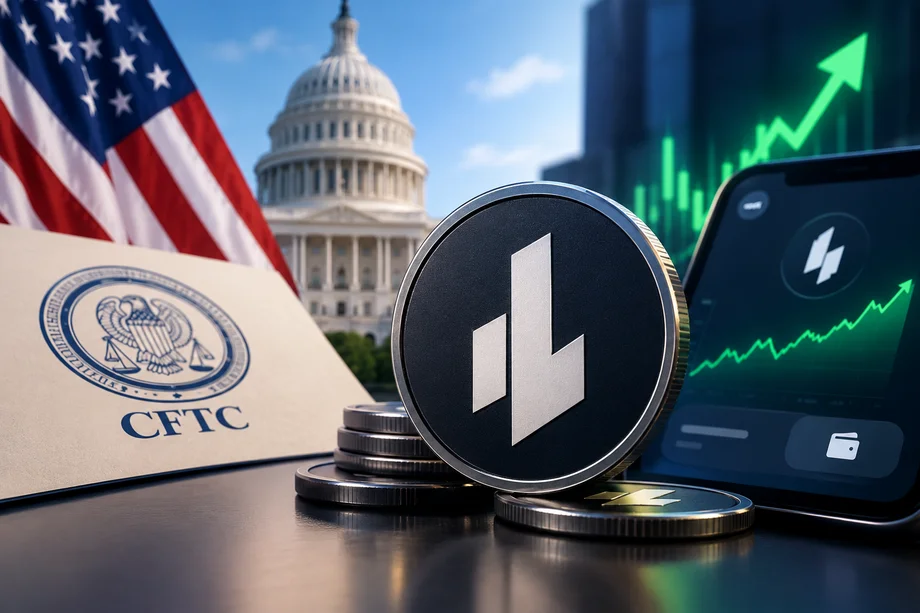
Lighter Token Climbs More Than 20% on Planned CFTC Filing and Research Note

Samsung and SK Hynix Upgrade China NAND Factories Amid AI Demand and Local Rivalry

China Prosecutors Move to Confiscate $5.1 Billion Bitcoin Haul Seized in UK Fraud Case

Bank of Korea Holds Rate at 3% After Consecutive Hikes, Eyes Data for Next Move