Newsroom
Drift Opens DFX Claims for April Exploit Victims with $3.11M Initial Recovery Pool
2 October, 2026 / News / AI / Tags: dfx, usdt, pool, verified, tokens
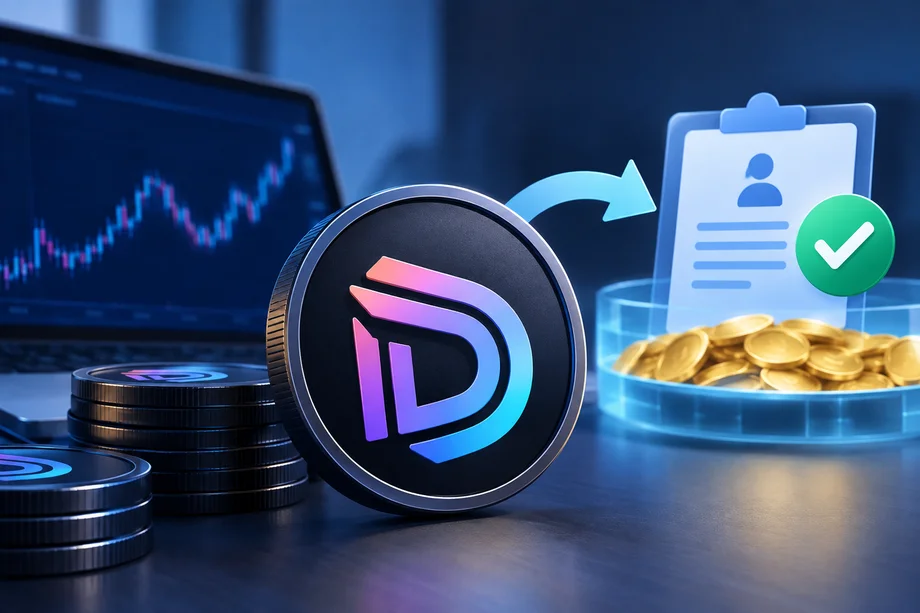
Eligible users receive one DFX token per USDT of verified losses from the April 1 incident, with early redemptions near 1% of claims and a multi-year funding plan
The Drift Foundation has opened claims and redemptions for its DFX recovery token, allowing users affected by the April 1 exploit to access compensation. Eligible wallets receive one DFX token for each USDT of verified losses, with the Recovery Pool starting at approximately 3.11 million USDT.
Claim Process and Token Details
Users must connect the wallet that controlled their Drift account on April 1 to claim allocated tokens. The foundation recorded spot and perpetual positions at the moment the protocol paused and applied pre-incident prices to determine verified losses totaling around 295.4 million USDT.
DFX is issued as a standard Solana SPL token with a fixed supply of about 299.5 million. No additional tokens will be minted. Holders may redeem tokens for USDT from the Recovery Pool, transfer them, or trade them on secondary markets such as Raydium. Redemption can occur from any wallet holding the tokens.
The redemption rate equals the pool’s USDT balance divided by the outstanding DFX supply. At launch this stood near 0.0104 USDT per token. Redeemed tokens are permanently burned in the same transaction as the USDT payout. Early redemption locks in the current fractional rate and removes any claim on future pool contributions.
The claim window closes at 00:00 UTC on January 1, 2028. All unclaimed DFX tokens will then be permanently burned, increasing the relative value of remaining tokens.
Recovery Pool Funding Sources
The pool is designed to grow until cumulative inflows reach the verified loss total. Daily contributions come from a share of Velocity’s net protocol revenue, deposited at 00:00 UTC. The allocation is tiered: 60 percent of the first 30,000 USDT in daily net revenue, 70 percent of the portion between 30,000 and 100,000 USDT, and 90 percent of amounts above 100,000 USDT. Net protocol revenue is calculated after setting aside 15 percent of net trading fees for the Insurance Fund and another 15 percent for trading capital.
Tether has committed up to 127.5 million USDT for relaunch and user recovery support. Strategic partners have pledged as much as 20 million USDT. Any assets recovered through freezes, bounties, or law-enforcement actions will also enter the pool. A 10 percent bounty applies to successfully recovered funds.
Once total inflows match the verified losses of approximately 295.4 million USDT, remaining tokens become redeemable at full value or higher. Revenue contributions are scheduled to stop at that point.
Background on the April Incident
The exploit resulted from a months-long social-engineering campaign rather than a smart-contract vulnerability. Attackers posed as representatives of a quantitative trading firm, approached contributors, and ultimately compromised private keys. Losses affected Solana-based perpetual and spot positions.
Insurance Fund deposits, which cover trading-related bankruptcies rather than the exploit itself, remained intact and later became available for withdrawal separately from the DFX process.
DFX holders who retain tokens stand to benefit from ongoing pool growth driven by protocol revenue, partner commitments, and any recovered assets. The daily pool balance and redemption rate will serve as the primary indicators of progress toward full coverage of verified losses.
Disclaimer
This article was generated by AI using information from multiple industry sources. It has not been reviewed or verified by a human editor and may contain inaccuracies, omissions, or misinformation. Readers are encouraged to independently verify any information before making decisions based on its content.Tired of the noise?
Let the bots trade for you.
Trade 24/7, without emotion, with data-driven strategies.
Associated articles
Bitget Restores Protection Fund Above $300M as Exchange Completes One-Week Pledge

US Bitcoin and Ether ETFs Record $1.1 Billion Inflows in Strongest Week Since April

Hyperliquid and Pump.fun Drive Nearly 90% of Record $638 Million Crypto Token Buybacks in 2026
Robinhood Chain Hits $3B DEX Volume, Driving Record $1.15M UNI Burn
StandX Cancels Token Launch, Distributes DUSD Airdrop and Begins Wind-Down
Latest articles
Lighter Token Climbs More Than 20% on Planned CFTC Filing and Research Note

Samsung and SK Hynix Upgrade China NAND Factories Amid AI Demand and Local Rivalry

China Prosecutors Move to Confiscate $5.1 Billion Bitcoin Haul Seized in UK Fraud Case

Bank of Korea Holds Rate at 3% After Consecutive Hikes, Eyes Data for Next Move