Newsroom
Senate Democrats Intensify Fight Against CLARITY Act Over Trump Crypto Earnings
15 July, 2026 / News / AI / Tags: murphy, trump, senator, democrats, senate

Democratic senators have voiced strong objections to the Digital Asset Market Clarity Act, citing unresolved ethics issues tied to President Trump's reported $1.4 billion in crypto-related income
Democratic Pushback Gains Momentum
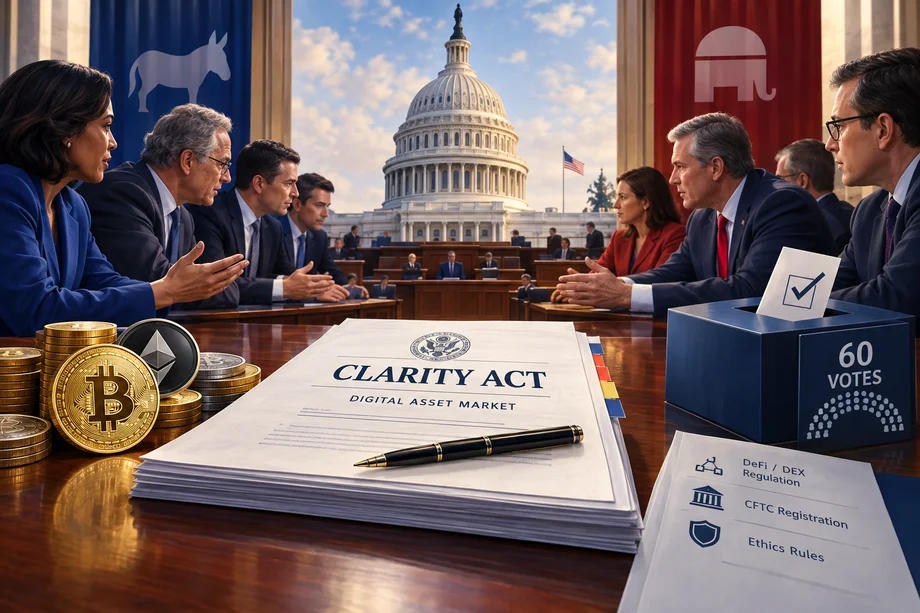
Three Senate Democrats held a Capitol Hill press conference on July 14, 2026, to express their firm stance against advancing the CLARITY Act without specific changes. Senators Chris Murphy of Connecticut, Chris Van Hollen of Maryland, and Jeff Merkley of Oregon joined broader concerns raised by Senator Elizabeth Warren.
Van Hollen, a member of the Senate Banking Committee, described the current draft as a corrupt piece of legislation that could cause significant harm. The group argued that the bill must include strong provisions to address potential conflicts of interest for government officials involved in crypto activities.
- Senators demand ethics rules barring the president and senior officials from personal crypto profits during their terms.
- Opposition centers on Trump's financial disclosures showing substantial crypto earnings.
- The bill requires broad bipartisan support to meet the Senate's 60-vote threshold.
Ethics Clause Emerges as Central Dispute
The main point of contention involves language that would restrict high-level officials, including the president, from engaging in crypto ventures while shaping related regulations. Democrats who previously supported committee versions have indicated they will not back the final text without this safeguard.
Murphy further stated that the legislation would essentially legalize what he called Trump's crypto corruption scheme. He questioned how the bill reached this stage without addressing connections between the Trump family and digital assets.
Financial disclosures revealed Trump's crypto holdings generated around $1.4 billion in 2025, with a notable portion linked to a memecoin. Senator Kirsten Gillibrand highlighted that $636 million came from this source, marking it as a primary income stream.
Legislative Timeline Under Pressure
Senator Cynthia Lummis, a key Republican backer, confirmed that the joint Banking and Agriculture Committee text is finalized and ready for Senate floor consideration. She indicated a potential vote window between July 15 and 20, ahead of the summer recess.
The CLARITY Act seeks to establish clear rules for digital assets by distinguishing oversight between the CFTC for commodities and the SEC for securities. It also includes consumer protection measures and restrictions on central bank digital currencies.
Negotiations have stretched over ten months, with additional debates on stablecoin provisions adding complexity. Supporters point to the need for regulatory certainty to support the U.S. crypto sector.
Industry and Political Context
Coinbase executives have described passage of the bill as important for maintaining U.S. competitiveness in digital assets against other global jurisdictions. The legislation passed the House in 2025 with bipartisan backing.
Democratic critics maintain that ethics provisions must take priority to preserve public confidence in the regulatory process. Several centrist Democrats have conditioned their support on including these guardrails.
| Group | Main Concern | Position |
|---|---|---|
| Senate Democrats (Murphy, Van Hollen, Merkley) | Conflicts of interest and ethics rules | Oppose without amendments |
| Senator Lummis and Republicans | Advancing market structure clarity | Push for floor vote |
| Industry Groups | Regulatory certainty | Support bill passage |
The debate occurs amid tight timing before Congress recesses, with midterm election considerations looming. Failure to reach agreement could delay or alter the bill's prospects significantly.
President Trump has publicly called for swift passage of the legislation. White House advisors have described the current period as critical for finalizing details.
Disclaimer
This article was generated by AI using information from multiple industry sources. It has not been reviewed or verified by a human editor and may contain inaccuracies, omissions, or misinformation. Readers are encouraged to independently verify any information before making decisions based on its content.Tired of the noise?
Let the bots trade for you.
Trade 24/7, without emotion, with data-driven strategies.
Associated articles

Trump Meets Senators to Push CLARITY Act Forward

Clarity Act Advances in Senate but Ethics Concerns Stall Crypto Regulation Bill

Senator Gillibrand Calls for Ban on Elected Officials Issuing Memecoins
Senate Republicans Release Final Clarity Act Draft With Trump-Backed Ethics Rules Ahead of Tuesday Vote

Trump Urges Senate to Advance CLARITY Act in Critical Week
Latest articles

SpaceX and Tesla Set Up Committees to Explore Merger That Would Combine Holdings of Over 30,000 Bitcoins

UK Banks Face Thousands of Complaints Over Crypto Transfer Restrictions

Ripple Backs SEC Proposed Crypto Asset Rules After $150 Million Legal Battle

Blockchain.com Introduces Options Trading on Seven Major Crypto Assets