Newsroom
SEC Commissioner Hester Peirce to Depart Oct. 2 After Eight-Year Tenure
26 September, 2026 / News / AI / Tags: peirce, hester, commissioner, task, commissioners
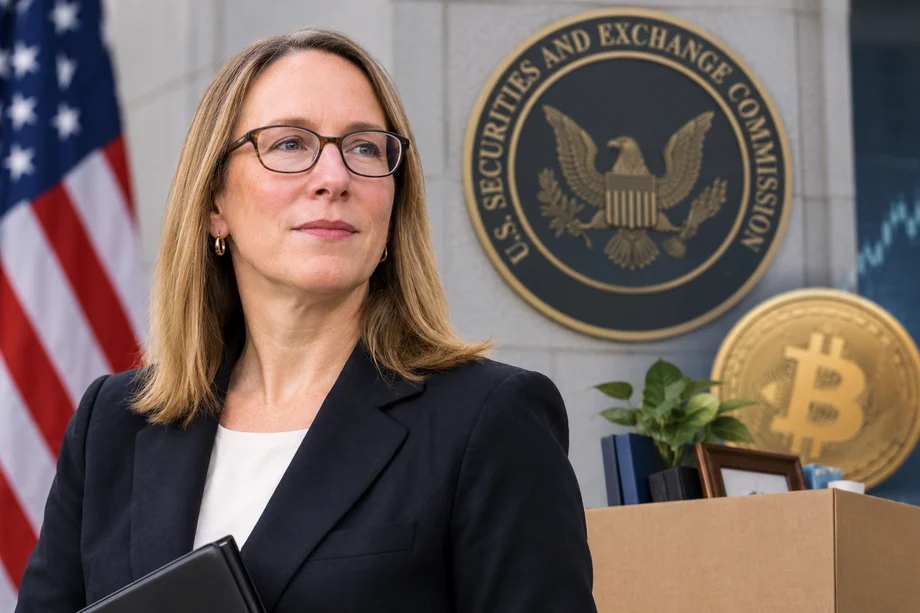
Hester Peirce, known as Crypto Mom for her push for clearer digital asset rules, resigns effective October 2 and will join Regent University’s law school faculty in November
U.S. Securities and Exchange Commission Commissioner Hester Peirce has submitted her resignation, effective October 2. Peirce, often called Crypto Mom for her consistent advocacy of clearer, rules-based oversight of digital assets, shared the letter on her social media account on September 25.
In the letter addressed to the president, Peirce described her service as the honor of her professional lifetime. She stated she would depart under the excellent leadership of Chairman Paul Atkins and Commissioner Mark Uyeda, the two remaining members of the commission, both Republicans.
Eight Years of Service and Crypto Task Force Leadership
Peirce joined the SEC in 2018 and has served for roughly eight years. Her official term expired in June 2025. Under agency rules, commissioners may continue serving for up to approximately 18 months after their terms end if no successor is appointed. She has also directed the SEC’s Crypto Task Force since February 4, 2025.
The task force has examined how existing securities laws apply to digital assets and decentralized systems. Peirce has repeatedly argued for more predictable frameworks rather than case-by-case enforcement. In June, she stated that publishing open-source code should not automatically subject software developers to federal securities regulations, addressing a long-running debate over liability in decentralized finance.
Commission Composition and Regulatory Shift
Peirce’s departure will leave the SEC with two commissioners. Caroline Crenshaw, the previous Democratic commissioner, left in January after her extended term, and no nomination has yet been made to fill that seat. The remaining members are Chairman Atkins and Commissioner Uyeda.
Since January 2025, the SEC has altered its approach to crypto regulation and enforcement. The agency has dropped several enforcement actions and investigations involving crypto companies, including some connected to the president and his family. Chairman Atkins has described the prior period as regulation by enforcement. Peirce’s positions on developer liability and clearer standards have aligned with this broader change in direction.
In March, the SEC and Commodity Futures Trading Commission issued a joint interpretation covering crypto assets, protocol staking, liquid staking, and staking receipt tokens. The interpretation indicated that qualifying staking activities and certain related tokens do not involve securities offerings under the described circumstances, while noting that different facts could produce a different analysis.
Move to Academia
Peirce plans to join the law school at Regent University in Virginia as an associate professor in November. The university expects her to strengthen academic programs in federal litigation, securities regulation, and digital assets. She had previously indicated plans to leave Washington after nearly 30 years and relocate.
Days before announcing her resignation, Peirce spoke at a digital assets conference about the potential of zero-knowledge technology to improve privacy in know-your-customer and anti-money-laundering processes. She suggested the tools could allow compliance without requiring full disclosure of sensitive personal information such as names, income, or addresses.
The Crypto Task Force is expected to continue its work after her exit. Market participants will watch how the group’s focus on digital asset classification, custody, tokenization, disclosures, and decentralized systems evolves under the remaining commissioners, and whether a replacement is nominated in the near term.
Disclaimer
This article was generated by AI using information from multiple industry sources. It has not been reviewed or verified by a human editor and may contain inaccuracies, omissions, or misinformation. Readers are encouraged to independently verify any information before making decisions based on its content.Tired of the noise?
Let the bots trade for you.
Trade 24/7, without emotion, with data-driven strategies.
Associated articles

Hester Peirce Leaves SEC: What It Means for Crypto Rules

SEC Postpones Key Meeting on Regulation Crypto Without Setting New Date

SEC Crypto Push: Peirce Backs Privacy Tools While Paxos Secures First Clearing License
House Chair French Hill Says SEC, CFTC Crypto Rules Fall Short, Eyes Lame-Duck CLARITY Vote

SEC Proposes Regulation Crypto Assets Framework Amid Stalled Congressional Bill
Latest articles

Network School Acquires Farcaster, Rebrands as Network State Protocol with New User Rules
US Judge Rejects Gemini and CFTC Bid to Void $5 Million Settlement

Capital B Posts $78 Million H1 Loss on Bitcoin Impairment While Expanding Holdings

Solana Accelerate China Event in Shanghai Suspended After Police Presence Reported