Newsroom
SEC Clears Path for First US 3x Leveraged Bitcoin and Ether ETPs
3 October, 2026 / News / AI / Tags: bzx, cboe, products, bitcoin, daily

The regulator approved a Cboe BZX rule change on October 2 for six futures-based products seeking triple the daily performance of Bitcoin, Ether and four commodities, though trading still awaits separate registration effectiveness
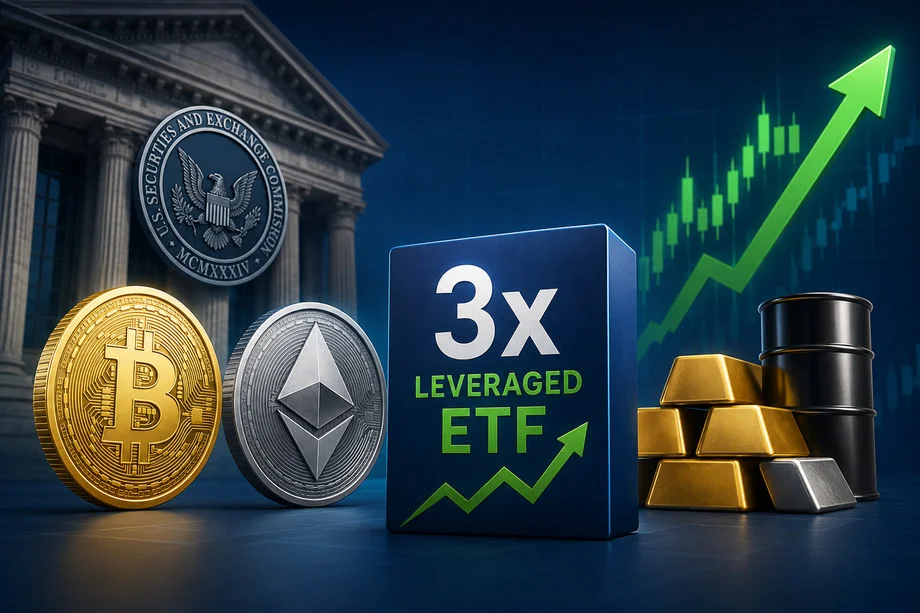
The US Securities and Exchange Commission approved a Cboe BZX Exchange rule change on October 2, 2026, permitting the listing and trading of six triple-leveraged exchange-traded products. The decision, issued under Release No. 34-106577, covers series of the Volatility Shares Trust sponsored by Volatility Shares LLC and marks the first time US exchanges can list products targeting three times the daily performance of Bitcoin and Ether.
Cboe BZX submitted the proposed rule change on August 10. The Commission published notice of the filing in mid-August and granted approval roughly seven weeks later. The products fall under BZX Rule 14.11(e)(4) as Commodity-Based Trust Shares, a category distinct from conventional investment-company exchange-traded funds.
Six Products Cover Crypto and Commodities
The approved lineup consists of the 3x Bitcoin ETF, proposed to trade under the ticker BITH, and the 3x Ether ETF, proposed under ETHK, alongside parallel products linked to gold, silver, crude oil and natural gas. Each fund aims to deliver approximately three times the daily return of its reference asset before fees and expenses.
None of the six products will hold the underlying assets directly. The Bitcoin and Ether funds will gain exposure through short-term CME Group futures contracts, cash and cash equivalents. The same futures-based approach applies to the commodity series. Positions in the crypto funds are expected to roll over a five-day period each month, with roughly 20 percent of expiring contracts shifted into longer-dated ones on each roll day.
Daily Reset and Compounding Effects
The threefold leverage target applies only to each individual trading day. Over longer periods the daily reset introduces compounding that can cause returns to diverge substantially from three times the cumulative move in the underlying asset. In volatile or range-bound markets, successive gains and losses may reduce the fund’s value even if the reference price finishes near its starting level.
Futures prices can also diverge from spot markets, and the monthly roll process itself can affect performance. The prospectus notes that price limits, accountability levels or elevated margin requirements in the futures markets could constrain the availability of contracts, in which case the funds may turn to other linked instruments such as options or related exchange-traded products.
Registration Still Required Before Trading
The October 2 order authorizes exchange listing and trading rules but does not make the products available to the public. A separate Form S-1 registration statement under the Securities Act of 1933 must become effective before sales can begin. The preliminary registration materials filed in August stated that no investment activities had started and that sales would commence only after effectiveness. No timeline for that step has been disclosed.
Broker-dealers remain subject to suitability obligations and Regulation Best Interest when recommending the products. Cboe must continue to monitor compliance with its listing standards, and the trust is required to notify the exchange if any fund falls outside those requirements.
Volatility Shares previously brought the first 2x Bitcoin and 2x Ether exchange-traded funds to market. The new approval extends that platform to triple leverage across both crypto and traditional commodity futures. The products are structured for short-term daily exposure rather than passive long-term tracking.
Market participants will next watch for the registration statements of BITH and ETHK to become effective, the final regulatory step before the funds can begin trading on US exchanges.


Disclaimer
This article was generated by AI using information from multiple industry sources. It has not been reviewed or verified by a human editor and may contain inaccuracies, omissions, or misinformation. Readers are encouraged to independently verify any information before making decisions based on its content.Tired of the noise?
Let the bots trade for you.
Trade 24/7, without emotion, with data-driven strategies.
Associated articles
Cboe Seeks SEC Approval for First US 3x Leveraged Bitcoin and Ether ETFs
Grayscale Withdraws Cardano, Hedera and Polkadot ETF Registrations in Rapid Filings

Canary Capital Launches First Staked TRX ETF on U.S. Markets
Teucrium Delays 2x Short XRP ETF to October as Long Fund Surpasses $150 Million
SEC Approves Nasdaq Texas Rule Change Listing Bitcoin, Ethereum, XRP and Solana as Digital Commodities
Latest articles

Singapore, Malaysia and Thailand Central Banks Expand BLOOM for Cross-Border Digital Money Settlement

Heatbit Launches $899 Bitcoin-Mining Water Heater Element for Existing Tanks

Underdog Partners With Zerohash for Crypto and Stablecoin Account Funding

Chainlink Teams With LG CNS to Advance Korean Stablecoins and Tokenization